Vancouver, Wash., terminal stirs hope for jobs
Written by jrood


Southwest Washington's three-member congressional delegation gathered at the Port of Vancouver to celebrate the opening of a new marine terminal on the former Alcoa-Evergreen aluminum site, The Columbian reported. Alcoa this spring finished environmental cleanup of the 218-acre site, making way for the port to complete its purchase of the two properties in March for a total of $48.25 million. The port is now ready to develop the site, zoned for heavy industrial use.
Work begins in November on
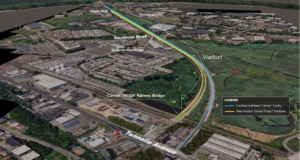
a new $18-million rail loop project, a bundle of tracks that will encircle 1.8
miles of the new terminal when it’s complete in 2010. The real estate within
the rail loop already is being used to store wind turbine components, the
region’s hottest new import.
Wind tower components
served as a backdrop to the event, underscoring the community’s hope that the
new terminal will also bring new jobs to the county. With 27,000 unemployed
residents in June, including the loss of more than 1,000 manufacturing jobs in
the past 12 months, job creation was the overwhelming theme of the delegates’
speeches.
Key to the port’s
development plans is the rail loop, part of the $137-million West Vancouver
Freight Access project to relieve freight train congestion through Vancouver.
The loop will triple the number of rail cars that move through the port each
year and decrease congestion on the BNSF main line that occurs when a train
comes into the port.
The port’s current rail
facility isn’t long enough to accommodate unit trains that can stretch more
than a mile with over 100 cars. The port must break them up in order to unload
the product and then reassemble the cars before trains can leave. The trains
also stick out onto the main line, blocking train traffic for as much as an
hour and a half.
The new loop will be long
enough to allow the full train to sit on the tracks, without taking it apart
and will reduce the waiting time 5 to 15 minutes as the trains cross the
mainline. Funding for the loop project is also secured, with $2.5 million in
federal stimulus money, and the remaining $15.5 million from federal and state
appropriations and port reserves.
The port expects the entire
freight access project to create 1,000 new full-time jobs by 2017 and 1,900
construction jobs. It might take many years for the port’s investment to bring
back the hundreds of manufacturing jobs held by Alcoa and then Vanalco aluminum
workers at the site, however.
The port will pursue an
additional $3 million from the transportation bill now under consideration in
the Senate to replace some of the port’s $10.7 million portion. The money will
help offset future costs of the larger freight access project and reduce the
need to seek outside funding for the remaining phases of the project.
RELATED ARTICLES