
FRA plans June 4 webinar to discuss PTC grants
The Federal Railroad Administration (FRA) will host a webinar on June 4 aimed at helping those seeking funding for the recently announced positive train control (PTC) grants.
The Federal Railroad Administration (FRA) will host a webinar on June 4 aimed at helping those seeking funding for the recently announced positive train control (PTC) grants.
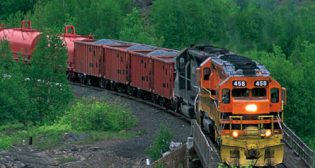
Operations will cease by the end of 2018 along the Huron Central Railway (HCRY), a subsidiary of Genesee & Wyoming Canada Inc., which cites a lack of provincial funding needed to maintain service.
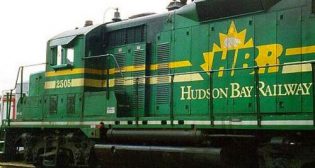
A consortium that expressed interest in purchasing the flood-damaged Hudson Bay Railway (HBR), the Port of Churchill and associated assets, has halted negotiations and cites the government of Canada’s “unwillingness to engage in meaningful dialogue.”
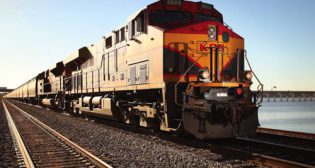
Kansas City Southern (KCS) has announced organizational changes with three new appointments, all of which are effective immediately.

A recent survey by the American Association of Port Authorities (AAPA) found members identified a need in excess of $20 billion during the next decade for multimodal port and rail access, but cited “funding/financing options” as the biggest hurdle.

The Gateway Program Development Corporation (GDC) is lauding a financial agreement that will allow for utilities to be relocated from the path of Section 3 of the Hudson Yards Concrete Casing project.
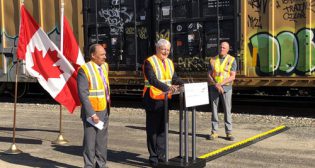
The Government of Canada’s Minister of Transport, Marc Garneau, has announced a CA$9.2 million (US7.18 million) investment for a project at Ashcroft Terminal that will improve terminal infrastructure.

The Federal Railroad Administration on May 15 issued a Notice of Funding Opportunity (NOFO) for $250 million in Positive Train Control (PTC) Systems Grants.

Edward R. Hamberger, president and CEO of the Association of American Railroads (AAR), has announced his upcoming retirement from the organization in early 2019.

The government of Canada will cover nearly half the costs of a street and safety project in Edmonton, Alberta, which will grade separate the top priority crossing in the city.
Canada will fund CA$39.8 million (US$31.1 million) for the 50th Street Widening Project, which will ease traffic congestion and improve safety along the corridor between 76th and 90th Avenue. The city says 50 Street provides access to adjacent developing industrial areas and functions as a major north-south commuter and goods movement corridor.
The improvements to the railway crossing at 50th Street and the Canadian Pacific Railway line will include a new underpass beneath the existing railway crossing north of the Sherwood Park Freeway; two new traffic lanes on 50th Street, increasing the total number of lanes from four to six; the realignment and reconstruction of the intersection at 82 Avenue and 50th Street to maintain important connections between local residential neighborhoods and commercial developments and new sidewalks and shared use paths along 50th Street.
“The CP rail tracks on 50th Street have been a long source of frustration for commuters in the Edmonton Metropolitan Region,” said Alberta’s Minister of Transportation Brian Mason. “We know traffic delays are frustrating and expensive. That’s why we are making this investment to get traffic moving safely and efficiently.”
This federal funding is provided through the National Trade Corridors Fund. The province of Alberta has agreed to fund up to CA$28.3 million (US$22.1 million) and the city of Edmonton will cover the balance of the CA$87.5 million (US$68.4 million).
“The funding commitments from both the government of Canada and the province signal that they are hearing the needs of Edmontonians,” said Mayor Don Iveson. “We can now move forward with this welcomed project that will help commuters and our local economy as we move goods and services more efficiently throughout our city.”

WASHINGTON – Technology class was in session for Congress Monday, courtesy of Class 1 railroads.

Ahead of an event held on Capitol Hill to demonstrate the rail industry’s innovations, the Association of American Railroads (AAR) released a white paper highlighting technology’s role in making the U.S. rail network safer, more efficient and more reliable.
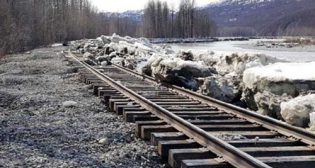
Ice jams have caused flooding along parts of Alaska Railroad’s line north of Talkeetna resulting in suspended service due to scoured ballast.
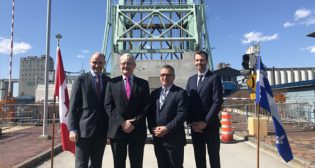
The Port of Québec will receive CA$15.5 million (US$12.1 million) from Canada’s National Trade Corridors Fund to upgrade port infrastructure including rail.
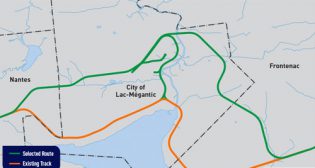
A 12.8-km (7.9-mile) route will allow trains to bypass the town of Lac-Mégantic, Quebec, were a fiery train derailment left 47 people dead in July 2013.

Cargill is investing CA$20 million (US$15.7 million) to build a rail expansion at its Lethbridge, Alberta, facility.
An increasing number of rail-related companies are joining an initiative to develop secure digital transactions.
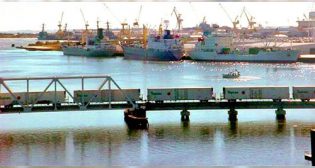
The Mississippi Department of Environmental Quality (MDEQ) has been awarded a $574,000 grant to fund planning, surveying and permitting for a 4,300-foot rail connection in Jackson County.
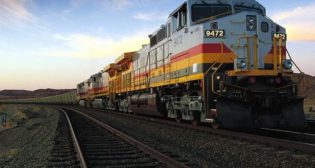
The Association of American Railroads and Norfolk Southern filed comments with the Federal Railroad Administration (FRA) and Pipeline and Hazardous Materials Safety Administration (PHMSA) on May 7 asking for a level regulatory playing field regarding automation.

On May 3, a consortium of Manitoba First Nations, led by Chief Glenn Hudson, and in partnership with iChurchill Inc., a private Canadian company, said it entered into an agreement to purchase the Hudson Bay Railway (HBR), the Port of Churchill and associated assets.