CSX completes $34 million maintenance “Jamboree”
Earlier this month more than 900 CSX employees worked to complete the company’s 2012 maintenance “Jamboree” on a section of its network in the Southeast.
Earlier this month more than 900 CSX employees worked to complete the company’s 2012 maintenance “Jamboree” on a section of its network in the Southeast.
In collaboration with various sectors of the rail industry, the Association of American Railroads says that the nation’s major freight, intercity passenger, commuter railroads and rail supply companies expect to hire more than 5,000 veterans in 2012. The rail industry’s commitment is part of the White House Joining Forces initiative, a nationwide effort to recognize, honor and support America’s veterans and military families.
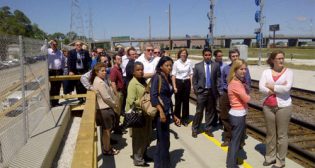
Illinois Governor Pat Quinn signed a law to begin the next phase of the Illinois Jobs Now! capital program, which is designed to create jobs, strengthen the transportation system and support economic growth across Illinois.
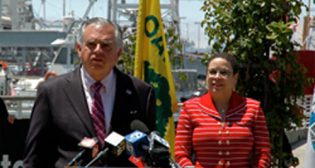
U.S. Secretary of Transportation Ray LaHood and California Governor Edmund Brown Jr., visited the Port of Oakland Army Base redevelopment site in California on Monday, July 9, 2012, to see where the port will be constructing the first phase of its rail project that received $15 million in federal Transportation Investment Generating Economic Recovery (TIGER) grant funding.
The Outer Harbor Intermodal Terminal (OHIT) Rail Access project of the Port of Oakland is expected to improve rail access to and from the port and expand the port’s rail capacity, leading to faster and cleaner goods movement in Northern California, while also providing rail access for the proposed Oakland Army Base redevelopment. These federal funds, along with additional local and state funding, will support the transportation project.
“This $15 million grant from the federal government boosts state and local efforts to create thousands of jobs by investing nearly $1.5 billion in Bay Area transportation projects. We’re not just rebuilding our infrastructure, we are also rebuilding our middle class,” stated Governor Brown.
The Port of Oakland handles 99 percent of all containerized goods in Northern California and is the only major U.S. West Coast container port that handles more exports than imports.
“I am very pleased this federal funding we fought for is coming to the Port of Oakland, where it will create jobs and make important infrastructure improvements. The Port of Oakland’s ship-to-rail exchange project is an excellent investment of federal funds in local and national economies because it both creates jobs and it improves critical public infrastructure in the Bay Area,” said Rep Barbara Lee (D-CA.). “This $15 million TIGER grant for the Port of Oakland is a clear example of the success of the TIGER grant program and why we must preserve and protect TIGER grants from efforts to end the funding.”
The federal funding will be matched more than one-to-one to launch the first phase of the OHIT Rail Access project, which is part of the joint City-Port OAB redevelopment plan.
This OHIT rail project is expected to deliver greater efficiencies in the Port of Oakland’s rail operations, create additional capacity for cargo movement at the seaport, reduce congestion on local roads and highways, create jobs and promote sustainable economic growth in the region.
The project includes building a new arrival track and high-speed turnout from Union Pacific’s mainline, two track leads into the port’s new Joint Intermodal Terminal and a new manifest yard (Knight Yard) to replace the former Oakland Army Base Yard. Knight Yard will be able to handle 100-150 rail cars per day.
The combined City of Oakland redevelopment and the Port’s first phase rail access project on the former Oakland Army Base property is approximately a $500 million investment.
The South Carolina Ports Authority is pursuing the development of an inland port in Greer, S. C., to improve the efficiency of international container movements between the Port of Charleston, the South Carolina Upstate and neighboring states.
Watco Companies named Gary Vaughn senior vice president, regulatory rela¬tions and compliance.
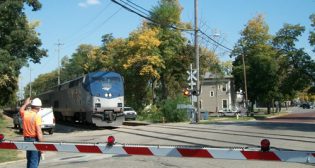
Washington state regulators approved funds to improve the safety at two railroad crossings in Stevens County, Wash.
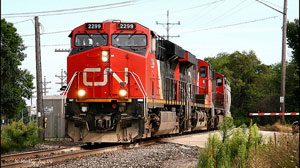
Canadian National plans to construct five extended sidings on its B.C. North Line in 2012 as part of a multi-year capital program to expand freight train capacity to handle growing freight volumes along its important Edmonton, Alberta, to Prince Rupert, B.C., corridor.
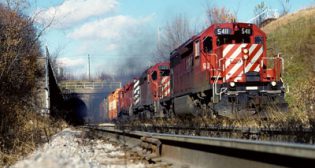
Tony Ingram has resigned from the Canadian Pacific Board of Directors. This is the third member of the board to resign in the past month following a tough proxy battle that came to a head at the railroad’s annual meeting in May in which then-president and CEO, Fred Green, stepped down.
The OneRail Coalition, a diverse group of rail stakeholders, issued a statement congratulating both parties and the House and the Senate for working together to advance transportation reauthorization legislation, which saves and creates millions of jobs by maintaining federal transportation spending at current levels.
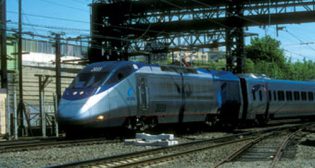
The Federal Railroad Administration issued a Notice of Intent that it will prepare an Environmental Impact Statement to evaluate potential passenger rail improvements on the Northeast Corridor between Washington, D.C., and Boston, Mass. The FRA is leading the planning and environmental evaluation of the NEC, an effort known as NEC Future, in close coordination with the involved states, the Northeast Corridor Infrastructure and Operations Advisory Commission, Amtrak and other stakeholders.
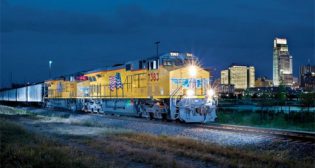
Founded July 1, 1862, when President Abraham Lincoln signed the Pacific Railway Act, Union Pacific today celebrates 150 years of building America. Starting by helping construct the first transcontinental railroad, surviving the country’s multiple economic crises, supporting America’s military men and women through conflicts and forging forward to overcome hurricanes, floods and droughts, Union Pacific remains on America’s landscape.

Both the House and Senate passed “Moving Ahead for Progress in the 21st Century,” or MAP-21, on Friday, June 29. President Obama is expected to sign the legislation into law shortly.
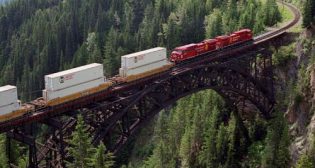
Canadian Pacific appointed Hunter Harrison as president and chief executive officer and a member of the Board of Directors.
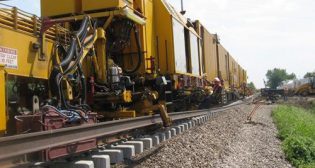
The state of Illinois has made a $8.6 million commitment toward the Phase II engineering studies on high-speed rail service on a consolidated 10th Street corridor through Springfield, should that be the chosen corridor in the Record of Decision. The planned commitment coincides with the Federal Railroad Administration’s approval to release Draft Environmental Impact Statements on future enhancements to the Chicago-to-St. Louis high-speed route currently under construction.
The Alaska Railroad Corporation was informed by the office of Rep. Don Young (R-Alaska) that ARRC will continue to receive funding near current levels through Federal Transit Administration formula funds.
Kansas City Southern promoted Jeff Songer from assistant vice president planning and administration for KCS’ U.S. engineering department to vice president and chief engineer of KCS U.S. subsidiary, closely coordinating with the leadership of its Mexican subsidiary, effective July 1.
Patriot Rail Corp. hired James Schultz to its management team as executive vice president and chief administrative officer. Schultz will be responsible for all rail-related administrative functions and will assist the CEO in providing overall daily organizational governance of the company.
BNSF plans to invest an estimated $92 million on maintenance and rail capacity improvement projects in Oklahoma this year.
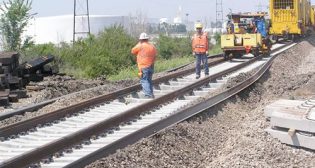
The Tier 1 Draft Environmental Impact Statement evaluating high-speed rail service improvements along the 280-mile Chicago to St. Louis Corridor was released on Tuesday, June 26. A key question with the improvements was what route to funnel freight and passenger traffic as it traversed through Springfield, Ill. The Illinois Department of Transportation recommended rail traffic be moved to the existing Norfolk Southern corridor running along 10th Street.