RailComm appoints new CEO
RailComm appointed Joe Forgione as president and chief executive officer, succeeding former President and CEO Joe Denny, who has steped down after almost 15 years of continuous service since founding RailComm in 1999.
RailComm appointed Joe Forgione as president and chief executive officer, succeeding former President and CEO Joe Denny, who has steped down after almost 15 years of continuous service since founding RailComm in 1999.

Canadian National says it has spent the past 12 months engaging customers in order to better position the railroad for success during the upcoming winter. The result is CN’s WinterREADY Plan 2013-2014, which the railroad says adds resiliency to its network and improves communication flow.
The National Transportation Safety Board (NTSB) has closed seven more of Washington Metropolitan Area Transit Authority’s (WMATA) outstanding safety recommendations, bringing the total number of recommendations closed to 20 out of 29.
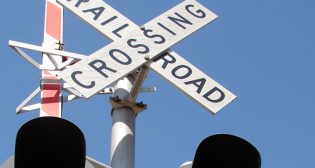
The Public Utilities Commission of Ohio approved construction authorization from the Ohio Rail Development Commission under which, CSX Transportation will install mast-mounted flashing lights and roadway gates at three crossings.
Claude Mongeau, president and chief executive officer of Canadian National said that Canadian railways have a solid record of improving their overall safety performance and remain committed to achieving further safety gains.
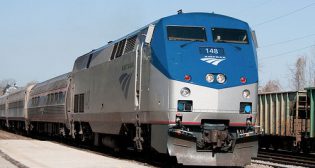
The Missouri Department of Transportation (MoDOT) held a public open house to detail a possible project that would add a second main track between Lee’s Summit and Strasburg. The route is experiencing capacity issues and currently serves four Amtrak trains and close to 30 freight trains a day.
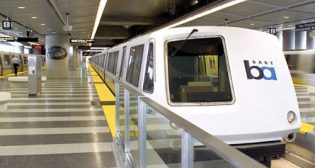
Bay Area Rapid Transit (BART) has moved to make permanent a temporary moratorium on a procedure known as “simple approval” in which trackside workers are responsible for their own safety.
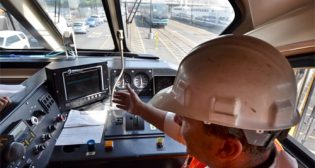
Editor’s note: The Association of American Railroads submitted the following commentary following the report “Industry leaders discuss PTC progress” RT&S posted earlier this month.
There has been debate about the railroad industry’s ability to meet the federal mandate for interoperable positive train control (PTC) technology across huge swaths of the U.S. rail network by 2015. There also have been some critics who have inferred that by seeking an extension of the 2015 deadline set by Congress for implementing PTC, the railroad industry is looking to dodge its commitment to safety. Nothing could be further from the truth and I would like to address this issue and hopefully provide some clarity for RT&S readers.
Canadian Minister of Transport Lisa Raitt discussed the critical role of the railway industry as the government strengthens railway safety standards with the Advisory Council on Railway Safety.
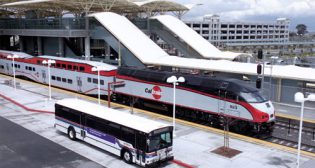
The California Transportation Commission (CTC) allocated $359 million to 36 projects. The CTC says the funds represent an investment that will create jobs bolstering the state’s economy, reduce traffic congestion, repair highways and bridges and improve rail service.
Six industry leaders representing five Class 1 railroads and Amtrak participated in a panel discussion updating attendees of the American Railway Engineering and Maintenance-of-Way Association (AREMA) Annual Conference on their progress toward PTC implementation.

Skanska-Rados Joint Venture (SRJV) reached the half way point in construction of the Exposition Transit Corridor, a 6.6-mile extension from Culver City, Calif., to Santa Monica. SRJV has worked one million hours worked on the project without a lost time incident.
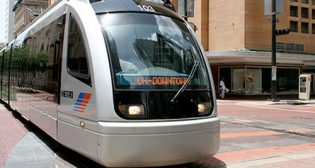
The Federal Transit Administration (FTA) is seeking public comment on the most significant regulatory step taken under FTA’s new transit safety authority.
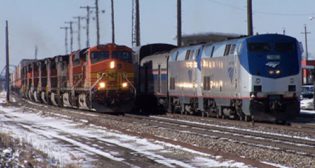
The U.S. Department of Transportation’s (USDOT) Research and Innovative Technology Administration (RITA) awarded approximately $63 million in grants to 33 University Transportation Centers (UTCs) to advance research and education programs that address critical transportation challenges facing our nation.
A failure in a Con Edison feeder cable resulted in a lack of electricity to power overhead wires along MTA Metro-North Railroad’s New Haven Line on Sept. 25. The railroad was forced to run limited service using diesel locomotives until further notice between Stamford, Conn. and Grand Central Station in New York City.

The risk of pedestrian and bicycle accidents at railroad grade crossings would decrease with sustained enforcement and education by local governments, along with consistency in design standards for warning devices, according to a study by the Urban Transportation Center at the University of Illinois at Chicago.
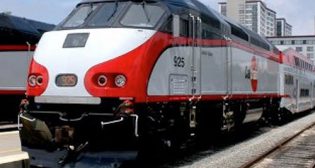
California’s Caltrain has begun work on an advanced signal system that will improve the performance and enhance the safety of the rail system, formally kicking off the first element of the Caltrain Modernization Program.

The U.S. Government Accountability Office (GAO) made public its report on positive train control (PTC) implementation and issued a trio of recommendations including extending the deadline, approving alternative safety technologies and granting provisional certification of PTC systems.
The Federal Railroad Administration (FRA) awarded a research grant for the city of Brunswick, Maine, the Northern New England Passenger Authority (NNEPRA) and the Maine Department of Transportation, among other partners, to participate in a field research program to develop and test new trespass detection and deterrent technologies.
As part of its continuing focus on customer safety, the Chicago Transit Authority (CTA) has launched a new informational campaign reminding “L” riders about the dangers of trespassing on CTA railroad tracks.