Fort Worth has had a good month on rail projects
Written by jrood


People who support rail transportation, both freight and passenger, must feel like they've been on a roll this month--finally. They've worked long and hard, and they deserve some good news, according to and editorial in the Ft. Worth Star Telegram.
There are
almost too many backs to pat for the biggest of the recent success stories, the
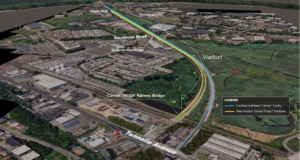
announcement of a $34 million federal grant to improve the Tower 55 rail
intersection southeast of downtown Fort Worth. From the state’s current
congressional delegation to former House Speaker Jim Wright, from state and
local officials to executives of the BNSF and Union Pacific, dozens of people
have pushed for this project.
For good
reason. Freight trains at times have been backed up for miles waiting to go
though the intersection, which has two north-south and two east-west tracks.
Children in some parts of Fort Worth have crawled under and between rail cars
to get to and from school.
The $91.2-million
project will add a third north-south track through Tower 55. Fort Worth, the
North Central Texas Council of Governments and the Fort Worth Transportation
Authority will help pay the cost, and more than half ($51.2 million) will come
from the two railroads.
Amtrak
announced that it had a banner year that ended Sept. 30. The national intercity
passenger rail service, which has two routes serving the Fort Worth Intermodal
Transportation Center, set records with 28.7 million passengers and $1.74
billion in ticket revenue. Ridership was up 5.7 percent. Growth on the routes
that include Fort Worth was even stronger, with Heartland Flyer service to
Oklahoma City up 11.1 percent and the Texas Eagle (Chicago and Los Angeles)
route up 10.2 percent.
The push
for high-speed passenger rail service in Texas has been on-again, off-again for
decades, but it has received an official on-again with the announcement of a
$5.6 million federal grant to study a possible route running between Oklahoma
City and the Rio Grande. If high-speed rail happens — a huge if, because it
would cost billions of dollars — local backers want D/FW Airport to be a major
hub. That’s good, but getting trains there across a sea of urban development
both north and south of the airport won’t be easy. Maybe that’s why they need a
$5.6 million planning grant.
Finally,
transportation planners have launched new efforts to find ways of financing new
commuter rail projects. The North Central Texas Council of Governments has
identified 52 miles of existing tracks that could make up a regional commuter
rail web.
Paying for
regional rail has been difficult. Local officials have gone to the state
Legislature at least three times with proposals to create revenue through sales
taxes, fuel taxes or transportation-related fees. Figuratively speaking, doors
slammed in their faces.
One idea
now is to create special tax districts around any new rail stations. The
districts would capture any nearby increase in property values and use the
resulting property tax revenue to pay back the cost of building the rail line.
Fort Worth
Councilman Jungus Jordan points to a significant problem with the special tax
district idea. Fort Worth already has 11 tax increment financing districts that
siphon away additional tax revenue from new development.
Cities and
other taxing entities already have significant problems keeping the lights on
and paying their employees. They all need new revenue. If "transportation
reinvestment zones" are the next bright idea for financing rail projects,
they should get only a portion of the revenue from surrounding growth.
RELATED ARTICLES