New CSXT terminal in Ohio to bypass Chicago
Written by jrood


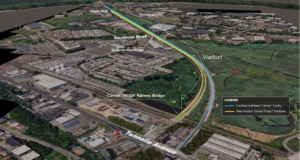
A key component of CSX Transportation's northern tier strategy will come into play in early 2011 with the opening of the Northwest Ohio Intermodal Terminal, The Journal of Commerce reports. The $175-million intermodal hub near North Baltimore, Ohio, will reduce transit times by at least a day as it routes containerized cargo from West Coast ports around Chicago to the many distribution facilities located in the Ohio Valley.
"This is really a game
changer for us," Bill Clement, vice president of intermodal at CSXT, told
the Los Angeles Transportation Club.
Chicago is the largest rail
complex in the nation where much of the interlining between eastern and western
railroads takes place. However, the rail yards are scattered throughout the
metropolitan area, and transferring containers from one rail carrier to another
often involves trucking the boxes through the congested city. As a result, what
should be a 12-hour transit through the Chicago area can easily turn into a 24
to 48-hour trip, Clement said.
With the opening of the
Northwest Ohio hub, CSXT will by-pass the city with all of its "beyond
Chicago" freight, improving both reliability and transit times.
Once at the hub, large
electric cranes that are four times as wide and twice as high as the typical
cranes found at seaports will lift the containers, further streamlining the
transcontinental move. Also, the new cranes will reduce nitrogen oxide
emissions by 80 percent compared to diesel cranes, Clement said.
The Ohio terminal is part
of a larger CSXT intermodal network known as the National Gateway Project that
will offer unobstructed passage for double-stack trains from the Virginia ports
to the Ohio Valley and on to Chicago. The National Gateway is being planned to
coincide with the widening of the Panama Canal. When the canal is widened in
2014, large container vessels of up to 12,000-TEU capacity will be able to
transit the facility with Asian cargo destined to East Coast ports on all-water
services.
CSXT supports seaports on
both coasts, Clement said, and the Northwest Ohio facility will expedite the
flow of containerized cargo to and from Atlantic as well as Pacific Coast
gateways.
About 60 to 65 percent of
CSXT’s intermodal freight moves on its northern tier. CSXT’s southern tier
strategy calls for constructing an intermodal hub in the Southeast although the
site has not yet been chosen.
So far, 2010 has been a
good year for intermodal, but CSXT is looking to the longer term as intermodal
is expected to capture a larger share of both domestic and intermodal freight.
Over-the-road trucking is challenged due to shortages of truck capacity and
drivers, rising fuel costs and environmental concerns, and these developments
should increase the attractiveness of intermodal, Clement said.
RELATED ARTICLES