San Bruno grade separation could be Caltain’s last
Written by jrood


Strapped for cash and waiting on high-speed rail to fund railway improvements, Caltrain isn't planning another grade separation project after San Bruno's aboveground undertaking, the San Carlos Patch reports.
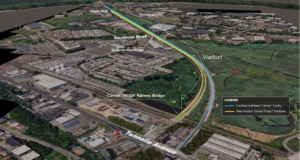
The $147-million project to raise railroad tracks above San Bruno, San Mateo and Angus avenues –
which is now expected to start construction in early November – will be the
first grade-separation project that Caltrain has completed since 2000, said
Caltrain spokeswoman Christine Dunn.
"There are no grade
separations that are currently being planned," Dunn said. "Grade
separations are very expensive and it takes a long time to get the funding
together."
Whether other Caltrain
segments will be moved to an elevated berm, an underground trench or remain
at-grade will depend on the final configuration of high-speed rail’s San
Francisco to San Jose section.
"We are taking their
tracks with our tracks," said Rachel Wall, spokeswoman for the California
High-Speed Rail Authority.
However, while the
High-Speed Rail Authority has been evaluating various design options, it has
also been drawing opposition from Peninsula cities as it prepares a draft
environmental impact report for the project.
For the San Bruno grade
separation project, Caltrain will lay the groundwork for the bullet train
line’s two tracks to be constructed. The two agencies agreed to develop their
respective systems together under the Peninsula Rail Program.
"Our partnership
with Caltrain is for an optimized, integrated high-speed rail solution,"
Wall said. This will include electrifying the Caltrain corridor once high-speed
rail moves in, she said.
Compared to
diesel-powered trains, electric trains would start and stop more quickly and
reduce energy expenses for the transit agency, which is facing a $30-million
shortfall next fiscal year, Dunn said.
The Caltrain Board of
Directors recently voted to increase zone fares by 25 cents and eliminate four midday trains to close a $2.3-million gap.
"The only way that
we are going to be able to maintain our service is actually growing our
service," Dunn said. "And the only way we can grow our service is by
electrifying the system."
While Caltrain’s future hinges on the fate of high-speed rail, it’s unclear how soon the commuter rail service
will reap the benefits.
California’s proposed
bullet train project received $2.25 billion in federal stimulus funding, the
largest recipient in the nation. The High-Speed Rail Authority is waiting on an
award of up to another $1 billion, Wall said, and the board has proposed a
formula to determine where to direct the initial dollars.
The four contending
segments are San Francisco to San Jose, Merced to Fresno, Fresno to Bakersfield
and Los Angeles to Anaheim.
The criteria seek to find
the most cost-effective section with the least hurdles so it can be completed
by 2017. But given a recent lawsuit filed by Bay Area cities and resistance to high-speed rail in cities like
Burlingame, the San Francisco to San Jose section may not be the clearest path
to start.
Without a capital boost
from high-speed rail to cut costs and increase ridership, Dunn said, Caltrain
would have to consider stripping service to peak commute hours.
RELATED ARTICLES