MTA Completes 10 Station Accessibility Projects in 2025
Written by Jennifer McLawhorn, Managing Editor


(Marc A. Hermann / MTA)
NEW YORK CITY - The Metropolitan Transportation Authority (MTA) has completed 10 station accessibility projects in 2025.
Governor Kathy Hochul announced the accomplishment, stating, “By securing historic investment to upgrade our transit system through congestion pricing and the MTA’s Capital Plan, we are taking our efforts to deliver a fully accessible transit system to the next level. . . The MTA is already opening newly accessible stations and upgraded elevators at a historic pace, and thanks to record state investment, the best is yet to come for riders.”
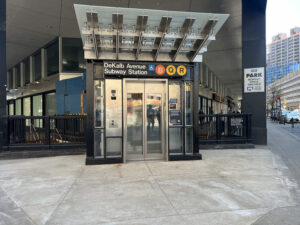
The 10 stations include seven subway stations and three Long Island Rail Road stations, listed below:
- Bay Ridge-95 St
- Church Av
- Woodhaven Blvd
- Northern Blvd
- Westchester Sq-East Tremont Av
- Mosholu Pkwy
- Borough Hall
- St. Albans LIRR
- Laurelton LIRR
- Locust Manor LIRR
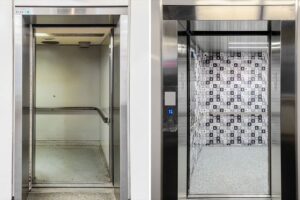
As of reporting, there are now 154 accessible subway stations and 117 accessible LIRR stations. During the station accessibility projects, crews worked to install street and platform elevators, build entrances and curb ramps, install fare arrays, update signage, and replace stairs and escalators. These enhancements to accessibility come in conjunction with 39 additional elevator replacements and 32 escalator replacements across the area. As a result, 2025 is the “best year on record for completed elevator replacement projects.” These were completed two months ahead of schedule on average.
MTA Chair and CEO Janno Lieber said, “Let the past year be more proof — the MTA is delivering more accessibility than ever before, both in terms of dollars and number of ADA stations. And with a fully funded Capital Plan and dedicated funding from congestion pricing, we’re not slowing down any time soon.”
MTA Construction and Development President Jamie Torres-Springer said, “The MTA’s ability to deliver accessibility projects faster, better and cheaper shows how smart construction strategies can deliver real results for riders while saving millions in the process. By bundling work and partnering with the private sector, these innovative solutions allow us to expand accessibility, modernize stations, and introduce new fare technology that makes traveling easier for everyone.”
MTA Chief Accessibility Officer Quemuel Arroyo said, “The MTA’s ongoing ADA upgrades and elevator replacements are about creating a more equitable transit system for everyone. These improvements aren’t just life changing for riders with mobility needs — they make travel easier for parents with strollers, seniors, and anyone carrying bags or luggage. Every completed project brings us closer to a transit network that truly works for everyone and we’re committed to keeping this momentum going in 2026 and beyond.”
On January 5, the congestion relief tolling program began to provide another stream of revenue for other MTA improvement projects. According to the release, this is estimated to generate more than $500 million by the end of 2025. For the 2020-2024 Capital Plan, 23 subway stations are lined up for accessibility upgrades and will be funded via the congestion relief tolling. In The Bronx, 3 Av-138 St, Brook Av, and Wakefield-241 St will receive accessibility improvements. In Brooklyn, 18 Av, Gates Av, Hoyt-Schermerhorn, Jefferson St, Kings Hwy, Neptune Av, and Nostrand Av will receive improvements. In Manhattan, 110 St, 145 St, 168 St, 42 St-Bryant Park, 5 Av, 59 St, 7 Av, Delancey St-Essex St, Lexington Av/59 St will receive improvements. In Queens, Briarwood and Parson Blvd will receive improvements. Lastly, Clifton SIR in Staten Island will receive improvements.
The MTA says it “has completed more station accessibility projects in the last five years compared to the previous ten” due to “bundling similar projects into large packages and through the use of design-build contracts.” Construction costs were saved through the Zoning for Accessibility (ZFA) as it gives developers “an increase in building’s density in exchange for funding and building accessibility projects.”