National Transportation Safety Board (NTSB) Issues Safety Alert Around Electric Propulsion Power Systems
Written by David C. Lester, Editor-in-Chief


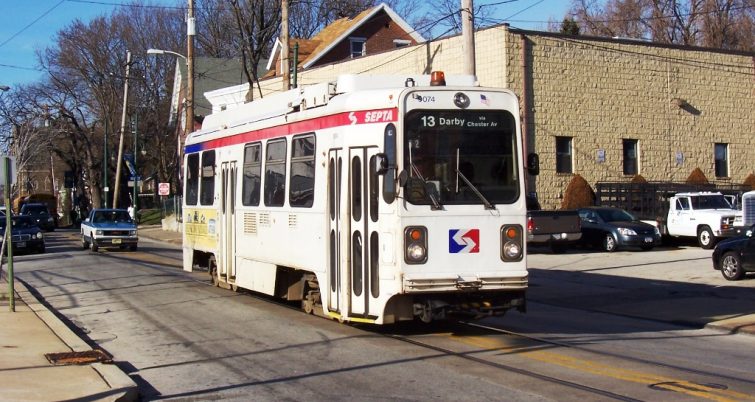
SEPTA Trolley (wikipedia.org)
WASHINGTON, D.C. –– A series of fires aboard transit and commuter trains sparks NTSB safety alert.
The NTSB release of a safety alert around electric propulsion power systems comes after a series of fires and electrical mishaps on some of the nation’s light rail and commuter systems that use electric propulsion.
The alert says “our investigators have observed electrical arcing, fire hazards, and smoke incidents from critical failures of electric propulsion power systems that have endangered passengers and employees.”
What Problems Have Occurred?
Examples provided by the NTSB include:
- “Electric propulsion power systems (such as third-rail systems or overhead wire catenary systems) have merged newer technologies with legacy components, introducing new failure modes.
- Temporary repairs and undocumented changes to third-rail or catenary systems, as well as aging electrical component tolerances that drift over time from their original design performance criteria, can also cause critical electrical problems. These include arching by worn contact surfaces, fires resulting from degraded cable insulation, and overheating from loose or corroded electrical connectors that increase resistance.
- Critical failures may not be adequately detected or mitigated by transit or commuter rail operators’ existing maintenance and inspection plans.”
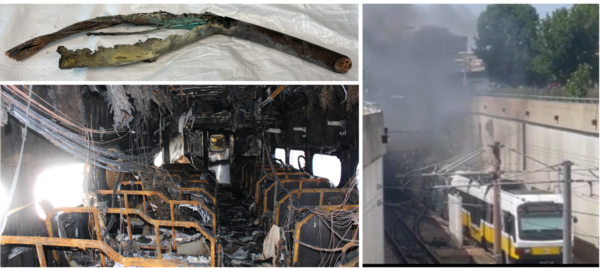
Figure. (Clockwise from upper left) Damaged third-rail feeder cable from a PATH track in Jersey City, New Jersey; Dallas Area Rapid Transit Train 81 in contact with a low overhead catenary wire in Dallas, Texas (Source: FOX 4 Dallas-Fort Worth); and internal damage to SEPTA railcar following the Ridley Park, Pennsylvania, fire.
What Can Be Done?
The safety alert includes recommendations from the NTSB on how to address and prevent these issues:
- ”Implement reliability engineering processes. If these processes are already in place, use them to reassess safety analyses of the design of electric propulsion power systems and other critical systems, particularly as equipment ages and when temporary repairs and changes are made to third-rail or catenary systems.
- Ensure all measurable hazards—including those involving aging electrical infrastructure or newly introduced replacement components—are incorporated into system safety programs like safety management systems (SMS). An SMS can provide structured processes to evaluate new or modified components for potential failure modes, integrate components safely with legacy systems, and monitor the components over time so emerging risks are identified early and mitigated effectively.
- Be aware of electric propulsion power system failures that involve aging electrical components. Review your maintenance, testing, and inspection procedures for wayside, car-borne, and associated electrical system components. Address deficiencies identified in the review.
- Use system failure modes identified in records or in previous incidents to review and revise—or develop, if necessary—maintenance, inspection, and testing procedures that can detect or prevent these failures.
- Use technology to generate real-time trend reports so emerging safety issues can be identified early and risks can be mitigated.”
More Information
You can read the full alert here, which includes links to more information about specific electrical issues that generated the safety alert.
Media
RELATED ARTICLES