New Head of Construction for Port Authority Mega-Projects Swings Big
Written by Port Authority of New York and New Jersey, Media Communications


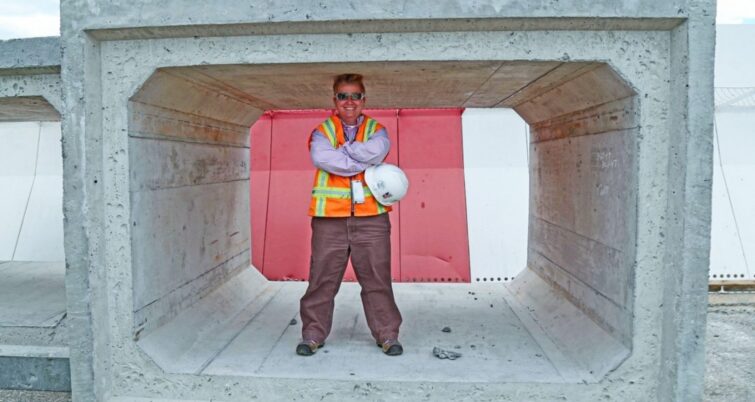
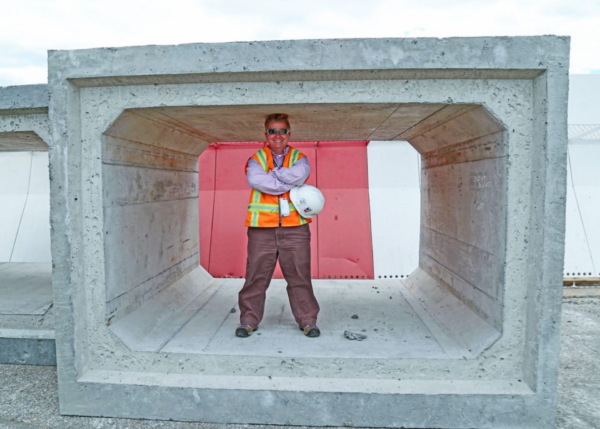
Courtesy of the Port Authority
NEW YORK/NEW JERSEY - The Port Authority of New York and New Jersey recognizes newly appointed director of construction for major capital projects, Amanda Rogers.
Chaos. Stress. Complications at every turn. That’s par for the course when you’re steering some of the most ambitious infrastructure projects in the region.
Amanda Rogers knows it’s not everyone’s cup of tea.
“I’ve recognized throughout my career that not everyone finds that fun,” Rogers said with a smile. “But I certainly find it fun. Every day is different.”
As the Port Authority’s newly appointed director of construction for major capital projects, it’s Rogers’ job to find collaborative, innovative ways to overcome those “fun” challenges enroute to completing mega-projects like John F. Kennedy International Airport’s redevelopment, the George Washington Bridge’s restoration and the new Midtown Bus Terminal. Along the way, she’s shining a path forward for the next generation of women rising through the ranks of the construction and engineering trades.
Rogers is aware she doesn’t fit the usual archetype of a hard-nosed construction boss. She realized early that she would need to handle herself differently from her male counterparts.
“I’d often be in a meeting, and they’d slam their fist on the table and get in a yelling match with a contractor,” she said. “When I started, I had long blonde hair and I’m 5 feet tall. If I slam my fist down and start yelling, people are going to laugh at me.”
Instead, she found a winning formula over her 24 years at the Port Authority that focuses on collaboration over confrontation. That mindset was formed early, she said, by a childhood interest in team sports, especially baseball. She transitioned to softball when girls were no longer allowed to play with the boys, earning a scholarship to Manhattan College, now Manhattan University, as the softball team’s starting shortstop. Her school records remain unbroken to this day, such as most doubles in a season and over an individual career.
“I’m a big fan of team sports where you had to work well with others and put in blood, sweat and tears,” she said. “Construction is really similar. If you’re prepared, if you did your homework, if you read the documents you were supposed to, people are going to respect you based on the work you’ve put into it. I’ve lived and died by that for the last 25 years.”
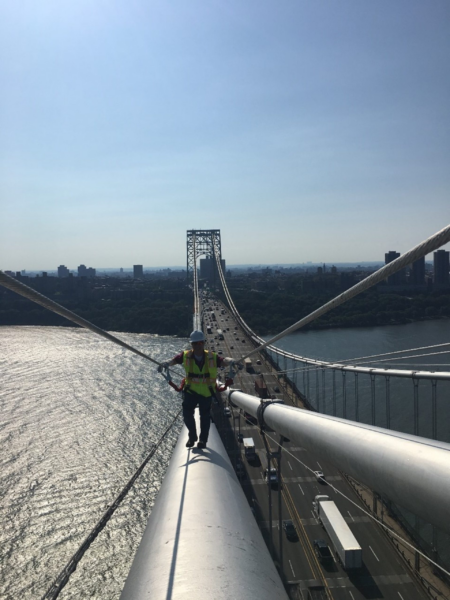
She has injected that ethos into many of the Port Authority’s biggest projects over the last two decades, including the unprecedented redevelopments of LaGuardia and John F. Kennedy International airports and the massive $2 billion Restoring the George program to rehabilitate the George Washington Bridge.
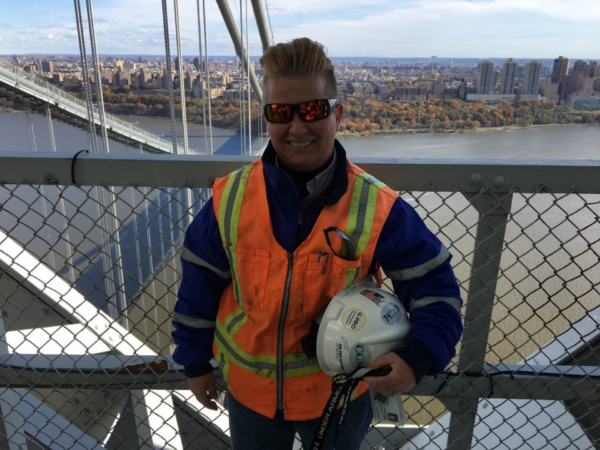
Through the stress and chaos she claims to enjoy, Rogers said she leans into a simple philosophy: the project is its own boss, not any single worker or company.
“It doesn’t matter what your role on it is,” she said. “Just keep in mind what’s best for the project, how do we move the project forward, what does it need right now. If you can get everyone in that mindset, the project is going to move.”
Now, her attention is turning to what may be even more complex endeavors: the new Midtown Bus Terminal and the Gateway Program, consisting of two new train tunnels under the Hudson River to be used by Amtrak and NJ TRANSIT. The Port Authority is providing engineering expertise for the massive project.
“If you held up the stakeholder list for Gateway on a piece of paper, it would probably be taller than I am,” she joked. “But we’re involved because the Port Authority has a proven record of being able to take complex projects and move them forward.”
For the Midtown Bus Terminal, the challenge isn’t just building a modern facility. The world’s busiest bus terminal will need to stay operational while construction happens. That means shifting operations to a temporary facility, demolishing the old one, constructing the new terminal, and then transitioning back, all in a tight urban footprint of a few city blocks.
“You’ve got tourists and Broadway on one side, residential on another side, and a major transportation hub in the middle that has to stay in operation,” she said. “It’ll be all about hearing concerns, seeing how we can work together, and doing all we can so that everyone can at least tolerate what’s going on around them for a period of time.”
Still, she called working on these kinds of transformational projects “an engineer’s dream.” She hopes to share that dream with the next generation of builders. More women are entering the field, and Rogers estimated a 50/50 gender split among young engineers at the agency.
She wants them to know they’ve chosen well.
“I tell all the young engineers that you chose the best place in the world to work as an engineer,” she said. “The diversity of our projects and the impact of our projects in this area of the country and world, it’s absolutely phenomenal.”
Media
RELATED ARTICLES