Jeffrey Watson Presented With RT&S ‘Engineer of the Year’ Award at AREMA
Written by David C. Lester, Editor-in-Chief


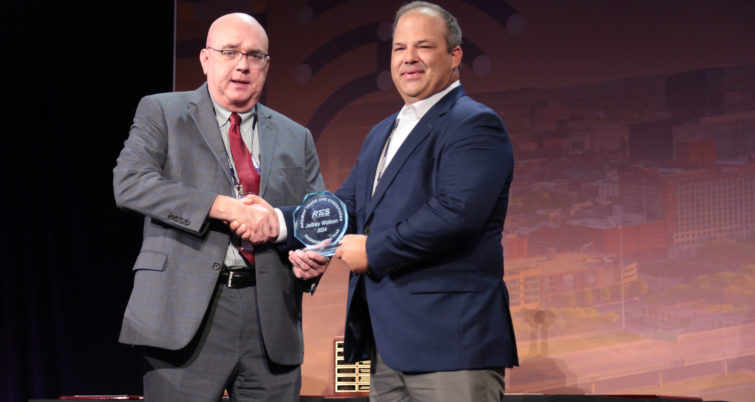
RT&S Editor David C. Lester (l) presents Jeffrey Watson (r), Vice President of Engineering at Genesee & Wyoming, with the RT&S 2024 Engineer of the Year Award
AREMA
LOUISVILLE, Ky. –– Jeffrey Watson was presented with the Railway Track & Structures 2024 Engineer of the Year Award at the annual AREMA meeting last week. RT&S Editor David C. Lester presented Watson with the award during the opening of the General Session on Monday, Sept. 16.
The feature article about Jeffrey that appeared in the September 2024 issue of RT&S is reproduced below.
Maintaining the Railroad with Military Precision
Jeffrey Watson, Engineer of the Year, Genesee & Wyoming
(All photos courtesy of Genesee & Wyoming)
The 2024 Railway Track & Structures 2024 Engineer of the Year, Jeffrey Watson, Vice President of Engineering at Genesee & Wyoming knows a thing or two about hard work and leadership. While an engineering undergraduate at Mississippi State, he joined the Marine Corps Reserve and served a little over six years as an infantryman in the Marine Corps, years that included a demanding overseas assignment. “If you ask me,” Watson said, “the Marine Corp offers the greatest leadership training in the world.” Watson applied a lot of his Marine leadership training to his career in the railroad, but more about that later.
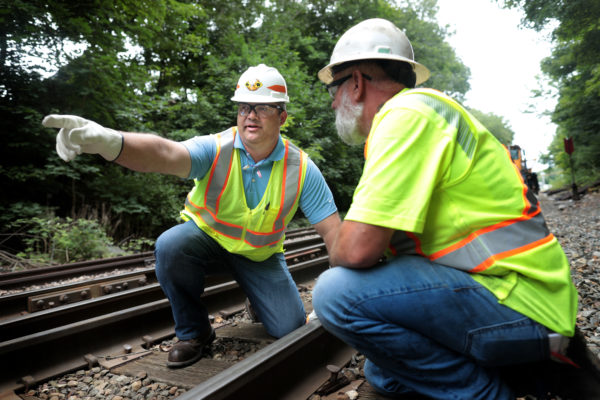
Watson was born in Indianapolis and moved to Jacksonville in the late 1980s, where his father worked for CSX as an attorney in the Government Affairs Department of the railroad. (His father had hired on with Seaboard Coast Line, which became part of CSX). Interviewing with a few engineering companies, Watson couldn’t find what he was looking for and wasn’t entirely sure what he wanted to do. “My father said, ‘what about the railroad?’” He hadn’t given much thought to it but when he left the Marine Corp in 2002, he joined CSX as a Management Trainee in the Engineering Department. The CSX management training program was being rebuilt at the time, and it was less formal than it is today. He notes that only two people from his training class are still with the rail industry, and his remaining classmate works in Engineering at CSX.
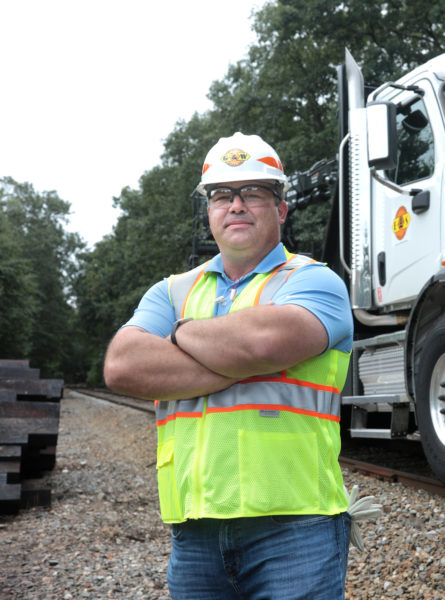
“I was lucky to hire at a time when the average age in the industry was considerably older than now, and I was surrounded by countless people with 30+ years of experience. It was a great time to learn the railroad business but also intimidating to work with and manage people who were almost exclusively 20+ years older than me,” Watson says. “I credit that environment with creating the foundation of my knowledge and success. It also helped me to become a better leader. I managed some of the best people I’ve ever worked with in the early days of my career and the technical skills I learned from them were invaluable. After about six years at various positions with CSX, ending as Roadmaster at the hump yard in Louisville, I joined Genesee & Wyoming.”
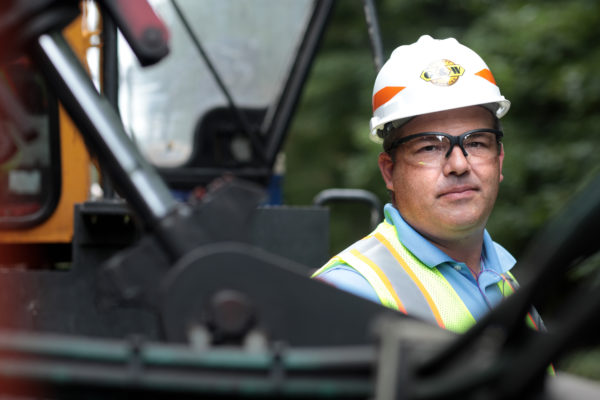
Watson likes to talk about leadership and his belief that strong leadership is really about building strong teams. “I don’t care for people who take all the credit and have the attitude of ‘this project would not have been accomplished if I had been here.'” He added that success as a leader is 100% contingent on the strength of your team. If you create a team and provide them resources and direction they need, you virtually ensure the success of your mission or project. “Out on the railroad,” Watson said, “we must be able to anticipate situations that would take us where we don’t want to go. We emphasize telling people why they need to do what they do instead of just telling folks to do it. This gives them understanding, creates buy-in and provides greater job satisfaction for everyone.”
Watson started with G&W as a Roadmaster on the Meridian & Bigbee Railroad. He was only there for a few months before working his way through regional management positions as the company went through a significant growth phase through acquisitions, including the purchase of RailAmerica. “This created a constantly evolving and satisfyingly challenging work environment,” Watson said. He added, “I gained experience during those years in building safety cultures, establishing standards and consistent procedures, along with building maintenance plans to establish the capital cycles and level of track safety we expect of G&W railroads.” In 2018, Watson transferred to G&W’s Australian subsidiary and spent two years working in what he says was “perhaps the most interesting and enjoyable stint of my career.” He points out that “it was an intriguing environment with the same ultimate goals and expectations we have within the U.S. industry, but different paths to achieve those goals.”
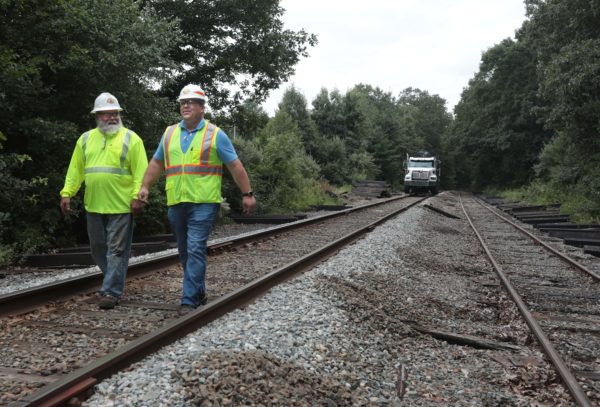
In March of 2020, Watson returned to the U.S. and assumed his current position as Vice President of Engineering for G&W. Interestingly, Watson said that “I can’t recall the exact date, but COVID hit and the NBA season was canceled and I arrived back in the country on a Tuesday and my first day in the office was Wednesday of that week. That was also my last day in the office for some time. It was pure luck that I flew home when I did. Two days later and I very likely would have been stuck in Australia for another year or longer. It was an interesting time to return to the U.S. operation and take on the biggest position of my career. Certainly not ideal, but I worked through the challenges, and it’s been a great experience ever since.”
Engineering at G&W
When asked what a typical day on the railroad is like, Watson responded by saying that typically, days are devoted to meetings or being in the field. “I enjoy being in the field as often as I can to work with our folks and gather information, which helps with capital planning and enables me to ensure that we’ve got the best equipment and the right equipment for the team to do its job. I also spend time analyzing new properties to see what needs to be done to rehabilitate them and follow those field visits with budget and capital planning meetings.”
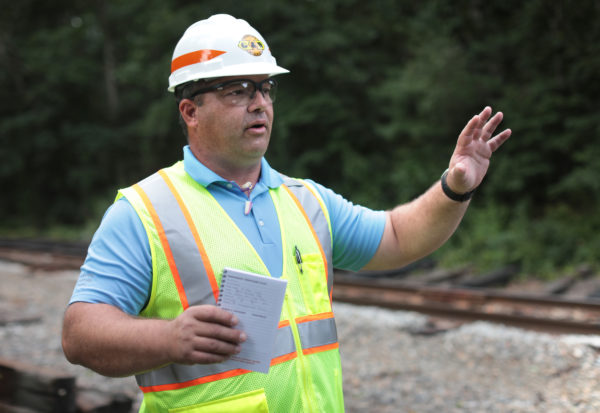
Watson points out that all of the roads’ inspection is handled internally. He says the railroads rely on maintenance contractors to some extent, but they do many things themselves. “Analyzing and keeping that schedule going takes a lot of time.” One challenge during much of the year, he says, is managing through various types of weather due to the geographic breadth of their properties. G&W may have one railroad under ice and snow while, at the same time, dealing with the potential for thermal misalignments (sun kinks) on a road in a hotter part of the country.
Information technology, big data, and artificial intelligence (AI) are bandied about a lot in today’s rail industry. But Watson says G&W’s engineering and IT teams take a very disciplined approach to testing and rolling out new technology across its footprint. For example, they use both visual and x-ray for tie inspection, which eliminates thousands of man hours, and much of the visual inspection is to verify the accuracy of data gathered by x-ray. As the industry moves forward with AI and machine learning, G&W is moving forward, too, but at a slower pace. “We must make sure that technology we employ has proven worth the investment on other railroads before we can afford to have large data-gathering equipment and highly sophisticated machine learning algorithms,” Watson points out. “However, we do utilize algorithms and machine learning in some areas and work carefully to ensure that our different IT platforms can speak to each other as changes are made. While we have not developed a formal AI program, we are watching developments in this area very closely, and we are working with engineers at Rutgers University to develop an AI-based joint bar inspection system.”
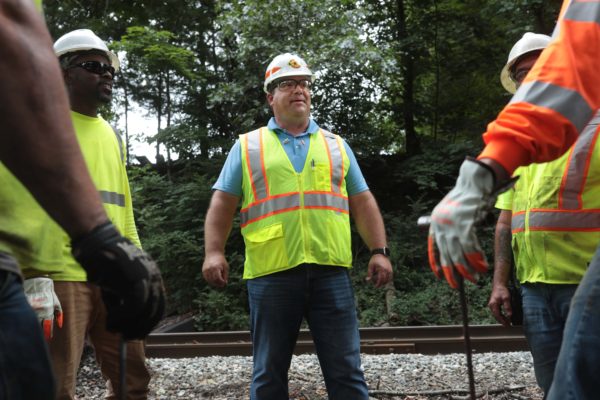
Like other railroads, G&W employs rail grinding and lubrication programs, but Watson says that the extent to which varies greatly by the size of the railroad. “Some of our properties that are 500+ miles long have programs like those of Class Is. However, on roads that average 3 million gross tons or less per year, we may do some grinding, but tend to replace rail when its profile needs to be reconfigured.” The same parameters apply to lubrication programs, which presents Watson’s team with a complex maintenance management program.
Regarding track geometry testing, Watson said that all of this is done internally by G&W. “We have two Hi-Rail trucks for track geometry, one that’s lighter duty and one that has a sliding weight to make it heavy enough to replicate train forces.” When asked about autonomous testing, Watson said this doesn’t work for G&W because the geographic spread and incontiguous nature of their footprint. “Moving automated testing equipment from one railroad to the next would require interchange and expensive per diem and lost time for any automated equipment, so we’re not presently doing this.”
Track and bridge inspectors on the G&W have drones available to them, and most are basic off-the-shelf units flown by those who are licensed to do so. “We also have some heavy duty, expensive drones, with high-dollar cameras available for when very detailed inspection is required and are particularly important for bridge inspection when our ‘snooper’ truck is not available.” The railroad also employs Lidar systems to check clearances for dimensional loads and has found the “digital twin” very useful for ensuring that all clearances are adequate.
Watson points out that railroading is a career, and not a nine-to-five job to have until something “better” comes along. He said, “If you work hard and put in your time, you will achieve the goals you are seeking. It won’t happen overnight, though. The railroad is not going anywhere and we work to instill this in our young employees.”