Engineering Perspectives: A Firm Look
Written by Jennifer McLawhorn, Managing Editor



Photo Credit: Shutterstock/Wanwajee Weeraphukdee
ATLANTA - From the March 2025 issue of Railway Track & Structures, this feature is a deep dive into what North America engineering firms are looking at in 2025.
As we make our way into spring 2025 and turn our attention to rail projects in a future issue, it is necessary that we take a look at the engineering firms who play a role in the early formation of those projects. Railway Track & Structures asked what various engineering firms believe the future of the industry holds. Focusing on the emergence of “megaprojects,” navigating generational and technological gaps, and investing in people were some of the outlooks provided. What follows is a special report on the future of rail engineering from leaders of top engineering firms in North America.
HDR: An Industry Outlook
By Bill Hjelholt, Global Freight Rail Director, Senior Vice President, HDR

When you serve the railroads, everything starts with safety. The industry’s safety culture and reduction of incident rates tells a great story of self-directed safety improvement. As railroads invest more every year in safety technology that goes far beyond regulatory requirements, there’s an opportunity for rulemaking and policy to incorporate the benefits of new technologies and innovation, such as autonomous inspection. At HDR, we developed our own FRA-approved Roadway Worker Protection training so that we can safely and quickly mobilize any of our specialists when called upon to help a railroad client.
The industrywide focus on enhancing service and market share is prompting reflection on the limits of operating ratio as the key performance metric. There is a priority on enhancing reliability and interconnectivity to better serve shippers. It’s encouraging to see the Surface Transportation Board’s recent support to streamline smaller acquisitions that improve connectivity and service. As the industry continues to refine itself to meet market demands, we see cases where Class Is are selling track segments to short lines to improve agility in handling local traffic. In other scenarios, Class Is are acquiring short lines, so the national rail network benefits with improved rail connections across regions. The historically bipartisan support of U.S. federal grant programs, such as CRISI and RCE, is a key driver for continued safety and efficiency across the rail network. HDR will continue to partner with communities, railroads and shippers, as we assist regulatory approvals from the STB and identify and plan railroad projects that provide socioeconomic benefits and garner FRA support.
To be successful in the ever-accelerating speed-to-market race in which consumers seek to optimize delivery from the supply chain network, railroads are prioritizing service reliability with each movement across their network. There’s a tremendous opportunity for railroads to capitalize on their inherent advantages to grow market share with intermodal traffic. A single intermodal train removes over 300 trucks from congested roadways and reduces fossil fuel consumption by up to 75% in the process. HDR is helping railroads capitalize on these advantages with permitting strategies that reduce approval timelines in the complex regulatory environment.
While railroads must focus on their daily mission of safe and efficient freight movement, they are also finding time for long-term strategies. Industry leaders are proving that when sustainability is properly executed, it reduces the total cost of infrastructure ownership. It is just good business. Railroad’s carbon emissions per ton-mile are also the lowest among all surface transport modes, but this is not stopping them from investing in alternative fuels, battery-electric locomotives, and yard equipment. HDR’s Regenerative Rail program is advising the industry and its regulators on the opportunities and challenges of alternative fuels and electrification as they seek to further decarbonize operations.
In the immediate future, navigating a reset of international trade with a minimum of supply chain disruption will be a shared interest between railroads, shippers and suppliers. We feel confident that worthy projects will see continued investment, from the private sector and federal and state governments. This sentiment is embodied in the ASLRRA’s advocacy efforts for its 600-member railroads and continued emphasis to modernize the 45G tax credit.
In this dynamic environment, we believe railroad industry decisions will be guided in large part by return on invested capital. HDR sees a bright future for the industry as we continue to make investments in our people and new technologies. These will enable us to help railroads reduce net investments by teaming with funding partners, reduce the total cost of ownership with smart designs, and enhance revenue streams by accelerating project delivery. That’s good for railroads, customers, the supply chain and the entire industry.
On Track for the Future: Parsons Driving Rail Innovation

By Mark Fialkowski, President of Infrastructure North America, Parsons
The rail industry has always been an exciting ride; at Parsons, we continuously evolve alongside it. As procurement models change, the delivery partner model has gained particular traction, reshaping how large-scale rail projects are conceived and executed. This shift is evident in our work on major infrastructure projects covering a wide range of rail systems.
In February 2024, Parsons was selected as part of a joint venture to serve as the delivery partner for the $16 billion Hudson Tunnel Project, the most urgent infrastructure project in the U.S. today. This marks our first major delivery partnership in the country, and we’re thrilled to contribute to such a high-profile endeavor. Just before the New Year, we were also selected as part of a team working on the $7 billion Austin Light Rail project, further solidifying our role as a leader in alternative delivery models.
These projects represent a growing trend: the emergence of “megaprojects” in the U.S., similar to those we’ve delivered in the Middle East. These massive undertakings require significant coordination between multiple stakeholders, including agencies, contractors, and designers, to complete them successfully. Whether we are the lead program manager or engineer of record on these and other complex projects, we remain committed to ensuring smooth collaboration and reducing risks. Our focus on minimizing change orders, improving scheduling, and providing greater cost certainty is critical in delivering successful outcomes in today’s dynamic rail environment.
As the rail sector evolves, so does the technology that drives it. One of our key contributions to the industry has been in the area of train control. We’ve come a long way since the introduction of communications-based train control (CBTC) in the late 1990s, a system in which Parsons has played a pivotal role. Today, CBTC is widely recognized as a best practice in train control, and we continue to assist agencies in implementing and upgrading their systems to optimize operational efficiency and safety. Our expertise in this area ensures that agencies stay at the forefront of technological advancements while improving the passenger experience and reducing operational costs.
Looking ahead, Parsons is poised to play an integral role in the next wave of transformative rail projects. We are leveraging our global experience to help bring high-speed rail to the U.S., tapping into decades of experience in delivering cutting-edge infrastructure. With our background in cybersecurity for the U.S. Federal Government, we are uniquely positioned to help safeguard critical rail infrastructure against evolving cyber threats. We remain focused on one overarching goal: delivering exceptional value to our clients and stakeholders, no matter the scale or complexity of the project. From rail electrification and advanced signaling to the latest in data-driven solutions, we are committed to shaping the future of rail by providing innovative, reliable, and sustainable solutions. At Parsons, we don’t just deliver rail systems; we are driving the future of transportation forward.
Engineering Perspectives: Navigating Generational Gaps and Technological Advances in Railroad
By Kendall Koff, President & Chief Executive Officer, RailPros

A look at the rail industry today can easily lead us back to the timeless goals of efficiency, safety, and growth that one hears about at every industry event and from every railroad CEO. As a life-long rail professional, I agree with the focus and the passion for achievement in these areas. However, my thoughts also turn how to find the success we seek in a changing environment. I would like to share a perspective on what we at RailPros describe as a person-centric culture. This brings together everything we do, however for this article, I will focus on two key items: generations in the workforce and technology.
It begins with people. The generations in the workforce today create a remarkable opportunity for success:
1. Generational diversity in the workforce – In 2025, there are four generations represented in the workforce: Baby Boomers, Generation X, Millennials, and Gen Z. Some of us have straddled the divide between analog and digital, learning new technological tools as they come into existence. But for others, smart devices and the internet have always been the norm. Companies can leverage the experience of the most tenured team members and capitalize on the younger generations’ new, fresh ideas, and perspectives to longstanding challenges. Learning how to best communicate across generational lines and balancing the new with the old is an essential item for all companies in our industry.
2. Technology – There is more computing power in your smartphone than NASA had in the supercomputer that sent the Apollo missions to the moon. This means there are more ways to streamline, simplify, and automate pieces of the work we do than ever before. Technology can help us run scenarios, adjust the design, and predict outcomes in ways that are more efficient than calculating by hand. As exciting as it can be to become an “early adopter” for new software/programs/platforms, our industry relies on safety first. Proper vetting, training, and testing must be done before utilizing something new.
At RailPros, we pair junior employees with more senior staff and encourage a two-way flow of information. This helps us to smooth out those generational gaps and align our teams, which, in turn, allows us to work more efficiently for our clients. We also have an IT steering committee that serves as our ‘checks and balances’ before we go live with the latest and greatest. This helps us ensure we’ve looked at a tool from all sides before we begin to use it for our own initiatives and eventually for those of our clients. In leveraging this multi-generational workforce and adopting relevant new technology I am confident that the rail industry will continue to grow and thrive.
WSP: Leading Innovation, 120 Years and Counting
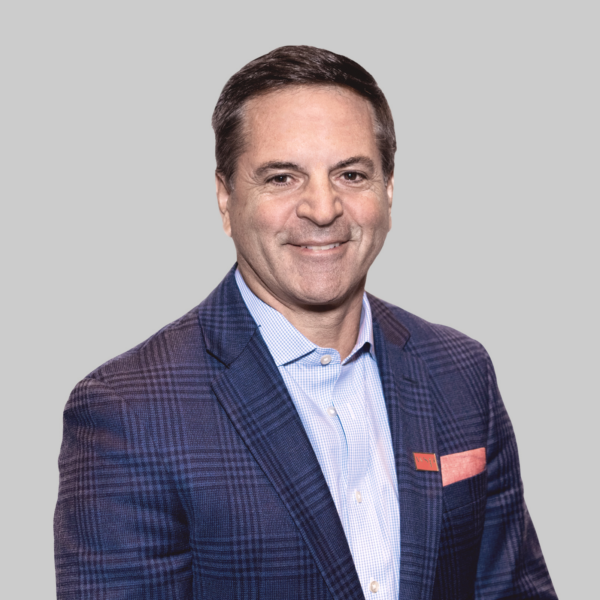
By Jerry Jannetti, PE, Senior Vice President and U.S. Transportation and Infrastructure Executive, WSP
Shortly after the New York Subway’s inaugural trip in 1904, Chief Engineer William Barclay Parsons and third rail co-inventor Henry Brinckerhoff partnered, forming a relationship that ultimately contributed to major transit and rail projects, including every New York Subway expansion. Third rail technology is still used in many systems worldwide.
Their collaboration laid the foundation for WSP, a leading engineering, environment and professional services firm, that has designed and delivered rail systems, stations and terminals for over 120 years. Today, WSP is contributing to 346 transit and rail projects across the U.S., including:
• The Los Angeles County Metropolitan Transportation Authority’s Southeast Gateway Line, a 14.5-mile, nine-station light rail transit line that will connect downtown Los Angeles to the City of Artesia. WSP is lead environmental and design consultant.
• The Purple Line Light Rail, a Maryland Department of Transportation/Maryland Transit Administration 16-mile light rail transit project north of Washington, D.C. WSP provides program management as part of the Purple Line Transit Partners joint venture.
• The Frederick Douglass Tunnel Program, a 1.4-mile Amtrak tunnel connecting Baltimore to Washington, D.C., replacing a frequently bottlenecked 150-year-old tunnel. The WSP-Parsons Joint Venture is providing engineering and design services through final design.
• The Hudson Tunnel project, centerpiece of the Gateway Program. Two new rail tunnels connecting New York and New Jersey will provide resilience during extreme flooding events. WSP is providing engineering support for the environmental impact statement and preliminary engineering design services.
Project funding remains a hurdle. Where the U.S. has spent billions on rail initiatives in recent years, however, European nations have spent trillions. Keeping up requires U.S. agencies to secure creative revenue sources and continue pioneering industry advances.
Forging partnerships with firms like WSP has helped clients secure more than $53.7billion in transportation grants since 2009, including $30.5 billion from the Federal Transit Administration and $15 billion from the Federal Railroad Administration. In addition, WSP has secured grants totaling $25.1 billion since 2022 through the Bipartisan Infrastructure Law.
The ever-increasing value of data may provide another source of revenue. Evaluating effective ways agencies can monetize cumulative data while ensuring individual privacy will be critical in coming years.
Adopting new technology, such as generative artificial intelligence, and encouraging innovation can dramatically advance rail reliability, safety and operational efficiency. WSP prioritizes AI and its potential to evaluate data, which will lead to safer, more efficient networks. Driverless train initiatives using autonomous vehicle systems has become a global trend. In partnership with tech organizations, WSP led a ground-breaking pilot of autonomous freight trains aiming to revolutionize short-distance transportation from industrial sites in Finland.
We work closely with industry trailblazers to develop energy-efficient fleets that incorporate biofuel, battery technology and hydrogen fuel-cell technology that reduce emissions and improve sustainability. When U.S. transportation leaders see innovation and progress on rail projects around the world, they wonder when these advances are coming to their local network. At a firm involved with many of those global projects, I tell them we can start right away. The rail industry is ripe for innovation it hasn’t seen since those early New York Subway days, and WSP has the talent ready to usher in those transformations.
Engineering a Stronger Future: Integration, Vision, and Leadership in Rail
By Tim Rock, President & Chief Operating Officer, Gannett Fleming TranSystems

For decades, rail has been the backbone of North America’s supply chain and urban mobility. But maintaining that position requires more than investment — it demands a smarter, more connected approach to infrastructure modernization, one that maximizes efficiency, minimizes risk, and builds for long-term resilience.
The challenges facing our industry today aren’t abstract — they are here, now, impacting our clients, our communities, and the future of transportation. Whether it’s the need to rehabilitate aging corridors, integrate new technology, or expand capacity to meet rising demand, the rail sector must find new ways to deliver projects faster, with greater precision, and with long-term sustainability in mind. At Gannett Fleming TranSystems, we’re focused on doing exactly that.
Integration That Delivers Real Results
The recent Gannett Fleming TranSystems merger was never about getting bigger. It’s about getting stronger, more agile, and more effective.
For decades, both firms have been recognized as leaders in rail, transit, and infrastructure solutions. Now, we’re building on that foundation by streamlining operations, improving technical collaboration, and enhancing project delivery. We’re not just a larger firm — we’re a smarter, more responsive partner to our clients.
Take rail network modernization. The days of relying on fragmented data and siloed decision-making are behind us. Clients need a more connected, insight-driven approach to project delivery. That’s why we’re integrating building information modeling (BIM) and geographic information systems (GIS) into our workflows, creating a real-time, visualized understanding of complex rail corridors. These tools aren’t just about efficiency — they bring clarity to decision-making, minimize risk, and allow rail owners to anticipate challenges before they become costly issues.
The same principles apply to asset management and maintenance planning. Instead of traditional inspection cycles that rely on historical data, we’re helping clients adopt data-driven predictive maintenance strategies informed by digital twins and reality capture. This shift doesn’t just improve reliability — it maximizes infrastructure lifespan and ensures that capital investments are targeted where they’ll have the greatest long-term impact.
What Drives Us Forward
I’ve seen firsthand that success in this industry isn’t just about technical expertise — it’s about vision, integrity, and execution. These are foundational principles I believe in, and they guide how we operate every day:
1. Investing in People
The strongest firms invest in their people. The best organizations don’t just attract top talent — they develop it. That’s why we emphasize mentorship, hands-on leadership, and career growth. When we invest in our teams, we invest in the future of rail.
2. Getting It Right for Clients
Clients don’t need more talk; they need real solutions that work. Whether it’s a freight capacity expansion or a passenger rail upgrade, they trust us to deliver on time and on budget. That trust is built through reliability, transparency, and the highest standards of performance.
3. Leading by Doing
Leadership isn’t about words — it’s about action. If we want to see real progress in rail and transit, we have to step up, drive innovation, and push for smart policies and infrastructure investments. That’s the kind of leadership I believe in, and it’s the approach we take as a firm.
Where We Go From Here
Every project we work on — whether a major rail expansion or a critical infrastructure upgrade— has lasting consequences. It shapes how people move, how goods flow, and how economies grow. That’s why we take a stakeholder-first approach, ensuring that today’s decisions create infrastructure that is adaptable, resilient, and built for the long haul.
At Gannett Fleming TranSystems, we’re not just preparing for the future of rail — we’re shaping it. Long-term success in this industry depends on more than technology and investment. It requires clear vision, decisive action, and a willingness to challenge the status quo. The firms that lead will be the ones that understand where the industry is headed and act with purpose —ensuring that the infrastructure we build today drives progress for decades to come.
Media
RELATED ARTICLES