Will Government Spending Cuts Impair Rail Safety?
Written by David C. Lester, Editor-in-Chief


File Photo
Great Care Must Be Taken When Re-Scoping Projects
RT&S “From The Dome” May 2025 Issue
The debate over government spending has reached a fever pitch in 2025. While most spending can be debated by reasonable people, some is clearly needed and some is totally wasteful. For example, military equipment must be purchased to defend the United States. Yet, the Pentagon doesn’t need to pay $1,000 for a toilet seat. Nevertheless, I’m not here to add to that debate. My focus, though, is on funding cuts for federal infrastructure projects, especially rail. They likely won’t all be bad, but they also won’t be universally good.
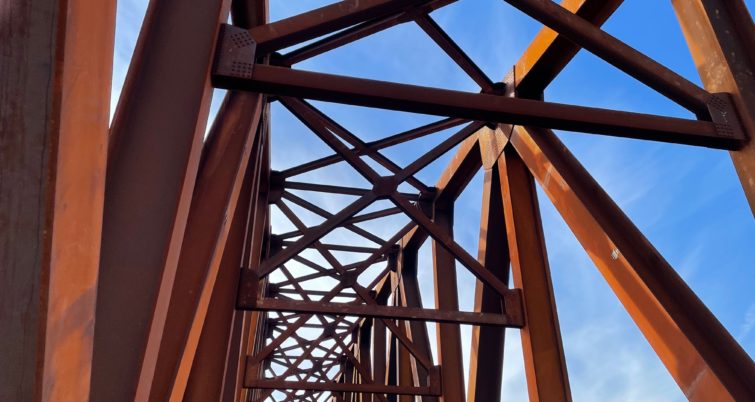
An example is a story we reported on during the week of this writing which announced that some funding for the New Jersey Dock Bridge Rehabilitation Project has been cut. The project initially called for $375 million for the project, but the USDOT announced that it has reduced the scope of project to bring the cost down to about $235 million, saving taxpayers $140 million. The scope reduction will also allow the project to be completed two years earlier than originally scheduled.
In a statement, the USDOT said the scope revision will “ensure critical safety and reliability elements but remove unnecessary aesthetic costs like enhanced lighting and defer some rehab work where structural elements still have a useful life. By strengthening and reinforcing the bridge’s steel components, Amtrak is extending the functional performance of the structure first opened in 1935.”
I have no knowledge of the details of this project. As far as I can tell, at this writing, the precise details of the scope changes have not been publicly announced. Only “enhanced lighting” and “deferring rehab because whatever parts are still in good shape.” Both “teasers” bother me. First, is the lighting purely decorative or is intended to improve navigation? Both? Neither? More importantly, what about the elements of the bridge on which rehab is deferred? Which elements are they? If you have the plans, tools, and equipment on site and ready to go, why not go ahead and complete the rehab? How many more years are these elements expected to last? If these elements will eventually need rehab, wouldn’t it be less expensive in the long run to do it now than to have to have a separate project in the future, when costs are likely to be significantly more than they are now? Also, unless rehab of these elements has been completed sometime during the history of the bridge, it’s hard to imagine that a nearly 100-year-old bridge would have very many elements that won’t need attention for too much longer.
Again, while I have no direct knowledge of the details of this project and the change in scope, I think we must be wary of this kind of thing. There’s always the possibility that the work needed was over-scoped and this is an opportunity for someone to milk the cow. But, unless there is widespread mismanagement and subterfuge on the part of the government and contractors, I wouldn’t think many self-respecting engineers would be a party to such.
Remember the O-Ring issue on the Space Shuttle Challenger, where engineers were concerned that these elements would not perform well in cold temperatures, but no one made enough of an issue to stop the launch? Those of us around at that time remember the horrific television footage of the space shuttle exploding with several astronauts on board, killing all of them. We’ve also had collapsed bridges and other elements of our infrastructure that have failed and killed people.
The main point of this piece is to remind rail engineers working on projects that involve government money to be careful if someone comes around after the project has already started to recommended scope changes that promise to “save taxpayer dollars.” If you don’t agree with something that is being proposed, there are avenues for you to express your concern. Poor decision making on infrastructure can result in lots of dead people when a bridge collapses while a 90-mile-hour train is rolling over it, plunging it into bridge parts and the water, canyon, or street traffic below. Decisions made in these cases may be perfectly fine. Or, they turn out to be deadly down the road.