Tri-Rail Facing Possibility of Fare Increase
Written by David C. Lester, Editor-in-Chief


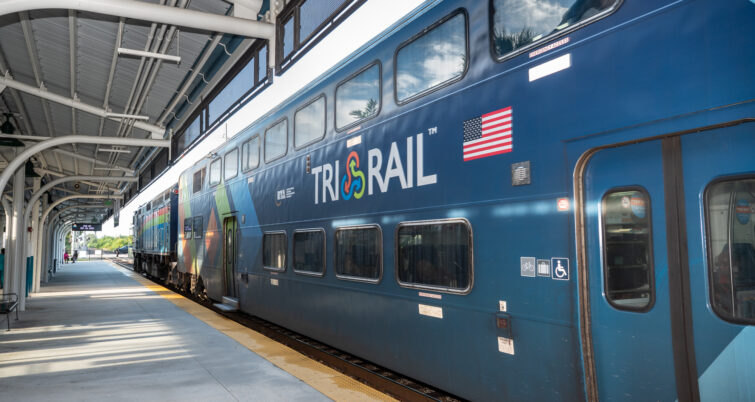
PALM BEACH, Fla. –– The continuing story of transit agencies running low on funding has a new chapter in South Florida.
The Palm Beach Post reported that Tri-Rail, overseen by the South Florida Regional Transportation Authority (SFRTA), has asked for a study to determine the feasibility and advisability of possibly raising fares by 10% in 2026. The Authority expects a report on the situation to be delivered by Feb. 27.
The Florida Department of Transportation fell short on its expected funding of $27 million when the agency’s budget was under consideration in July 2025. Tri-Rail officials say that this lack of funding threatens the future of the service, because in addition to the lack of state funding, it will have a $30 million deficit when COVID emergency funding is exhausted, with the agency saying it would have to stop running trains by July 2027. To avoid this, new funding sources must be found.
Tri-Rail officials point out that the FDOT’s failure to provide funding is not in line with the law, yet no legal action has been brought against the department. Apparently, Tri-Rail would rather take the matter up with the state legislature during the coming spring in an effort to try to re-think the funding decision.
Meanwhile, Florida DOT officials take the position that their agency already provides enough funding to Tri-Rail and believes that Palm Beach, Broward, and Miami-Dade counties should contribute more.
Raquel Regalado, a Miami-Date County commissioner and a member of the SFRTA board, said “We eventually need to raise our fares. We cannot ask our state partners to pay more, our county partners to pay more, and not raise the fairs. It’s not sustainable.”
Tri-Rail’s current estimate is that a 10% fare increase would provide around $740,000 and trigger a 97,000 passenger trip reduction because of the demand elasticity among riders. This estimate is based on the impact of fare increases at other rail commuter systems.
All told, even with the fare increase, Tri-Rail’s total annual revenue would be about $15.6 million, which represents about 13% of Tri-Rail’s annual $118 million operating cost.
The Tri-Rail team also pointed out that any federal money the agency receives is based in part on the level of ridership, so if ridership drops, the government funding could drop, too.
While Tri-Rail is definitely facing financial challenges, as are most public transportation entities in the United States, the service seems to be popular with the community it serves. The Post reports that in 2025, the agency provided 4.5 million passenger trips, which broke it’s prepandemic record of 4.4 million in 2019.