A Change in Perspective: Strong Vision, Sound Design
Written by David C. Lester, Editor & Jennifer McLawhorn, Managing Editor



Shutterstock / Patrick Daxenbichler
ATLANTA - From the March 2026 issue, executive leaders from engineering companies share their insights on industry growth, technology, and artificial intelligence.
Zephyr Rail: Engineering Innovations That Promote Safety, Increase Quality, and Keep Us on Budget and Schedule, Leveraging AI
By Jacqueline L. Patterson, PE, CCM, EdD, Chief Executive Officer, Zephyr Rail

Artificial intelligence has become a common topic across every industry, often framed in terms of disruption or job replacement. At Zephyr Rail, we apply AI in practical ways that improve safety, design quality, and project execution while preserving the fundamentals of sound rail engineering.
For decades, rail engineering and construction have relied on field data collected under Track & Time, frequently requiring flagging protection and on-track access. While these practices remain essential, they introduce inherent safety exposure, scheduling risk, and complex coordination. As rail corridors grow busier and project timelines tighten, the industry continues to ask how to reduce exposure and improve efficiency while still obtaining the high-quality data required to support informed engineering decisions.
Railroads are increasingly using AI to enhance operations and safety through applications such as predictive maintenance, wayside detector analysis, visual defect detection, and automated yard checks. Advances in AI-enabled drone technology and data analytics are now extending those benefits into the engineering and design space. At Zephyr Rail, AI-supported aerial platforms collect high-resolution corridor data—including top-of-rail elevations and track geometry context—without occupying the track or interrupting operations. Few organizations currently derive survey-grade top-of-rail information remotely, without Track & Time, at scale.
From a safety perspective, the implications are significant. Reducing on-track presence lowers worker exposure to live rail environments and minimizes reliance on complex access coordination. Simply put, the safest time on the track is no time at all. AI-enabled data collection allows teams to reserve track access for activities that truly require it.
Design quality also improves. Drone-based datasets provide consistent, repeatable coverage and dense point clouds that can be re-analyzed as designs evolve. This supports stronger QA/QC, improves confidence in alignments and profiles, and reduces the risk of missed conditions that can drive change orders during construction. AI does not replace railroad rules or engineering judgment. Instead, it is becoming a practical tool that complements established safety practices, helping rail professionals deliver safer projects, higher-quality designs, and more predictable outcomes.
Olsson: Putting People First in a Fast-moving Industry
By Ryan Kosola, P.E., Vice President and Rail Sector Leader, Olsson

The rail industry is fast-paced – and at Olsson, that’s exactly how we like it.
Freight doesn’t wait. Passenger agencies don’t wait. Neither do communities. But more than speed, our industry demands responsiveness, efficiency, and, above all, safety. If you serve railroads and public agencies, you learn quickly that these standards aren’t slogans – they’re cultural commitments. They guide how we mobilize, how we communicate, and how we design.
It’s exciting to serve an industry that continuously pursues a better way forward. Safety culture improves every year, driven by our railroad partners who are setting higher expectations and achieving stronger outcomes. At the same time, the industry demands efficiency. This expectation means fewer slow orders, faster project delivery, improved navigation of regulatory pathways, and advancement of projects without disrupting operations.
One of the most notable industry shifts we’ve observed involves the increasing interface between freight railroads and public agencies. Through federal grants and other safety-driven initiatives, we’ve seen stronger partnerships emerge. These collaborations move projects forward while preserving operational efficiency, striking a balance that benefits everyone.
So, what’s most essential to strengthening our role in a fast-paced, evolving industry that demands safety and responsiveness? The answer is simple: our people.
Olsson exists for its employees. That may sound inward-facing, but in practice, we’ve found that putting people first gives us the ability to match the pace of the rail industry. When you truly prioritize your people – their development, their well-being, their growth – it shows in how they serve clients. Employees who feel supported take ownership. And employees with ownership take care of their clients and projects.
From our perspective, this is a remarkable time to build a career in rail. Demand for expertise exceeds supply. Across the industry, talented professionals are stepping into meaningful roles. Our focus on people isn’t a strategy – it’s our identity. When you build an environment where professionals can thrive, innovation and client service follow.
The rail industry’s future is strong. And we’re proud to help shape it – one safe, responsive, and efficiently delivered project at a time.
Purposeful Growth, Broadened Capabilities Ahead for RailPros and Rail Industry
By Mark Wheeland, SVP Service Delivery, RailPros
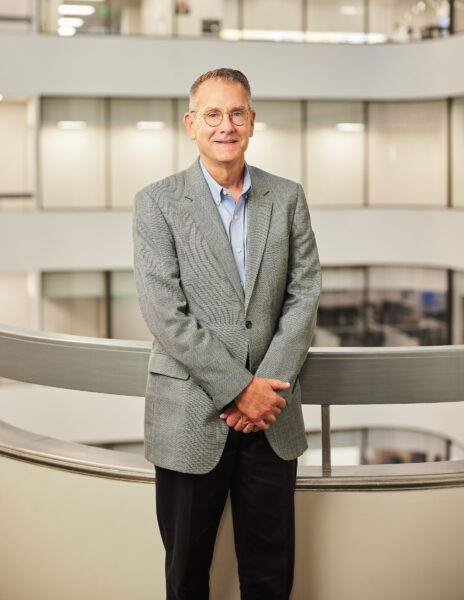
If 2025 proved anything, it is that RailPros is committed to purposeful growth in service of our clients. Over the past year, we have expanded our team, broadened our capabilities, and opened new offices across North America. That progress reflects not only our momentum, but also the transformation that continues throughout the railroad industry. As infrastructure demands rise and innovation accelerates, we continue to grow alongside the clients we serve. In 2026, railroads face evolving safety expectations, technological advancement, and increasing demand for efficient modes of transportation. In this environment, expertise must go beyond technical skill. Our clients need partners who understand operational, financial, and regulatory realities. We approach every engagement with an owner’s mindset – thinking strategically, acting quickly and decisively, and aligning our work with long-term performance and value.
Safety remains fundamental to everything we do. We believe it extends well beyond regulatory obligation. We are relentless in the pursuit of safety excellence – training, staying focused, and holding each other accountable as we make our way towards the goal of sending everyone home safely every day. Our Training team furthers this pursuit by creating and delivering comprehensive safety, compliance, and technical instruction across all rail disciplines, reinforcing accountability and risk awareness at every level.
Our Field Services team builds on that commitment. Our qualified railroad flaggers (RWICs) coordinate closely with dispatchers, train crews, contractors, and project teams to protect active rail operations. Through disciplined communication and strict adherence to Roadway Worker Protection requirements, they help safeguard personnel, equipment, infrastructure, and train operations. RailPros’ Utility Observation professionals provide oversight when third-party utilities work on or near railroad property. Acting as the railroad’s representative, they monitor activities to ensure compliance with engineering standards and safety requirements—preventing conflicts, protecting assets, and minimizing operational disruption.
Our Engineering services focus on strengthening rail infrastructure and operations. We provide civil and track design for industrial leads, sidings, and yard expansions, as well as bridge, structural, and site development engineering. With our recent acquisition of Diverging Approach, Inc., we now deliver fully integrated signal design, manufacturing, installation, testing, and commissioning—offering seamless end-to-end solutions. We also guide projects from planning through commissioning with program management, construction oversight, and inspection services.
Lastly, our Strategic Consulting team supports the freight and industrial rail sector, including manufacturing, ports, agriculture, and energy, by optimizing how rail integrates with their operations and facilities. Through conceptual and detailed track design, yard and switching evaluations, and operational and safety training, we identify clear, actionable improvements. Our planning, supported by network assessments, traffic flow analysis, and asset evaluations, helps clients allocatecapital wisely while maximizing long-term asset performance. Speed of execution sets us apart: we translate strategy into field-ready plans, coordinate stakeholders effectively, and accelerate project delivery to allow our clients to capture value quickly.
GFT and the Next Chapter of Freight Rail: Execution, Insight, Resilience
By Kevin Hicks, Freight & Rail Market Sector Leader, GFT
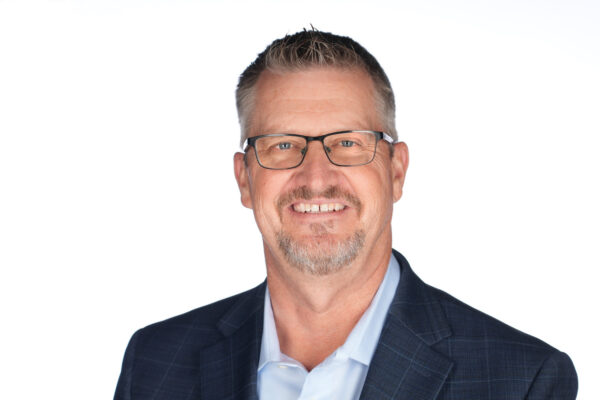
Freight rail enters 2026 with capital programs intact and very little tolerance for execution missteps. Safety performance keeps improving. Class I railroads continue to fund core bridge, track, and yard projects even with merger questions in the background. Federal grants still support sidings, terminals, and grade separations, while Congress wrestles with ideas to improve the speed of delivery of grants to get projects done more efficiently and less expensively. At the same time outage windows shrink, construction costs stay high, and railroad executives ask harder questions about risk, return and schedule certainty.
From my seat at GFT, one theme stands out. Execution depends on integration, data, and people working together from the start. Planning, engineering, and construction support need to align before crews reach the track. When that happens early, outages stay contained, and recovery does not spill into the next work window. When alignment slips, the cost of catching up grows fast.
The workforce transition continues to shape delivery in quiet but significant ways. Experienced railroaders are retiring, and their judgment cannot be replaced overnight. New engineers and inspectors are stepping into complex environments with less buffer than their predecessors had. Knowledge transfer has to be deliberate and embedded in active projects, not left to chance.
For 2026, I expect steady investment, tighter access, and more scrutiny. Firms that listen well, plan with discipline, and stand alongside freight railroads through the full program lifecycle will help expand capacity while sustaining the industry’s record safety performance.
HDR: Industry Insights
By Bill Hjelholt, Senior Vice President, Freight Rail, HDR
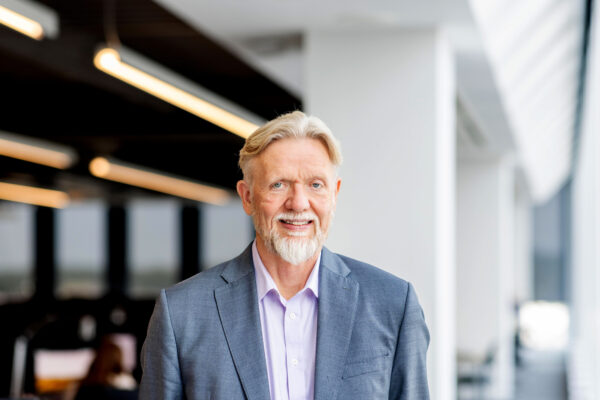
Already, 2026 is shaping up to be another exciting and successful year for the rail industry. Industry regulators have outstanding leadership, technology is accelerating innovation and capital is being allocated for growth.
The industry faces the possibility of supply chain shifts if the UP-NS merger is approved. Uncertainties impacting global supply chains also continue to pose a challenge. But steady hands are managing these challenges and guiding ongoing investment. Every Class I railroad posted growth in 2025, despite substantial headwinds like trade agreement resets and hurricanes.
Severe weather events will continue to challenge the industry. CSX and NS spent hundreds of millions of private money to restore services destroyed by Hurricane Helene; I feel the industry does not get enough credit for the public benefits this private money generates. The efficiency of freight rail boosts the productivity of the nation. While it’s impossible to fund a systemwide hardening of all infrastructure, we see the railroads incorporating resilience upgrades into their projects, sometimes with federal support that recognizes the public benefits.
I just attended the AASHTO Council on Rail Transportation Winter Meeting. It was encouraging to see the FRA, the state DOTs, Class I and Short line railroads come together with thought leaders from the consulting industry to address challenges that can only be met through communication and collaboration. Away from the blue light glare of social media clickbait, I was impressed at the shared focus on railway safety priorities: road-rail crossings. Hundreds of avoidable deaths occur every year at railway crossings, where risky human behavior continues to overcome the best efforts of technology and regulation. There is broad consensus and renewed commitment to advance crossing safety initiatives. The Railway Crossing Elimination Grants (RCE) are a shining example, and many of the 70+ grants the FRA has obligated so far this year are RCE.
Short lines and Class II railroads seem to be entering their Golden Age. CRISI grants and private equity investments provide financial support, while they continue to upskill their human equity with great leadership. A functional partnership with Class Is has evolved that allows each to do what they excel at, and this creates opportunity for the short line industry.
Looking ahead, ongoing investment in technology and innovation will continue to boost safety and reliability metrics. We sense the regulators are trying to catch up and also protect rules that have served well in the past. At HDR, our data science practice group is achieving amazing things for our clients. We are investing heavily in AI. HDR adopted two AI platforms, and we are training our people as “citizen-practitioners”; empowering thousands of our staff to generate smart tech solutions without relying on IT specialists or custom software. HDR also embraces uniquely human abilities.
It’s our people who help prioritize objectives to develop solutions that optimize economic and social benefits while minimizing adverse impacts. With strong partnerships and strategic investments, the industry is well positioned to navigate challenges to seize opportunities ahead.
Media
RELATED ARTICLES