Engineers Under 40: Recognizing Tomorrow’s Leaders Today
Written by David Lester, Editor-in-Chief and Jennifer McLawhorn, Managing Editor


Shutterstock - Poguz.P
ATLANTA - RT&S profiles 13 individuals for the annual recognition program, Engineers Under 40.
Shawn Baer
Assistant Vice President Structures, Genesee & Wyoming
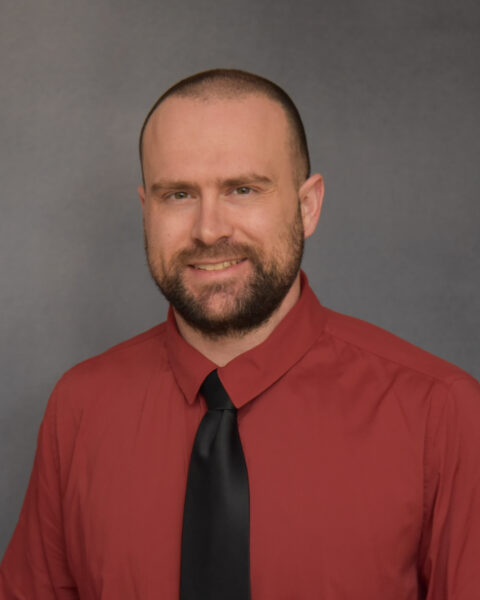
At Genesee & Wyoming, Shawn has ensured that thousands of rail bridges are safe and compliant for operations. His work managing structures in the Northeast U.S. and responding to outages and completing critical projects helps keep the railroad running, enabling G&W to provide dependable rail freight transportation for new and long-term customers alike. Shawn has brought several new technology initiatives to fruition while planning and executing sound structural projects. Shawn manages 2,145 Active Structures with 3,765 Active Spans between Pittsburgh, Pa. and Auburn, Maine.
Shawn has been very successful in quick and sound decision making responding to challenges including structural component failures due to weather, bridge strikes by third parties, as well as capital planning.
In addition, he has mentored track personnel, teaching them what to look for during track inspections related to structures, culverts and slope conditions.
Shawn wants to continue his passion for learning all aspects of the industry and to become a more well-rounded railroader as he supports G&W railroads. He also aims to be more involved in AREMA.
Andrae Banton
Senior Electrical Engineer, Long Island Rail Road
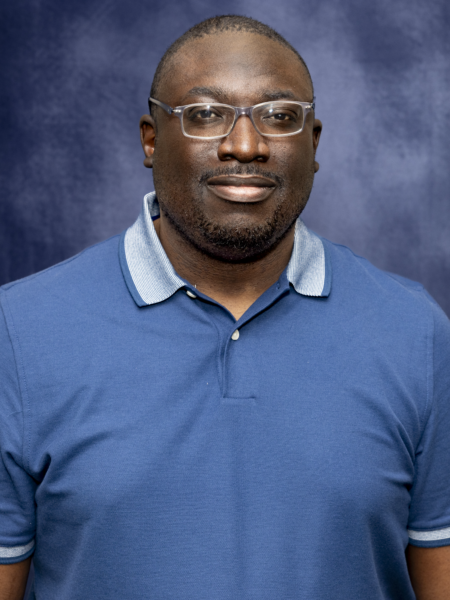
Since joining the MTA Long Island Rail Road in 2016 as a Junior Engineer, Andrae J. Banton, P.E., has gained progressively responsible experience across a wide range of fleet engineering projects and currently serves as a Senior Electrical Engineer in Equipment Engineering. His work has contributed to fleet modernization, onboard technology improvements, and compliance with federal safety requirements. Early in his career, Andrae supported the development and installation of passenger-area camera systems across the fleet. He now serves as the lead engineer for implementing the Federal Railroad Administration mandate requiring front-facing locomotive cameras and crashworthy memory modules, an initiative that strengthens operational transparency and post-incident analysis.
Andrae also played a key role in integrating new locomotive technology into the existing passenger fleet. As part of the introduction of Siemens Charger locomotive units, he addressed the challenge of integrating the locomotives’ industry-standard 27-pin communication and control system with the 36-pin trainline used by the existing C-3 coach fleet. To verify compatibility and ensure proper operation, he designed specialized diagnostic test equipment used to validate trainline communication and operational logic between locomotives and coaches.
In addition, Andrae has contributed to improvements in onboard communication networks, automatic vehicle monitoring systems, and onboard router technology. His work includes system testing, configuration, engineering analysis, technical documentation, and training of maintenance personnel. One of the most technically challenging problems Andrae solved involved updating the onboard automatic station announcement system, which operates on a legacy architecture developed more than 30 years ago using an MS-DOS-based platform.
Andrae Banton’s professional goal is to continue advancing rail fleet technology by leading increasingly complex fleet-wide system upgrades that improve safety, reliability, and regulatory compliance.
Christopher DelGallo
Division Engineer, Norfolk Southern

Christopher “Chris” DelGallo has built his career in railroad engineering through hands-on leadership across a range of operational environments and large-scale infrastructure projects. He entered the industry as a laborer with the Wheeling & Lake Erie Railroad before completing two internships with Norfolk Southern in Bellevue, Ohio, during the Moorman Yard expansion project that doubled the size of the class yard. After graduating, he joined Norfolk Southern as a management trainee and has since taken on progressively broader responsibilities, reflecting increased scope, leadership, and impact, across roles including assistant track supervisor, track supervisor, engineer of track, and now division engineer for the Gulf Division of Engineering’s Maintenance of Way & Structures (MW&S) team. In total, he oversees 4,400 track miles that span seven states from Virginia to New Orleans. His career spans multiple regions—including St. Louis, Mount Vernon, Grand Junction, Kansas City, Chicago, Roanoke, Altoona, and Birmingham—gaining both breadth of exposure and deep, on-the-ground experience across varied operating environments.
In his current role as division engineer in Birmingham, Chris plays a key role in several significant capital projects, including the Warrior Coal and 3B infrastructure initiatives supporting increased capacity and operational efficiency. His responsibilities include overseeing material shipments, coordinating outage planning, and providing direct field leadership during execution. He takes a hands-on approach to project management, working alongside field supervisors to organize resources and ensure complex infrastructure work is completed safely and efficiently.
DelGallo’s long-term goal is to build on the strong safety culture and operational momentum within the division while strengthening collaboration across departments. He believes that sustained operational excellence depends not only on engineering performance but also on strong relationships and teamwork across the railroad. As a third-generation railroader, Chris draws on more than 85 years of combined family experience.
Michael Delibero
Product Development Manager, ENSCO

As a Product Development Manager for ENSCO Rail, Michael has focused his leadership on the Ultrasonic Rail Flaw Detection System product line, driving improvements that directly strengthen rail safety, reliability, and operational efficiency. Michael has led the development and maturation of leading-edge ultrasonic testing capabilities for the rail industry, translating modern sensing and system concepts into practical tools that can perform in demanding field conditions.
A hallmark of his impact has been his pivotal role in delivering ENSCO’s first high-speed ultrasonic rail flaw detection system, an important development that enables effective inspection at speeds up to 50 mph. Through his product leadership, Michael has helped move ultrasonic inspection from incremental improvement to genuine performance advancement, raising the bar for what high-speed, high-quality rail flaw detection can look like in day-to-day railroad operations. His contributions have strengthened the industry’s ability to detect rail defects faster, with less disruption, and with a clearer path to scalable deployment.
Through persistence, accountability, and hands-on leadership across the full development lifecycle, Michael overcame schedule pressure and elevated expectations to deliver a high-performing product on time and with measurable impact.
His ability to balance technical rigor with execution focus has helped the team deliver meaningful capability advancements on schedule while maintaining a high standard of quality and professionalism.
Marcus Dersch
Senior Principal Research Engineer, University of Illinois Urbana-Champaign

As a Senior Principal Research Engineer at UIUC, Marcus is faced with challenges in management of large-scale research and testing projects in full scale laboratories – and in coordinating with host railroads to conduct experimentation on track.
Additional challenges Marcus has overcome relate to management of procurement of materials and supplies needed to carry out testing – in an environment where rules are frequently changing. Here are some of the example impacts Marcus has had on the rail industry through his research leadership role in RailTEC UIUC:
- Improved mechanistic–empirical design of track components (crossties, fasteners, ballast, under‑tie pads) by leading field and lab research.
- Enhanced safety through better management of rail stresses, neutral temperature, and buckling risks – improving rail adjustment practices.
- Modernized inspection with UAVs, 3D laser scanning, machine learning, and automated change‑detection systems.
- Improved quantification of wheel loads and track loading environments to support maintenance and design – developed a new small system for quantifying wheel flats.
- Acquired and promoted understanding of ballast and substructure behavior, including performance in transition zones.
- Developed predictive models for track degradation and component health.
- Influenced industry standards and best practices through committee leadership and technical guidance. Spent nine years in Committee 30 leadership for AREMA.
- Advanced resilient track components such as engineered interspersed sleepers and under‑ballast mats.
- Improved data‑driven planning for track life‑cycle management and component replacement strategies.
- Translated research findings into practical solutions adopted by railroads, agencies, and industry partners.
- Served as a dedicated mentor by advising and developing the next generation of railway engineers and researchers.
- Grew a strong, collaborative research program that integrates advanced technologies such as sensing, machine learning, and automated inspection.
- Contributed to national standards and professional organizations to influence best practices across the rail industry.
Alaina Elias
Signaling Project Engineering Performance Lead – North America, Alstom

Alaina Elias has contributed to the rail industry through advanced signaling system engineering, technical leadership, and engineering performance initiatives supporting major transit programs. From 2018 through January 2022, she served as a System Application Engineer on the Eglinton Crosstown Light Rail Transit project, one of North America’s most complex transit infrastructure programs. In this role, she supported implementation of advanced signaling and control systems, translating system design into functional application, resolving technical challenges, and coordinating across engineering interfaces critical to project delivery. She also supported Urbalis Flo signaling programs, where she developed and maintained core system data structures, created track schematics representing physical and logical system elements, and modeled system configurations used by subsystems. This work required precision, systems understanding, and cross-discipline coordination. Alaina progressed into leadership roles including Technical Lead and Engineering Domain/Metier Group Manager, leading teams of System Application Engineers supporting projects across the Americas. She developed a training program from scratch, improved team capability, and supported resource planning and technical
problem solving.
Elias’ professional goals focus on advancing sustainable transportation through high-performing railway systems and strong engineering organizations. She aims to continue contributing to large-scale signaling and transit programs while improving the processes, performance frameworks, and measurement approaches that enable consistent, efficient, and high-quality delivery. Her long-term goal is to operate at the intersection of technical engineering, organizational performance, and workforce sustainability by helping engineering teams perform at a high level while ensuring the industry continues to grow, evolve, and reflect the communities it serves.
In summary, Alaina gives back both at Alstom and to the community in a multitude of ways: Founder, Alstom Women of Excellence Pittsburgh Chapter (2021), Alstom Women of Excellence North America Chair (current), Alstom Pittsburgh Site Mental Health Champion, American Foundation for Suicide Prevention Volunteer raising more than $20k, Led event and partnership initiatives with Alstom, University of Pittsburgh Swanson School of Engineering, Alumni speaker and presenter. Alaina has demonstrated leadership through technical team management, organizational initiatives, and culture-focused industry impact.
Emmanuel Grospe
Director of Operations Analytics & Reporting, RailPros

In his 7+ years in the rail industry, Emmanuel Grospe has made critical contributions, helping deliver numerous significant and award-winning rail engineering projects in California. Emmanuel has more than 8 years of experience and knowledge in project controls, scheduling, data analysis and modeling, reporting, and system implementation. His technical experience includes developing baseline project schedules and integrated master schedules, cost management, contract administration, design, implementation, and management of Project Management Information System (PMIS), and business process improvements. Emmanuel made significant contributions to the Los Angeles Union Station (LAUS) Rail Yard Rehabilitation and Modernization Project for Southern California Regional Rail Authority (SCRRA). This critical $67 million+ rehab project was a highly complex undertaking that modernized legacy track and signal infrastructure, enhancing sustainability and long-term performance in one of the most critical areas of Metrolink’s network. As the Project Controls Manager, Emmanuel oversaw schedule development/management and cost monitoring. He also implemented PM systems and processes and was instrumental in leveraging Microsoft SharePoint, Teams, Planner, and Power BI to foster collaboration and transparency between the project team, SCRRA, and contractors. The completed project won both regional and national awards from the Construction Management Association of America (CMAA).
Grospe’s professional goal is to advance how data and analytics are used in the rail industry to improve project and program performance. He is focused on applying advanced analytics, AI, and machine learning to transform raw project data into clear, actionable insight that helps clients make better, faster, and more informed decisions. Through his work, clients have been able to address some of their most challenging problems ranging from schedule risk and funding constraints to safety prioritization by relying on structured, transparent, data-driven tools rather than fragmented reporting.
Brandon Klevans
Signal Engineer I, CSX

Brandon has played a pivotal role in advancing CSX’s signal engineering and power technology capabilities, delivering innovations that directly improve operational efficiency, reliability, and safety across the network. He led the development and implementation of CSX’s new Limited Approach Limited and Limited Approach Medium standard signal aspects—representing the first new signal aspects added to the company’s operating rule book in more than 30 years. These enhancements are now being widely deployed, with over 100 field installations to date and have received overwhelmingly positive feedback from train crews for improving train handling and operational consistency.
In addition to his signal modernization work, Brandon piloted a new hybrid operating and standby power technology for yard switches that significantly outperforms traditional lead acid battery systems. The solution delivers longer duty cycles and extended standby power, reduces weight, and eliminates the need for hazardous disposal handling. Due to its proven reliability and performance, the cross functional team supporting the pilot has elected to leave the installations in place and formally adopt the technology as the new standard yard switch power solution across CSX. Through these contributions, Brandon has demonstrated exceptional technical leadership, innovation, and cross functional collaboration—driving measurable improvements that position CSX for long term operational excellence and earning him recognition as a clear rising star within the organization.
Brandon is an emerging railroad signal engineer with four years of experience who is focused on expanding his role in developing and implementing advanced signal engineering solutions that leverage new and evolving technologies. He is highly motivated to take on increasingly complex and high impact projects that broaden his technical expertise and deepen his understanding of large-scale railroad operations.
Colin McGrane
Assistant Director of Project Management & Deputy Project Manager, Metro-North Railroad

Colin’s professional goals center on advancing resilient rail infrastructure while strengthening the next generation of railroad engineers.
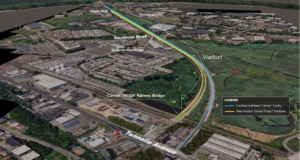
Colin demonstrates leadership through technical command, cross-functional coordination, and mentorship. On the Park Avenue Viaduct Replacement Project, he serves as the central coordination point between the Design-Builder, Metro-North operations, Maintenance of Way, and MTA Construction & Development. The project requires precision planning to execute intensive weekend outages without disrupting weekday service for nearly 225,000 daily riders. Colin leads outage planning meetings, aligns construction sequencing with railroad operations, and ensures that structural, track, and systems work is fully integrated. Beyond project delivery, Colin actively mentors junior engineers and oversees three engineering trainee graduates.
One of the greatest challenges of the Park Avenue Viaduct Replacement Project is replacing major structural elements on a 133-year-old elevated railroad that cannot be completely taken out of service. The project team must demolish and replace two-track bridge spans within tightly constrained weekend windows while ensuring the adjacent two tracks remain operational. Early in the construction phase, sequencing complexities and coordination between disciplines posed schedule risks. Colin worked closely with field personnel, railroad maintenance forces, and the Design-Builder to refine outage work plans, improve pre-fabrication strategies, and enhance real-time communication protocols. Through structured planning sessions and continuous improvement after each outage, production efficiency increased significantly, culminating in peak weekends where six two-track spans were replaced successfully. By turning operational constraints into structured execution strategies, Colin helped transform one of the most logistically complex rail bridge replacement efforts in the country into a repeatable, high-performing program—demonstrating resilience, adaptability, and engineering leadership under pressure.
Tim Robinson
Assistant Chief Regional Track Engineer, Canadian National

A railway engineer trusted to lead at every level, Tim Robinson represents a rare and powerful combination in modern railway engineering: a technically rigorous engineer, a proven operational leader and a trusted executive advisor who has worked at the very center of corporate decision-making. He exemplifies the next generation of railway engineering leadership – deeply grounded in operations and guided by a strong sense of stewardship for the railroad and the people who run it.
Some of Tim’s recent accomplishments include:
- Data driven, risk-based engineering initiatives that significantly improved long train safety, reliability, and network fluidity on critical freight corridors.
- Delivered measurable safety and performance outcomes, including a 50% reduction in in service failures on one of CN’s most heavily trafficked subdivisions.
- Bridged engineering, operations, and executive leadership, ensuring technical solutions were operationally practical and trusted by field teams.
- Championed field-engaged change implementation, building adoption through transparency, dialogue, and respect for frontline expertise.
- Strengthened enterprise-level decision making through system-wide thinking, translating complex engineering and operational insights into clear executive guidance.
- Demonstrated values-based leadership during periods of uncertainty, supporting safe and reliable rail operations through major network wide challenges.
Leadership that comes prepared, Tim Robinson’s goals are rooted less in titles and more in stewardship, capability, and trust. One of the most significant challenges Tim Robinson encountered was navigating rail operations through the COVID 19 pandemic, a period when the railroad was required to continue operating as an essential service amid rapidly evolving health guidance and widespread uncertainty.
Michelle Sabers
Junior Design Engineer, Structures, Zephyr Rail
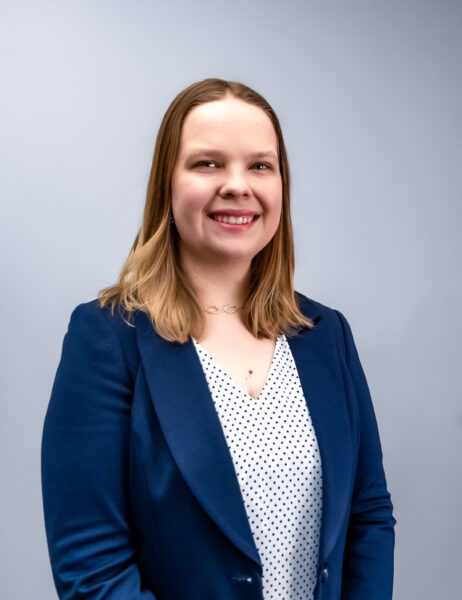
Michelle Sabers exemplifies the new wave of rail infrastructure leaders, engineers who blend innovative structural research, practical field experience, regulatory expertise, and a commitment to advancing the rail industry. Less than three years after earning her undergraduate degree, Michelle is already making an impact on major rail and transit projects throughout California. Her rapid progress showcases exceptional technical skill, proactive problem-solving for constrained right-of-way issues, and leadership within professional groups. She is not just involved in infrastructure projects; she actively influences and shapes their development. Michelle considers engineering a public trust, recognizing that the infrastructure we create benefits communities for generations. She approaches her work with integrity, curiosity, and a profound respect for the responsibilities of our profession. Michelle stands out not only for her ability to perform her tasks effectively but also for her way of thinking like a senior engineer. She anticipates constraints, suggests refined structural solutions in tight right-of-way situations, and seeks ways to enhance internal processes for future projects. She does not wait for instructions; she proactively offers solutions.
Sabers currently serves as the Treasurer for ASCE’s Orange County Younger Member Forum (2025) and as PE/FE Review Chair, aiding emerging engineers in licensure preparation. Previously, she held roles such as Treasurer of the Earthquake Engineering Research Institute (UCI Chapter), Secretary of Chi Epsilon (UCI Section), and Team Captain for a collegiate Seismic Design Competition. These positions involved managing finances, leading organizations, and coordinating technical efforts. Michelle also guided Zephyr Rail’s involvement in the Samaritan’s Purse Operation Christmas Child shoebox drive during the 2025 holiday season. Although the initial target was 10 boxes, her leadership led Zephyr Rail to donate 55 boxes.
Terence Savage
Specialist Track Evaluation, Canadian Pacific Kansas City (CPKC)
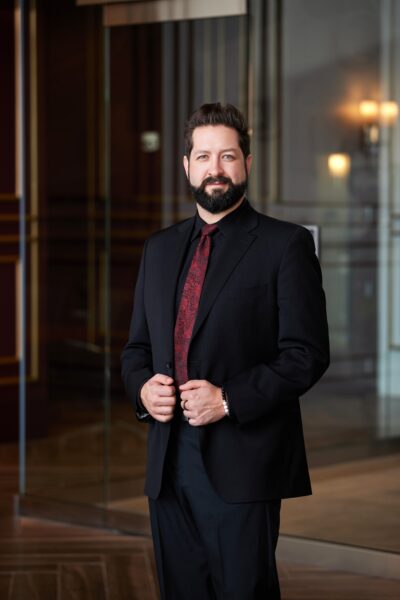
Terry has played a pivotal role in developing advanced rail testing technologies and industry-leading analytical tools at CPKC. Through in-house methodologies and algorithms, Terry has enabled comprehensive, real-time monitoring of track conditions and critical assets, including ties, ballast and other vital track materials. Terry’s work sits at the intersection between data collection and data analyzation, finding him working both in the field and in office. His work is one that handles an astounding level of data that he must parse through to both analyze for the betterment of the company and pass along to relevant stakeholders.
As a leader, he has delivered immediate and lasting benefits by reducing derailments, extending asset life, minimizing slow orders and driving safer, more efficient rail service. By empowering his team and leveraging cutting-edge measurement and analytics, he enabled CPKC to achieve a step-change in operational safety, reliability and efficiency across its entire network. He served as Project Manager Lead for the Automated Track Geometry Measurement System boxcar initiative, overseeing the full lifecycle from design and construction to deployment and utilization. He managed all aspects of the project, including cross-functional communication, ensuring successful implementation from start to finish.
The Track Stress Index’s reliability and accuracy require consistent refinement, which presents significant opportunities for Terry. He must manage millions of data points and continually adjust complex calculations. Much of the validation process is dependent on field leaders to confirm accuracy. This demands substantial time and precision, frequent engagement and real-time tweaking and considerable discretionary effort to ensure the Index remains robust and effective. As a result, confirming accuracy is an ongoing process, introducing both uncertainty and risk. Terry approaches this challenge with strategic thinking and a warm attitude that welcomes collaboration and feedback as he continues to improve upon technology that already performs at a high level, just like Terry himself.
Kylie Steel
Group Leader, Olsson

Kylie Steel is driving meaningful innovation in the railroad industry through her exceptional ability to deliver creative, constructible structural solutions that keep trains moving during complex infrastructure projects. As a Group Leader in Olsson’s Rail Engineering and Design team, she combines deep technical expertise with practical design intuition, directly strengthening the reliability and safety of rail networks across the country. Kylie has earned industry-wide recognition for her talent in solving unconventional structural challenges—projects with tight geometry, complex staging, aging infrastructure, or narrow construction windows where standard solutions simply don’t work.
A powerful example is her work on Union Pacific Railroad’s Miller Yard Bypass Track project, where she developed an innovative 14 segment precast concrete box culvert with a post tensioning and tongue and groove system. This approach enabled track rerouting and bridge replacement under aggressive time constraints while maintaining yard operations. She later presented this work at the 2021 AREMA Annual Conference, establishing her as a trusted structural problem solver within the rail community. A major focus of Kylie’s professional goals is strengthening industry knowledge around complex structural design and constructability. Through research, national presentations, and collaboration with Class I railroads, she intends to expand the field’s understanding of how innovative structural systems—such as segmental precast solutions, pier protection design, and advanced staging configurations—can be applied to accelerate construction while maintaining safe operations.
Media
RELATED ARTICLES