Automatic Train Operation (ATO) Used On WMATA Red Line Cannot Be Expanded To Other WMATA Lines For Time Being (Updated and Corrected 4/18/25)
Written by David C. Lester, Editor-in-Chief


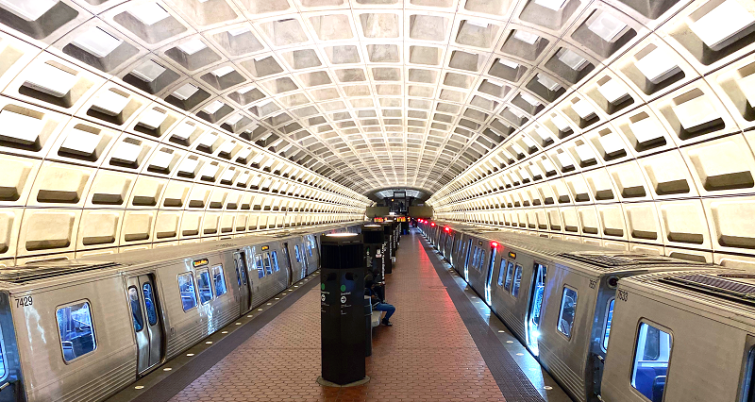
WMATA
WASHINGTON, D.C. –– The Washington Metrorail Safety Commission has directed WMATA to not expand the use of Automatic Train Operation beyond the Red Line for the time being. OUR ORIGINAL STORY FROM EARLIER THIS WEEK HAD A COUPLE OF ERRORS AROUND REFERENCES TO AUTOMATIC TRAIN OPERATION AND AUTOMATIC TRAIN CONTROL. WE REGRET THE ERRORS AND APPRECIATE WMATA POINTING THEM OUT. THESE ERRORS HAVE BEEN CORRECTED AND THE STORY UPDATED. MOST READERS LIKELY KNOW THERE IS A DIFFERENCE BETWEEN AUTOMATIC TRAIN CONTROL AND AUTOMATIC TRAIN OPERATION. FOR A FULL DEFINITION OF EACH, READERS ARE REFERRED TO THE INTERTECH RAIL WEBSITE LISTED AT THE END OF THE STORY. DCL
WMATA’s safety record and its relationship with (and creation of) the Washington Metrorail Safety Commission provide important background for understanding the reaction to the recent station overruns.
After an accident in 2009 (see below), the automatic train control system used by WMATA was turned off. Although the NTSB determined that the ATO was not the cause of the accident, it was turned off and remained off until December 2024, when it was reactivated on the Red Line. Since December, the Washington Post reports that 217 trains operated by ATO have overrun stations, which is 10 times the number of overruns of trains operated by drivers. A spokesperson from WMATA confirmed to RT&S that there have been 217 station overruns, but added that it considers this to “a reliability problem and not a safety problem.” Moreover, WMATA said that “We have had zero red signal violations on ATO.”
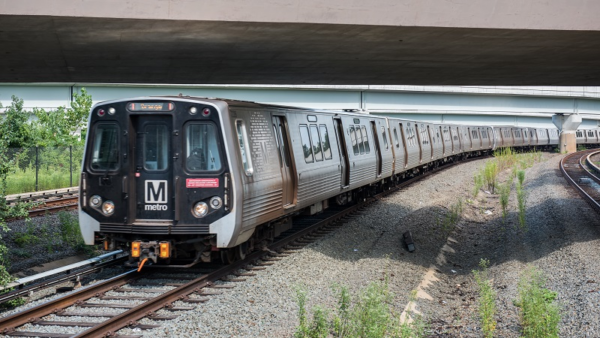
WMATA Photo
The WMATA system has suffered a variety of operating problems and safety challenges for the past several years. Since the system was opened in 1976, there have been two deadly crashes and a tunnel fire that killed a passenger.
1996 Accident
In January 1996, when WMATA trains still operated in ATO mode, strong winter weather had passed through the city and there was ice and snow on many of the tracks. A number of Red Line trains were overshooting stations, and the Washington Post reported that one driver checked with superiors to see if they might be running the trains too fast for the winter weather conditions. WMATA officials, though, told the operators to continue allowing ATO to run the trains at the normal speed.
This operator, Darel W. Callands, died at the controls of his train when it crashed into a standing train at the Shady Grove Station. The National Transportation Safety Board’s report on the accident provided the probable cause:
“We determined that the probable cause of this accident was the failure of Washington Metropolitan Area Transit Authority management and board of directors (1) to fully understand and address the design features and incompatibilities of the automatic train control system before establishing automatic train operation as the standard operating mode at all times and in all weather conditions, (2) to permit operating department employees, particularly Operations Control Center controllers and supervisors, to use their own experience, knowledge, and judgment to make decisions involving the safety of Metrorail operations, and (3) to effectively promulgate and enforce a prohibition against placing standby trains at terminal stations on the same track as incoming trains. Contributing to the severity of the injuries to the train operator was the disproportionate amount of crush sustained by the lead cars of the colliding trains.”
2009 Accident
In 2009, two WMATA trains collided and nine people were killed. Initially, the cause was thought to be something to do with automatic train operation, but it was determined that faulty signals in the tracks, and not the automatic train operation, were the cause of the accident. The National Transportation Safety Board’s report on this accident concluded:
“The National Transportation Safety Board determines that the probable cause of the
June 22, 2009, collision of Washington Metropolitan Area Transit Authority (WMATA)
Metrorail train 112 with the rear of standing train 214 near the Fort Totten station was
(1) a failure of the track circuit modules, built by GRS/Alstom Signaling Inc., that caused the
automatic train control system to lose detection of train 214 (the struck train) and thus transmit
speed commands to train 112 (the striking train) up to the point of impact, and (2) WMATA’s
failure to ensure that the enhanced track circuit verification test (developed following the 2005
Rosslyn near-collisions) was institutionalized and used systemwide, which would have identified
the faulty track circuit before the accident.
“Contributing to the accident were (1) WMATA’s lack of a safety culture, (2) WMATA’s
failure to effectively maintain and monitor the performance of its automatic train control system,
(3) GRS/Alstom Signaling Inc.’s failure to provide a maintenance plan to detect spurious signals
that could cause its track circuit modules to malfunction, (4) ineffective safety oversight by the
WMATA Board of Directors, (5) the Tri-State Oversight Committee’s ineffective oversight and
lack of safety oversight authority, and (6) the Federal Transit Administration’s lack of statutory
authority to provide federal safety oversight.
“Contributing to the severity of passenger injuries and the number of fatalities was
WMATA’s failure to replace or retrofit the 1000-series railcars after these cars were shown in a
previous accident to exhibit poor crashworthiness.”
After this accident, even though automatic train operation was not the cause, the accident revealed that there were other problems at WMATA, namely maintenance and infrastructure issues. Also, as noted earlier, automatic train operation was turned off after the 2009 accident and has remained off since then, and only reactivated on the Red Line in December 2024.
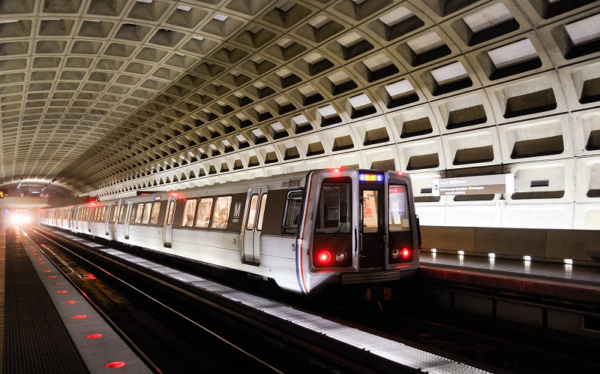
WMATA Photo
2015 Tunnel Fire
The NTSB report on a 2015 tunnel fire, which it called a “smoke and electrical arcing accident” says the accident occurred on the afternoon of January 12, 2015. The train was a southbound WMATA Yellow Line train, and had about 380 passengers aboard. After encountering heavy smoke in the tunnel between L’Enfant Plaza station and the Potomac River bridge in Washington, D.C., the train stopped.
The train’s operator informed the Rail Operations Control Center (ROCC) that the train was filling with smoke and needed to return to the station. Meanwhile, another WMATA train, which was following the stopped train, was allowed to enter L’Enfant Plaza Station, yet the station was already filling with smoke. Because of the trouble causing the fire, the train stuck in the tunnel was unable to move because the third rail power was lost. Passengers began to evacuate the train, some by themselves and others with the assistance of first responders. The accident injured 91 people, including passengers, first responders and WMATA employees. One passenger died.
The NTSB report of probable cause concluded:
“We determined that the probable cause of the Washington Metropolitan Area Transit Authority L’Enfant Plaza station electrical arcing and smoke accident was a prolonged short circuit that consumed power system components resulting from the Washington Metropolitan Area Transit Authority’s (WMATA) ineffective inspection and maintenance practices. The ineffective practices persisted as the result of (1) the failure of WMATA senior management to proactively assess and mitigate foreseeable safety risks and (2) the inadequate safety oversight by the Tri-State Oversight Committee and the Federal Transit Administration. Contributing to the accident were WMATA’s failure to follow established procedures and the District of Columbia Fire and Emergency Medical Services Department’s being unprepared to respond to a mass casualty event on the WMATA underground system.“
WMATA Photo
This accident, in addition to the two previous ones along with other alleged troubles and mismanagement, led Congress to create the Washington Metrorail Safety Commission in 2017 to perform safety audits and oversee safety compliance at the agency.
Current Status of Station Overruns
Regarding the current station overruns, the Post reports that the Washington Metrorail Safety Commission is not requesting or requiring that WMATA turn ATO off on the Red Line, but to bring in engineering experts, possibly from the NTSB, to determine what is wrong and correct it. In addition, a Commission spokesperson said that [“all commissioners] agreed that WMATA has not used safety management and engineering principles to determine reasons for the station stopping failures in ATO.”
An area of agreement between both WMATA and the Commission is that the ATO system, which was designed in the 1960s, needs to be upgraded to a more modern and robust version.
Further Reading on WMATA and the Washington Metrorail Safety Commission
For a story on wheel problem resolution, please see the Railway Age article below:
https://www.railwayage.com/passenger/rapid-transit/wmata-addressing-pressing-problem
FOR A COMPLETE DISCUSSION AROUND THE DIFFERENCES BETWEEN AUTOMATIC TRAIN CONTROL AND AUTOMATIC TRAIN OPERATION, PLEASE SEE THE FOLLOWING INTERTECH RAIL WEBSITE:
https://www.intertechrail.com/articles/atp-atc-and-ato-explained-demystifying-railway-automation