East River Tunnel Rehab Project is Chugging Along
Written by Jennifer McLawhorn, Managing Editor


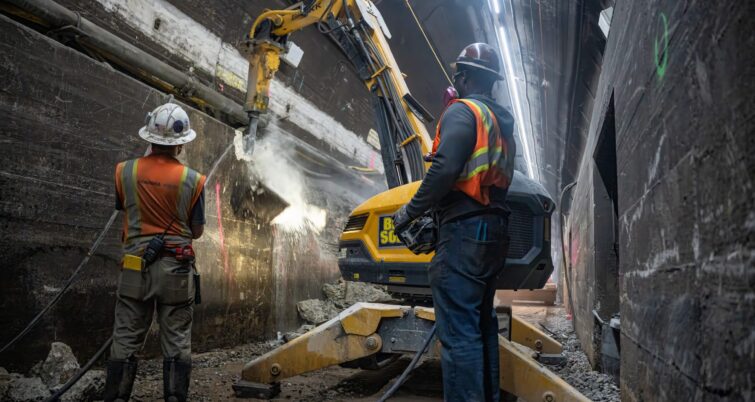
Crews conduct bench wall demolition.
Amtrak
NEW YORK CITY - Amtrak has shared progress on its East River Tunnel Rehab project.
In May, RT&S reported that “Line 1 preparation activities were performed in the months preceding the closure that began over Memorial Day weekend. These include ‘repairing damaged sections of bench wall, sealing the tunnel liner to prevent water infiltration, replacing third rail, and making signal and power upgrades throughout Lines 1, 3, and 4.'” By July, the project had finished its decommissioning phase, including the power and signaling, as well as installing temporary power, lighting, and ventilation fans. Over the summer, crews worked to remove track and ballast and install temporary systems, “before advancing bench wall demolition across portions of the tunnel sections.” During five 55-hour weekend outages, crews worked on signal infrastructure including “enclosures, transformers, conduits, and cables.”
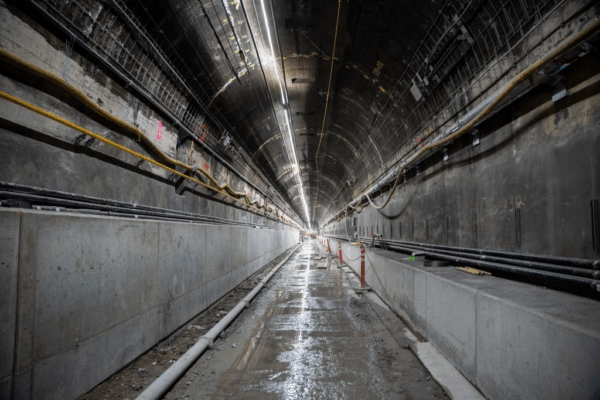
Now, Amtrak has shared another progress update on the project. Throughout October, the first section of concrete was poured for the new tunnel benchwalls. These walls, Amtrak says, run alongside both side of the tunnel and house heavy duty electrical conduits and provide emergency egress. Crews developed a modern configuration (pictured, left) to feature a high benchwall on one side and a low benchwall on the other. The low benchwall will “provide improved access beneath trains in the event of a delay or maintenance issue that must be resolved underneath the train.”
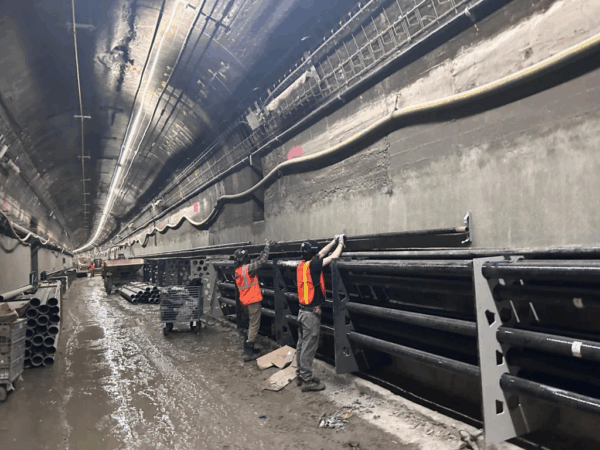
The benchwall construction process follows 9 steps as follows. First, the bulk bench wall is demolished with debris removed. Secondly, the remaining bench wall is trimmed to the finished design profile before spall repairs and grouting are performed. After, crews install duct bank spacers and new conduits before setting the formwork. Then, the process calls for concrete lines to be installed for concrete placement, and a working platform is installed. Lastly, concrete is placed. The steps, Amtrak says, follow an “aggressive, yet realistic, schedule.” By mid-December, crews placed over 11,000 linear feet of benchwall since the first pour. Once line 2 is finished, it will have around 14,000 cubic yards of concrete.
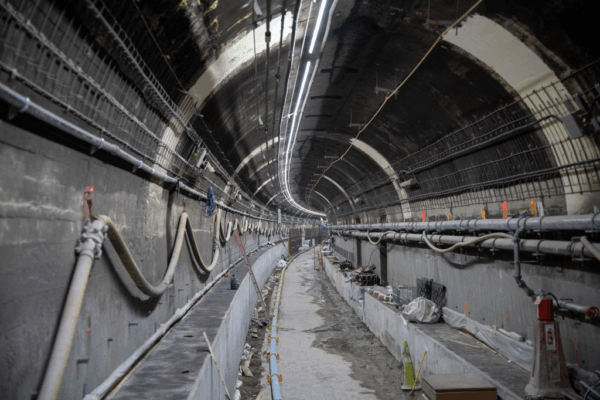
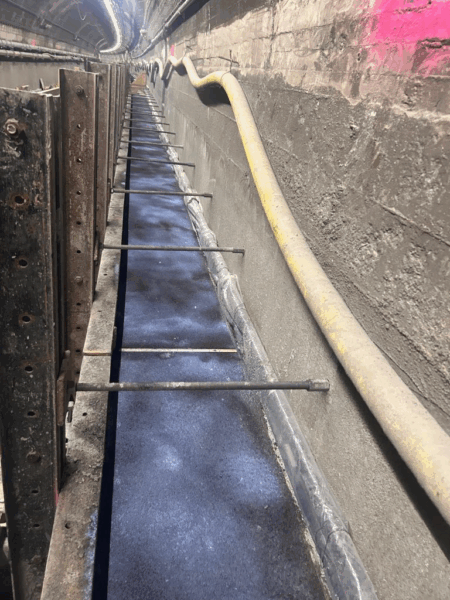
During this time, crews are also working on system installations (pictured, above). According to the update, “snake tray” cable management systems line the tunnel walls (pictured, left) for communication, lighting, and safety systems. Crews are installing fire standpipe legs and new lighting fixtures, and they have also started pulling high-voltage feeder cables through the new conduits.
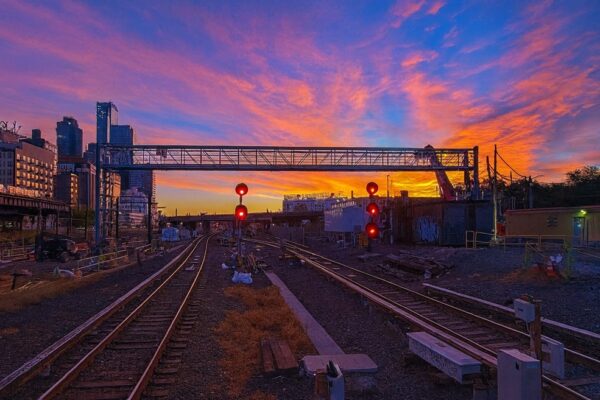
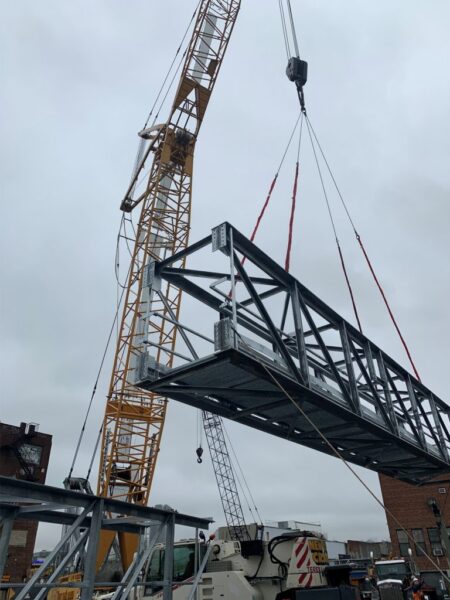
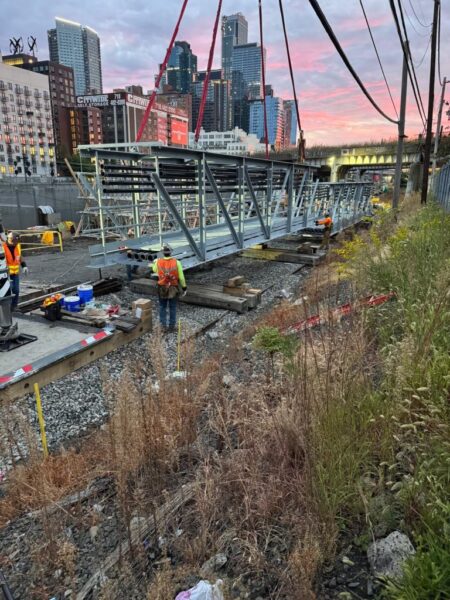
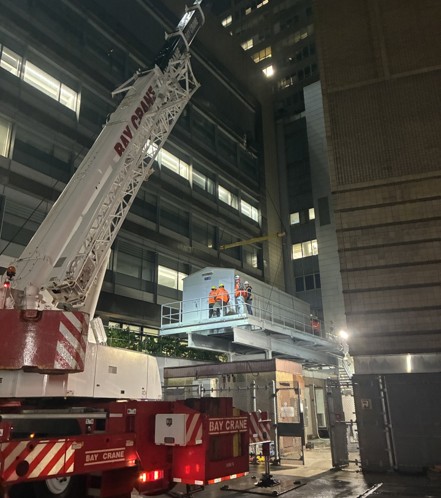
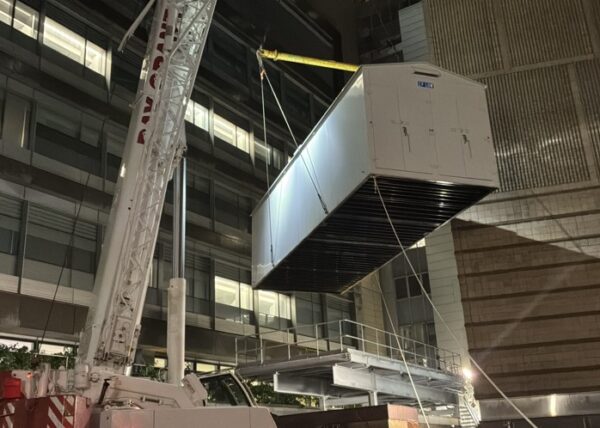
Elsewhere, crews worked to install an Aerial Utility Bridge (AUB) across the east portal. This spans LIRR tracks and provides a “critical pathway for signal and traction power cables.” Crews performed precision crane work over a 55-hour weekend outage. Adjacent to the structure, crews placed a new signal hut as “another key piece to the future signal system.” Below is a gallery, courtesy of Amtrak, that shows the AUB and signal hut installations.