BNSF Southern Transcon Buffeted by High Winds
Written by David C. Lester, Editor-in-Chief


BNSF Wind Fence
Courtesy of BNSF via LinkedIn
FORT WORTH, Texas –– BNSF reported this week that much of its network, particularly the Southern Transcon which runs from Los Angeles to Chicago, has been affected by "excessive and extended winds" that often exceed 75 m.p.h.
The railroad reported that the high winds have “impacted service consistency, alongside unexpected service incidents. Regardless of the challenges, BNSF says that “we are dedicated to restoring network fluidity as soon as possible and we have implemented a series of strategic actions and resiliency measures to ensure a swift recovery and minimize disruptions:
- Enhanced Resource Allocation: Leveraging our recent improvements in crew and resource management that are driving quicker recovery.
- Repositioning Additional Resources: Positioning locomotives from our surge fleet to support the recovery efforts and combining and consolidating trains where opportunities arise to streamline operations.
- AI Wind Technology: We continue to leverage advanced AI wind technology to proactively manage crew availability and optimize network operations.”
On the western side of the railroad, BNSF said it is focusing on improving fluidity through Los Angeles and San Bernardino, and expects improvements in the (easterly) Chicago area as the weekend progresses.
Last year, RT&S reported on the railroad’s installation of a wind fence next to its line in New Mexico’s Abo Canyon, one of several BNSF has installed in wind-prone locations.
More information about railroad operations in strong winds was shared in a BNSF LinkedIn post last year, which said:
“Railcars are held together by gravity, in conjunction with the heavy weight of the container and the cargo. A light breeze isn’t likely to have an impact, regardless of what the railcar is carrying. But when winds exceed 50 miles per hour, things get tricky.
“Knowing the power of Mother Nature, BNSF has wind stations throughout our network to measure wind speeds, direction, temperature and more. These stations notify our weather forecasting services and serve as a way to communicate wind events throughout the network.
“Traditionally, trains affected by high winds must significantly reduce speed or stop entirely until the high wind warning passes. But as technology has further developed, we’ve become more prepared and more efficient when high winds pick up.”
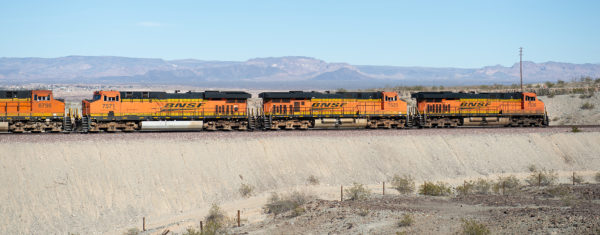
David C. Lester photo