Well, The Cat’s Out of the Bag: Merger Talk Arrived Sooner Than We Thought
Written by David C. Lester, Editor-in-Chief



ATLANTA - From the August 2025 issue of RT&S, Editor-in-Chief David Lester writes about Class I merger chatter.
The ink on my June 2025 “From the Dome” column was barely dry when we heard that Union Pacific and Norfolk Southern had been involved in merger discussions for several weeks. CSX CEO Joe Hinrichs has said that CSX is open to any opportunities that would improve shareholder value and grow the railroad’s traffic. For now, though CSX is focused on operation, infrastructure projects, and making CSX the best it can be. So, at this writing, that’s where we stand. NS and UP seem to be in serious discussion, and CSX is waiting for someone to come calling. By the time you read this, fresher headlines will likely hit the papers.
Frankly, I’m surprised that merger talk has broken out now. As I said in my June column, Class Is currently face a lot of challenges, including service quality, shipper perception (or observation) that railroads are difficult to do business with, and the prospect of a hard-fought campaign to gain STB approval. My conclusion in June was that “transcontinental mergers will likely occur; it’s just a matter of when.” But, I don’t think a lot of folks thought that “when” meant “now.”
Nevertheless, we have a much different focus and landscape for the rail industry than we did a couple of months ago. From what I can tell, most industry analysts and observers believe these mergers will happen sooner than we think, although a lot can happen beforehand. For example, UP and NS may not be able to come to terms, meaning that UP may ring the phones in Jacksonville to see CSX is interested. Everyone correctly assumes that if UP+NS is announced, then BNSF+CSX would follow soon. Indeed, TD Cowen rail analyst Jason Seidl said that if the STB approves one merger, they’ll be approving two. Having one transcontinental railroad and two regional Class Is would not make any sense. We have four Class Is in the United States. If two become one, then the remaining two will also become one. Then, we’ll have two –– brilliant!
It is well known that when BNSF and CN tried to merge just after the turn of the century, shippers and regulators were still smarting from the service meltdowns caused by several high-profile Class I rail mergers in the 1990s. The Surface Transportation Board (STB) was not going to allow any more merger-induced problems for the industry and the economy, so it put a 15-month moratorium on rail mergers so it could write new merger rules, referred to as the “2001 rules.” When the CPKC merger was under consideration, the STB used the pre-2001 set of rules when deciding to approve the merger, so the new 2001 rules have never been used for evaluating and deciding on a merger. Given the size and impact of transcontinental mergers, the 2001 rules would assuredly be the basis for deciding these, which adds to speculation that merger approval may be even more difficult than in the past.
While shippers would benefit from single-line service offered by transcontinental carriers, they would ask for some merger concessions as well, with the most prominent being reciprocal switching. Reciprocal switching, generally speaking, describes a process where a customer (either shipper or receiver) is only served by one railroad. In other words, if this customer is located along and served only by, say, BNSF, (a situation described as the shipper being “captive”) but wishes to send their shipment via Union Pacific, then BNSF would move the shipment from the customer’s facility to the tracks of Union Pacific for the line-haul movement and possible delivery to the receiver, depending on the terms of agreement. The STB ruled in 2024 that a shipper may petition the agency requesting a reciprocal switch. However, this rule was struck down by the 7th Circuit Court of Appeals in early July, so it remains to be seen how this long-debated topic will be addressed in the merger proceedings.
One opinion I have about the “final round” of mergers is that I’d prefer to see BNSF+NS and UP+CSX because I think these pairings would be a better fit and I’d rather not disclose my reasoning. However, in a recent Railway Age news post, Jason Seidl of TD Cowen discussed the thinking of Farrukh Bezar, a former Senior Vice President and Chief Strategy Officer at CSX: According to Seidl, “Both Eastern Class I’s are good fits for Union Pacific, but Bezar sees Union Pacific/CSX as slightly better on fundamentals. Network alignment on the carload (bulk/merchandise) franchise between Union Pacific and CSX is notable, and a single-line network would enable service improvements. Additionally, Union Pacific’s strong leadership under CEO Jim Vena (whom Bezar praised) and operational performance would be a significant asset to a consolidated industry. Bezar did not rule out the possibility of a Union Pacific/CSX combination ultimately prevailing given the fundamentals but noted that other intangible factors such as cultural compatibility play a key role in deal formation.”
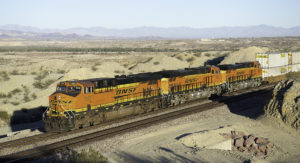
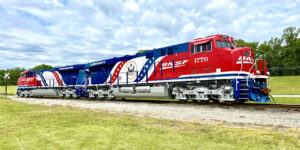
Perhaps a less important, but equally interesting, topic is what would the new railroads be called? For example, as far as I know, Union Pacific has never merged with or acquired another railroad when Armour Yellow paint and UP lettering didn’t swallow the other carrier’s locomotives. So, if UP+NS occurs, would NS Black become UP Armour Yellow? Based on previous mergers, it’s hard to speculate on how leaders would identify the railroad resulting from BNSF+CSX.
Needless to say, the next several months, maybe even two to three years, will be very interesting, both from the standpoint of which merger partners will come together, but also finally realizing the benefits of true single-line service. My only regret is that I believe merger focus will distract from efforts to improve service quality and the other needed changes to get our current four U.S. Class I houses in order.