Editor’s Notebook: The Marvel of Railroad Engineering
Written by David C. Lester, Editor-in-Chief


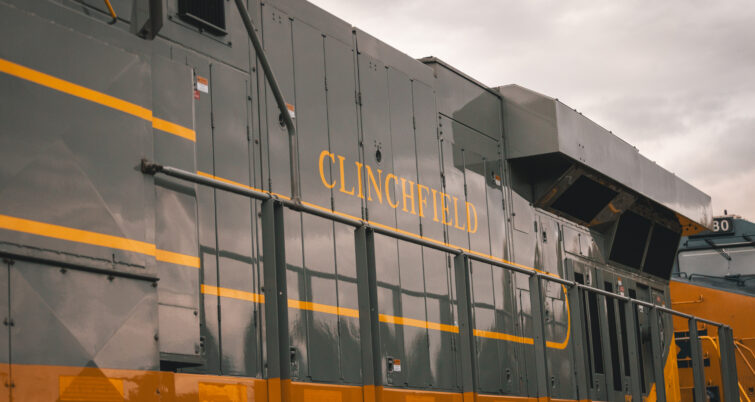
Photo courrtesy CSX
ATLANTA –– It doesn’t take much looking around to appreciate the amounts of creativity and ingenuity that go into our nation’s transportation infrastructure.
Massive bridges like the Brooklyn in New York and the Golden Gate in San Francisco, complex interstate highway interchanges, and airports with miles-long runways are all impressive accomplishments. While the railroads sometimes receive grants for infrastructure projects through CRISI grants (Consolidated Rail Infrastructure and Safety Improvements) and other funding sources, the cost of and expertise needed for maintaining a line is monumental. That’s why the Class Is have huge capital budgets every year. And, by and large, the expertise to maintain and repair comes from railroad personnel. Railroads may use third parties to perform some functions, such as rail grinding, but the carriers must internally sign off on projects before they begin.
The capability of and demands placed on railroad engineering teams requires folks who like to be outside, are smart, and willing to work hard. Some of the stories I’ve seen over the years about line restorations after major storm damage are impressive. For example, we recently reported on the reopening of CSX’s Blue Ridge Subdivision, which is the line that used to be the Clinchfield Railroad. About this time last year, Hurricane Helene blasted the southeastern United States and took out approximately 60 miles of this line, which serves North Carolina and Tennessee and handles about 14 million gross tons of freight every year. RT&S’s Managing Editor, Jennifer McLawhorn, filed reports on our news website beginning just after the hurricane hit and continued through much of 2025 as CSX repaired the line in mountainous territory. (Please check our website, www.rtands.com, to read Jennifer’s reports and watch videos of the progress made by CSX). The Blue Ridge Subdivision was reopened in late September and folks couldn’t ask for a better opening –– a revenue train with CSX’s Clinchfield Heritage Unit on the point.
It was essentially the same story at Norfolk Southern, where Helene destroyed lines east and west of Asheville, N.C. Those lines were restored between late 2024 and April 2025, and the loops at Old Fort, N.C. are currently under restoration, with completion expected within the next several months.
One of the more dramatic stories of rail engineering at work was Norfolk Southern’s lines into New Orleans and Mobile after Hurricane Katrina, twenty years ago, in 2005. The restoration after Katrina included replacing the track on the Lake Pontchartrain bridge that had literally blown off the concrete bridge into the lake. Interestingly, NS was able to pull the track out of the water and place it back on the bridge, restore it, and have trains moving on it in approximately two weeks. Massive amounts of debris had to be cleaned. The devastation was so bad that the railroad had to bring in every last item needed to support the operation, as there were no stores, gasoline stations, or other supply sources open. Even for basic needs, NS had to provide its own food, water, fuel, medicine, housing, and everything else needed to sustain life. The recovery effort was remarkable. If you’d like to learn more about this, check out the NS website at https://norfolksouthern.mediaroom.com/Rebuilding-tracks-and-lives-honoring-New-Orleans,-20-years-after-Katrina.
Anyone with even a modicum of knowledge about the transportation industry in the United States knows that the infrastructure landscape differs on railroads when compared to other modes. While trucking companies use highways, inland waterway carriers ply navigable rivers, and airlines (both freight and passenger) take off and land at airports, only the railroads are required to build and maintain their rights-of-way. Yes, other modes pay fees for the usage of infrastructure, but if something requires maintenance or repair, it’s not their problem.
Of course, rail engineering is not limited to recovering from major disasters. Routine and proper maintenance saves money in the long run. “Little” things like track geometry, ballast, communications and signals, bridges, and a myriad of other areas, don’t grab the headlines, but they keep derailments or other rail disasters out of the headlines. And most of this is paid for with private money. When I joined RT&S over six years ago, I had been interested in railroads for over 40 years. I was well aware of MOW work but didn’t know a whole lot about it. Now, I know a lot more about it than I used to and I’m always impressed with railroad engineers and engineering departments with every story I research, read, or write and at every rail engineering conference I attend. Once you go down the path of learning about engineering on the railroad, you never look at a piece of track the same way again.