Iowa Interstate Railroad Replaces Booneville Bridge
Written by Jennifer McLawhorn, Managing Editor


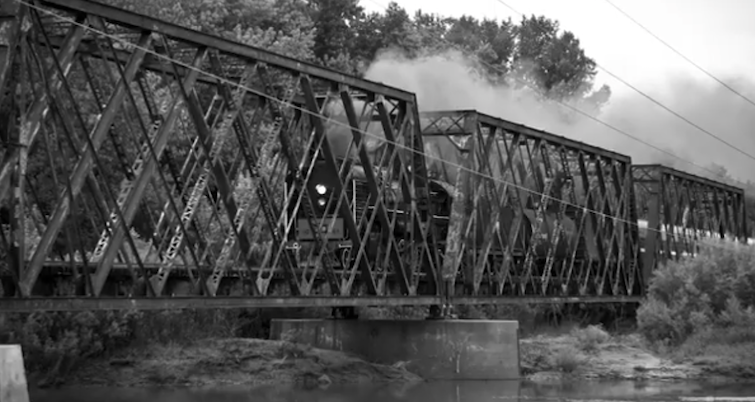
Booneville Bridge
Screencapture of Iowa Interstate Railroad YouTube video
BOONEVILLE, Iowa - Iowa Interstate Railroad replaced the Booneville Bridge.
The 118-year-old truss bridge is located over the Raccoon River west of Des Moines. According to ASLRRA, the bridge carries 42,000 carloads annually and was close to being put of service due to its condition. Because of its previous condition, it would’ve been “costly and inefficient” to reroute traffic around the bridge, says ASLRRA. The new structure is stronger and will be able to withstand future flooding.
Elite Octane CEO Nick Bowdish said “The majority of the 8,000 carloads we ship go over that bridge and if that infrastructure was out, it would have a multi-million-dollar impact on the efficiency and cost-competitiveness of our business.”
The project costs a total of $6,941,000. It was funded through a CRISI grant of $3,470,500 along with a local matching fund. A video (below) from the Iowa Interstate Railroad delves into the bridge’s history and its subsequent replacement.
“The William J. Duggan Bridge will ensure safe and efficient freight connections between IAIS customers and rail destinations across North America and around the world,” said IAIS President Joe Parsons. “Completion of this project is yet another step in our unending drive at IAIS to prioritize safety, resiliency, and reliability in everything we do.”
“This bridge is a fitting tribute to Bill Duggan’s ongoing lifetime of service to the industry in this country and around the world which continues to this day,” said Henry Posner III, chairman of IAIS. “After the bankruptcy of our predecessor the Rock Island in 1980, the IAIS route was deemed unnecessary and nearly liquidated; in fact, parts of the railroad stood idle until 1984. Bill came to the Iowa Interstate from the Illinois Central in 1989, and was tasked with keeping the railroad running with very limited traffic and funding. The early years were tough, but we have evolved into today’s strong, stable, resilient route connecting Iowa and Illinois to the world because of the foundation–both physical and cultural–laid by Bill. It is especially appropriate that this bridge carry his name as our West End has historically been our lowest-density segment and was at one point a re-abandonment candidate.”