MTA Approves Tunnel-Boring Contract for Second Avenue Subway Project
Written by Jennifer McLawhorn, Managing Editor


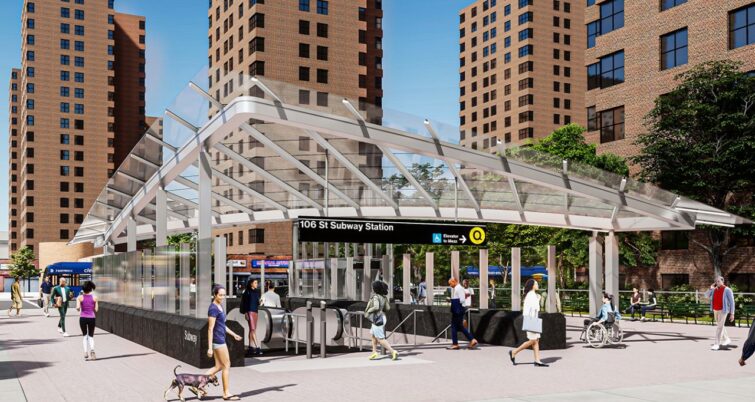
106th Street Subway Station rendering.
Courtesy of MTA via LinkedIn
NEW YORK CITY - The Metropolitan Transportation Authority (MTA) approved a tunnel-boring contract for the Second Avenue Subway project.
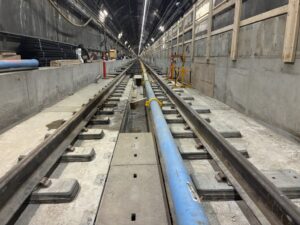
The project seeks to expand transit access in East Harlem, according to the MTA. New York Governor Kathy Hochul announced the MTA Board’s approval of the contract to extend the Q train from 96th Street to 125th Street with the new tunnel extending from 116th Street to 125th Street. Additionally, MTA says crews will excavate space for the future 125th Street Station. To save the MTA $500 million, crews will “outfit the tunnel along the route that was built in the 1970s to accommodate the future 116th Street Station.” Located between 35 and 120 feet below Second Avenue, crews will use 750-ton machines with 22-foot diamond-studded drill heads to bore the new tunnel. Work is expected to begin later this year. Heavy civil construction is slated to begin in 2026 with tunnel boring work in 2027. A service revenue date for Phase 2 is currently expected in September 2032.
The $1.972 billion contract was awarded to Connect Plus Partners, a joint venture between Halmar International and FCC Construction. This contract is the second of four for the Q train extension, according to the MTA. The MTA also states that despite the project’s high construction cost in New York City, the cost-benefit of the project is still “significant.”
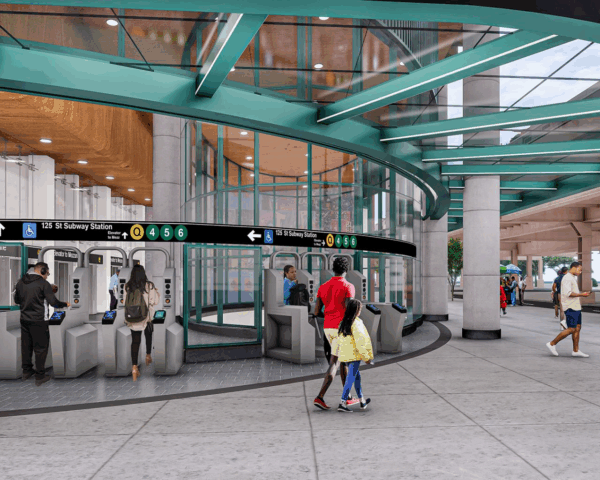
In January 2024, the first construction contract was awarded for utility relocation. These crews worked under this contract to relocate underground utilities from 105th Street to 110th Street on Second Avenue. The third contract will have crews working to build the underground space for the future station at 106th and Second Avenue. As of reporting, that contract is “currently in procurement.” The final contract, currently in the design phase, seeks to cover the fit-out of the three stations at 106th, 116th, and 125th Streets. This includes the “systems needed to run train service, such as track, signal, power and communications.” Each station will be ADA accessible and include above-ground ancillary buildings for ventilation, mechanical, and electrical equipment, according to the MTA.
Phase 1 of the project was the city’s “largest expansion of the subway system in 50 years” that sought to extend the line from 63rd Street to 96th Street. It also included two additional stations at 72nd Street and 86th Street. Service opened on January 1, 2017.
MTA Chair and CEO Janno Lieber said, “This is a meaningful step forward not only for the project but everyone in East Harlem and Central Harlem. Locals have waited almost 100 long years for their promised subway extension. Thanks to investments from Governor Hochul and our partners in Washington, today the new MTA is moving forward with the largest tunneling contract in agency history, but – more important – with a project that pencils at the lowest cost per rider of any heavy rail project in America.”
MTA Construction and Development President Jamie Torres-Springer said, “After generations of promises, the new MTA is delivering. Today’s contract award brings us closer to world-class transit service in East Harlem. Using lessons learned from Phase 1, we’re excited to keep our momentum going and complete this contract better, faster, and cheaper than ever.”