Supplying the Structure
Written by Jennifer McLawhorn, Managing Editor


TIEnergy
ATLANTA ––If you were to view a segment of track as a spine, you could argue railroad ties are similar to vertebrae.
No matter its composition, creating and maintaining ties is necessary.
They give the railroad a backbone, a structure that allows rails to be fastened into alignment. With the amount of track maintenance needed to produce, maintain, replace, and reuse ties, RT&S has gathered a selection of what the industry currently offers.
Stella-Jones supplies up to 10 million pressure-treated wooden crossties per year. It offers not only railway ties and timbers for Class I, short line and commercial railroad operators, but also industrial products—including wood for railway bridges and crossings, marine and foundation pilings, and construction timbers—and customized services. Preservatives for mixed hardwood and oak include creosote, borate and copper naphthenate. With facilities located across the United States and Canada, Stella-Jones’ extensive network offers economical coverage using rail, truck and maritime transport. Stella-Jones’ combined production capacity and long-term relationships with wood suppliers ensure a constant ample supply of raw material, particularly in times of emergency need. Lastly, its continental network of treating facilities and distribution yards carry a large inventory to ensure its customers get the materials they need.
Using data scans from Aurora to identify which ties are most in need of replacement, Loram Technologies works with customers to build a replacement plan based on current tie condition and budget allocation. With this finalized plan, an automated tie marking system marks each tie planned for replacement and the Tie Set Out team places new ties at the point of use by the marked tie. This eliminates the need for someone to walk the track and physically mark where to set out ties ahead of a tie distribution team.
The Tie Set Out Software allows users to know exactly where to set out ties and how many are required for each drop as the team travels along the track. As well as making any edits needed to the tie count. The result is ties that ere much closer to where they need to be installed, allows for increased productivity for the tie replacement teams as less time is spent moving ties around and along the track to the appropriate install locations.
Loram Technologies collects data on thousands of miles annually. This information and the use of the software effectively and safely helps increase tie life and reduce fouling conditions.
Koppers tells RT&S its North Little Rock, Arkansas, facility has been updated and upgraded to offer peak efficiency, now capable of processing and treating more than 2.5 million crossties annually. Fully automated, the plant handles larger volumes of ties per treating cycle, with less need for direct employee contact, and in a cleaner, more environmentally friendly workflow. Bundles of ties enter the facility and are moved automatically into transport bays, then into cylinders for treatment. Following treatment, the ties are moved automatically from the cylinder into a drying area, where following a specified time, they are moved out for distribution to customers. And this entire process happens with the push of a button.
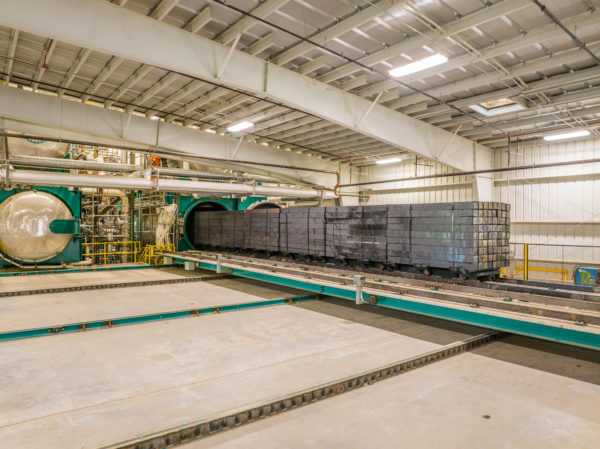
Courtesy of Koppers
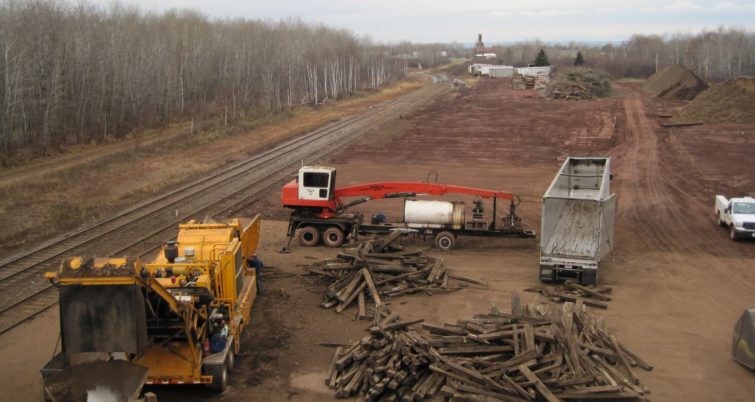
TiEnergy LLC has provided responsible and innovative tie disposal and track maintenance solutions for Class 1, short-line and private railroads for decades. It has received and recycled hundreds of thousands of old ties and turned them into an in-demand, marketable product that supports railroads, landfills, and the community. Expired ties create storage issues, disposal headaches, and safety hazards for railroads, and TiEnergy has systems in place to turn the ties into an aggregate substitute called TIEROC, which helps landfills operate more efficiently. In turn, the responsible disposal method helps railroads meet sustainability goals. Each recycled tie saves 3.06 pounds of carbon from entering the atmosphere. Once ties are transported in cars, they can cause car capacity issues. They leave behind small debris such as stone, grit, dirt, and slivers of wood, and over time, accumulated debris reduces the volume available for tie loading. TiEnergy has built its business on recognizing issues and creating solutions, and we developed an as-needed car cleaning service as part of tie unloading/disposal. This service helps customers maximize their individual car volume and reduce their overall tie disposal cost.
For Nisus, its QNAP® copper naphthenate is an American-made, general use preservative for pressure treating crossties and bridge ties. QNAP-treated ties are safe, long-lasting, and sustainable. Testing conducted by the USDA Forest Product Laboratory on ties treated with copper naphthenate demonstrated an estimated service life of over 65 years. QNAP-treated ties also have the most options for their further use at the end of life, from fencing and residential landscaping to serving as fuel for permitted boilers. Under the EPA’s Nonhazardous Secondary Material rule, only QNAP-treated ties can be used in any boiler covered by the rule, and only QNAP-treated ties are allowed as boiler fuel with creosote-treated ties. In addition, QNAP is not a skin-sensitizer, and its cleaner handling characteristics mean that crews face less risk of skin irritation when handling treated ties. A non-conductive and non-corrosive formula, QNAP results in less drippage in use, a particularly important aspect for environmentally sensitive bridges over pedestrian walkways, roads, and waterways.
Courtesy of Nisus
Omaha Track facilitates the removal, processing, and distribution of over 3 million ties annually, and its business continues to grow and evolve as its operations expand. It starts by acquiring second-hand ties from a variety of locations, where it uses a meticulous sorting process to ensure the highest-quality ties are resold for landscaping products. Ties of lower quality are designated as a crosstie fuel source for power plants and other industries. Omaha Track tells RT&S it is currently working on making the operation more energy-efficient and sustainable, with the goal of reducing our carbon footprint. It partners with Class 1 railroads to safely repurpose crossties, including those treated with creosote. Its facilities in LaCrosse and Superior, Wisconsin; Pueblo, Colorado; Hazen, Nevada; and Chicago Heights, Illinois specialize in processing scrap railroad ties and other wooden railroad materials into chips suitable for co-generation fuel.