Railway Track & Structures 2025 Top Projects
Written by David Lester, Editor-in-Chief and Jennifer McLawhorn, Managing Editor


CSX Cumberland Yard.
Courtesy of CSX
ATLANTA - The annual Top Projects awards for 2025 have been selected and featured in the June 2025 issue of Railway Track & Structures.
We opened our look at Top Projects in 2024 with these words: “One of the top rewards of working on Railway Track & Structures is exposure to the myriad of railroad infrastructure projects going on at any one time. One of the top challenges of working on the magazine is choosing ten of the many projects nominated for our annual Top Projects program as honorees.” We experienced these rewards and challenges again this year while selecting ten of the nominations for 2025 Top Project honors. We believe you’ll enjoy reading about all this great work and might even glean some tips for your own projects.
CSX Cumberland Yard Redesign
Location: Cumberland, Maryland
Contractor: CSX
Designer: Zephyr/CSX
Owner: CSX
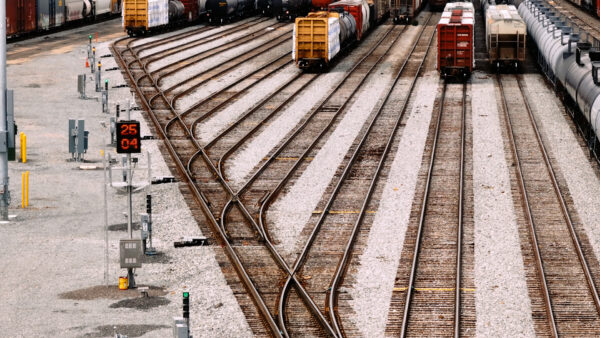
Cumberland Yard is a vital switching hub on the CSX network for processing freight between the Northeast corridor and Midwest markets. Previously a hump yard, its hump operation ceased in 2017. Flat switching continued on the west end of the classification yard, while the east end was dismantled, leaving all tracks except one stub-ended. Anticipating future increases in switching operations, CSX transportation and engineering teams collaborated to design an APEX kicking lead to process 800+ cars daily. Utilizing a double lead design, a model suited to Cumberland Yard’s geographical characteristics and existing layout was created. In mid-2024, the removal of the hump structure began and materials repurposed for the roadbed of the switching ladder and new switches in H Yard. Following a grading plan, CSX engineering forces installed 48 turnouts, including 33 powered APEX units. The yard was commissioned in December 2024, with switching operations starting immediately. Early in 2025, carloads increased due to the Howard Street Tunnel reroute plan. At present, Cumberland switches on average 300-350 cars per shift, totaling over 900 cars daily. The new yard configuration, achieved through extensive design and engineering work, ensures a safe and effective pin puller location for conductors. Features like a heated walking pad for winter safety, alongside a scoreboard and system monitors that provide continuous real-time operational information, have enhanced the yard’s safety and efficiency.
Norfolk Southern Emergency Bridge Replacement
Location: Newport, Tennessee
Contractor: Hail Contracting of Kentucky, Inc.
Designer: HDR, Inc.
Owner: Norfolk Southern
In the Fall of 2024, Hurricane Helene brought historic flooding and unprecedented damage to the Southeast. Thanks to Norfolk Southern crews working around the clock to clear trees and repair damaged rail, NS was able to reopen all core routes affected by the storm within 72 hours of landfall. But the company’s AS Line, which runs from Salisbury, N.C. to Morristown, Tenn., crossing the Eastern Continental Divide through the Blue Ridge Mountains and Asheville, N.C., was severely damaged, and the section of the line that runs from Newport, Tenn. to Old Fort, N.C., including the Newport bridge, a critical piece of infrastructure, had been out of service since the storm.
NS moved quickly following the storm to assess damage and begin planning recovery efforts. Steel fabrication emerged as the critical path for the rebuild, and design work on the Newport bridge began almost immediately. But as engineers assessed the structure, sections of the original bridge that were initially deemed salvageable continued to deteriorate. By the time NS was ready to move forward, updated designs were needed—restarting the process. Project leaders located a steel fabricator in Minnesota willing to operate around the clock, running three shifts of ironworkers to complete the job. It was a true emergency response, with other projects put on hold to prioritize the bridge. Access to the site was also essential. The City of Newport worked hand in hand with NS teams to ensure consistent, reliable access—playing a crucial role in keeping the project moving.
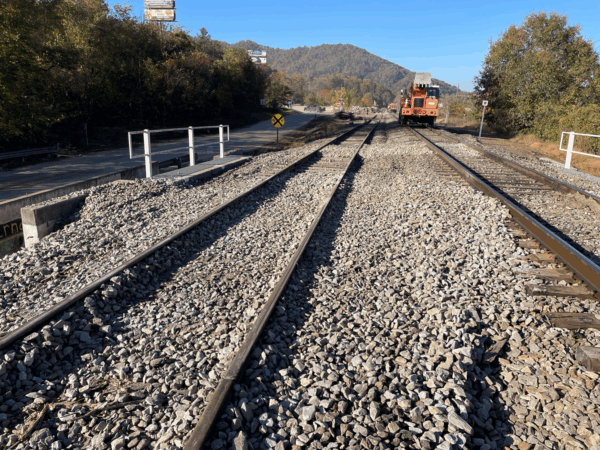
The existing bridge consisted of two 157’–3” riveted deck truss spans, one 113’–9” riveted deck truss span, and two 43’–0” deck plate girder spans founded on stone piers and masonry abutments. The bridge crosses the Pigeon River near Newport, Tenn. and was constructed by the Southern Railway in 1916. Immediately following Hurricane Helene, damage was observed at Pier location 2, the pier was dislodged from its footer and moved laterally downstream. Pier damage resulted in vertical misalignment of the track surface and supporting two 157’-3” deck truss spans. Design plans were prepared to replace the damaged Pier. An emergency contract was let and awarded to Hall Contracting of Kentucky, Inc. As contractor forces began mobilization, the damaged pier collapsed entirely, leaving the supporting deck truss spans resting at the bottom of the Pigeon River. Design plans were revised to include replacement of the damaged deck truss spans, which also required revision to the piers.
The replacement structure consisted of three 105’-5” welded steel beam spans, founded on three drilled shaft bents socketed into rock with pre-cast concrete caps and modification to existing pier 3. Additional required repairs included structural steel repairs to the remaining 113’-9” deck truss and 43’-0” deck plate girder spans, fabrication of a steel pony bent to support new span 4, and concrete encasement of the existing east abutment. The replacement structure was designed to modern E-80 specifications and is expected to provide 100 years of revenue service life. The restoration of the Newport bridge allowed NS to resume normal service to Asheville, and gave the community hope as residents, accustomed to watching NS trains each day, welcomed a return to normalcy since the hurricane.
South Coast Rail
Location: Southeastern Massachusetts
Contractor: MBTA
Designer: VHB and HNTB
Owner: Massachusetts Bay Transportation Authority (MBTA)
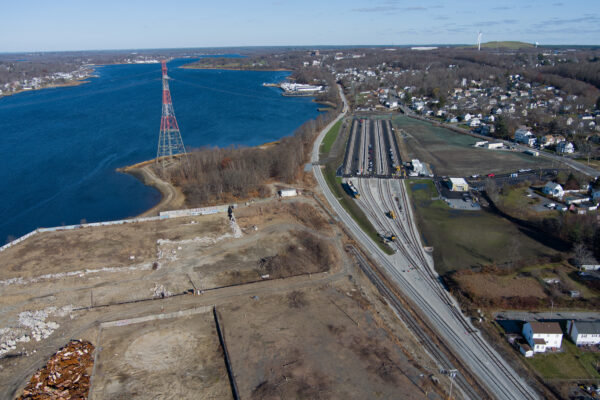
The $1.1B South Coast Rail project stands to significantly enhance both mobility and economic vitality in Southeastern Massachusetts. For the first time in 65 years, the project brings rail service to this region, which is experiencing some of the highest unemployment rates and lowest median incomes in Massachusetts. Over 30 years, innovative design approaches, strategic program management, and focused stakeholder engagement facilitated the project moving from an idea to reality with the start of service.
South Coast Rail is one of the state’s most significant transportation projects in recent memory, providing passenger rail service between Boston and the communities of Fall River, New Bedford, Freetown, and Taunton for the first time since the late 1950s. The new direct, one-seat ride enhances access to Boston’s robust job markets, higher education opportunities, and world class hospitals, while also facilitating access to more affordable housing in Southeastern Massachusetts. Project complexities included:
Coordination and communication among a wide array of stakeholders comprising seven municipalities, various local, state, and federal agencies, rail freight companies, Native American tribes, and numerous other interested parties. Successful approaches included developing a partner working group with key regulatory authorities and facilitating a regional task force involving municipalities and business coalitions.
Fluctuating funding and political will over the project’s 30-year lifespan required innovative, cost affective approaches to keep the dream of South Coast Rail alive. These approaches included strategically phasing design and construction, advancing early action projects, utilizing existing freight rail lines, and creatively repurposing hazardous/excavated materials to minimize costs and environmental impacts.
Evaluating 64 alternatives as part of a thorough NEPA/MEPA environmental review, during which the project team introduced innovative strategies such as evaluations of the economic effects of a new commuter rail connection, ridership, land-use planning, and transit-oriented development opportunities for corridor communities. First conceived in the early 1990s, the South Coast Rail project is being meticulously developed in phases. Phase I was completed in early 2025 and includes 37 miles of track, six stations, two layover facilities, 14 bridges, 86 culverts, 27 grade crossings, a pedestrian bridge, and a new signal and communications system.
South Shore Line Double Track
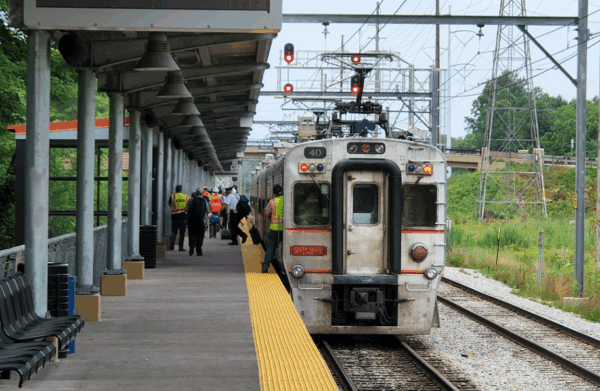
Location: Gary to Michigan City, Indiana
Contractor: Herzog/Walsh Joint Venture
Designer: HDR
Owner: Northern Indiana Commuter Transporation District (NICTD)
This project included 22 miles of new double track from Michigan City, Ind. to Gary, Ind. on the existing South Shore Line. The project included 64 new signal and grade-crossing houses, 35 smaller cases, and modifications to 24 existing locations. The project also included two new stations and added a second platform at three existing stations. Modern Railway Systems (MRS) was the managing joint venture partner alongside Herzog Technologies to form Transit Systems Partners (TSP). TSP was a major subcontractor responsible for the design, procurement, installation, testing, and commissioning of the signal, crossing, and communications systems. This project has greatly improved passenger rail service within the region by increasing the frequency of trains and reducing the travel time from 100 minutes to 67 minutes between Michigan City and Chicago’s Millennium Station. The primary challenge was the aggressive schedule. With numerous stakeholders involved and other trades working in the same areas, maintaining a streamlined timeline was crucial. It adopted an agile construction approach, enabling us to adjust tasks dynamically as challenges arose and pivoted to other areas if something was inaccessible. Regular team and project-wide meetings ensured open communication, allowing team members to share insights and coordinate effectively. This collaborative environment fostered creative problem solving and allowed them to tackle obstacles collectively. During excavation, it encountered high water tables (due to close proximity to Lake Michigan) that posed a significant risk to our project timeline. This issue required immediate attention as excessive water could delay construction and increase costs. To mitigate this, our team employed advanced dewatering techniques, including the installation of sump pumps and vacuum trucks, which effectively managed water levels and allowed excavation to proceed without significant delays. This swift response of the project management team exemplified the commitment to proactive problem solving. Labor availability was another major concern. Ongoing steel mill rehabilitation, solar farm electrical work, and data centers took precedence over the work, which meant local labor was in high demand. To counter this challenge and achieve project milestones, it utilized local subcontractors and brought in employees from across the country to supplement the crews.
Additionally, the project incorporated new technologies to modernize and enhance the efficiency of the system. One notable innovation was Siemens GCE. The GCE is a versatile integrated system for detecting trains and activating grade crossings which can be used in a variety of complex applications. As with any new product, the procurement process had a longer-than-expected lead time. To successfully integrate this new product, our team engaged with the supplier for on-site demonstrations, ensuring all personnel were familiar with the handling and installation processes. The rail line passed through urban areas and the Indiana Dunes National and State Parks, where existing infrastructure, traffic, and community concerns restricted entry points for the boom trucks and materials. To navigate these limitations, it implemented a detailed logistics plan that included identifying optimal access routes and scheduling lane closures. By engaging with local stakeholders early in the process, communicating its intentions, and addressing community concerns, it fostered a culture of goodwill and cooperation.
UPRR Omaha Bridge 23.84 Over The Elkhorn River Replacement
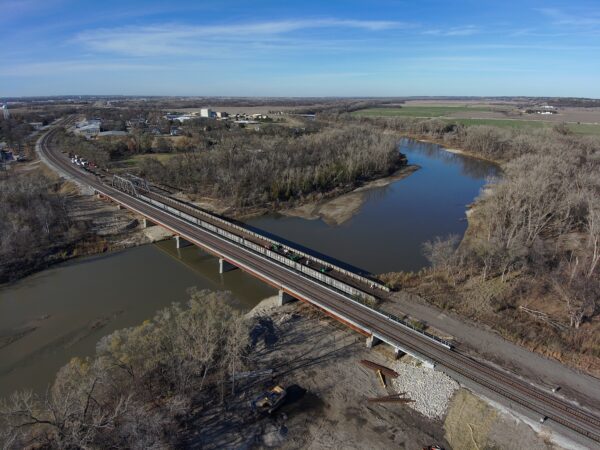
Location: Waterloo, Nebraska
Contractor: Lunda
Designer: GFT
Owner: Union Pacific Railroad
Originally constructed in 1906, UPRR Bridge 23.84 on the Omaha Subdivision carries two mainline tracks critical to the railroad’s network. The 812-foot structure included ten through plate girder spans and one pin-connected through truss, both aging and fracture-critical. Following major flooding in 2019, the bridge required emergency reinforcements to remain in service, accelerating the need for full replacement. The site required careful design coordination, river access planning, and comparative evaluation of multiple replacement strategies. GFT was engaged to develop preliminary design options for both in-line and off-line bridge replacements. The study concluded that an off-line replacement was the most economical solution and provided better long-term maintenance by eliminating fracture-critical span types.
The bridge alignment was offset approximately 55-ft from the existing structure requiring ROW acquisition and significant track embankment on the east approach. To accommodate the larger superstructure depth, the proposed track with 70 mph design speed was approximately 3’ higher than the existing mainlines. A federal levee crosses the project just off the west end of the bridge requiring coordination with USACE during design and construction.
The new bridge span arrangement consists of two precast concrete box girder approach spans on each end and six 130.5-ft steel plate girder spans with a composite concrete deck for a total bridge length of 898-ft. The new superstructure — a built-up steel girder with a composite cast-in-place concrete deck — was designed to support 12 inches of ballast under concrete ties, along with a spray-applied elastomeric waterproofing system and integrated ballast protection mat. Girder length and weight were selected to eliminate the need for field splices to minimize erection costs. These elements required detailed coordination to ensure structural performance and long-term durability under heavy freight loads. Substructure design posed another key decision point. The preferred alternative — a cast-in-place concrete wall pier with pile supported footings — necessitated the use of cofferdams and concrete seals for construction within the active river channel. The footing depths were designed to withstand the 100-yr scour event also requiring additional embedment of the piles into bedrock to resist potential temporary uplift loads due to the cofferdams. Modified precast concrete elements for 15-foot track centers were incorporated into the approach and end bents, enhancing schedule efficiency and installation consistency.
Nearly 1.2 miles of new double track embankment was also constructed requiring 140,000-yd3 of fill. Additionally, river access constraints required the planning of temporary bridges or causeways to facilitate pier construction. These efforts were critical to maintaining environmental compliance, ensuring worker safety, and enabling efficient delivery within the bounds of an active UPRR corridor. These solutions ensured resilient bridge performance while minimizing disruption to one of UPRR’s most critical corridors.
Lincoln Energy Expansion
Location: Birmingham, AL
Contractor: Road & Rail Services
Designer: Design Nine
Owner: Lincoln Energy
For this comprehensive design/build project, the site preparation alone encompassed engineering work, clearing and grubbing 2.5 acres, installing eight culverts, and excavating and preparing 1,600 cubic yards of sub ballast for 3,160 feet of new track construction. The track construction itself involved the relocation of three #11 turnouts and the addition of three new #11 turnouts. Because of the hazardous nature of the commodity being shipped (ethanol), the track was grounded and bonded. This track project dramatically increases the efficiency, throughput and volume of the terminal by facilitating the use of longer trains. The capacity of this terminal increased from a maximum of ninety (90) car unit trains to one hundred ten (110) – car unit trains. This new construction required coordination with multiple stakeholders. Lincoln Energy, the customer, required active operations throughout the construction process. Road & Rail Services, LLC collaborated with the BNSF team to move utility poles, move signal relays, and set the mainline switch, all without impeding Lincoln’s daily operations. Additionally, it collaborated with an outside partner for excavation services and Design Nine for engineering services.
Brightline West High-Speed Rail
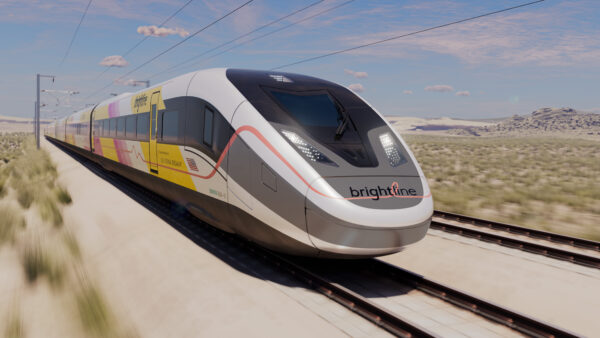
Location: Las Vegas to Rancho Cucamonga
Contractor: Stacy Witbeck/Herzog Contracting Corp. JV
Designer: HNTB & Jacobs
Owner: Brightline
The Stacy and Witbeck Herzog Contracting Corp. (SWH) Joint Venture is playing a vital role as the track and systems contractor for the Brightline West high-speed rail project, delivering innovative solutions to ensure the success of this transformative transportation initiative. During preconstruction, SWH has developed strategies to address logistical considerations and site access for the 218-mile Class 9 track alignment between Las Vegas, Nev. and Rancho Cucamonga, Calif.
Understanding the complexity of transporting large volumes of construction materials—such as ballast, ties, rail, and turnouts—within the Interstate 15 median, SWH is implementing a short line railroad system. This solution, which includes 500 ballast cars and 80 flat cars, will reduce the risk of traffic congestion and enhance the safety and efficiency of bulk material delivery to the corridor. The project’s terrain, which includes a maximum 5.5% grade—steeper than typically encountered in U.S. rail corridors—offers an opportunity to advance rail technology and operational resilience. SWH is exploring the use of Electronically Controlled Pneumatic (ECP) braking systems to provide greater precision and control on steep grades. Through innovation, collaboration, and a forward-looking mindset, SWH is helping to set a new standard for high-speed rail construction in the United States.
Moodna Viaduct Bridge Timber Tie Replacement
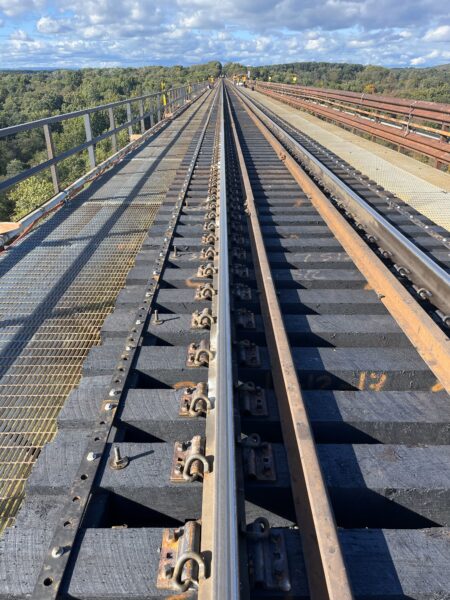
Location: Salisbury Mills, NY
Contractor: J-Track, LLC
Designer: RailPros, Inc.
Owner: MTA Metro-North Railroad
RailPros and J-Track partnered on the Moodna Viaduct Bridge Timber Tie Replacement contract, a $7.5M design-build project on the Port Jervis Line. The Moodna Viaduct is an historic steel railroad trestle bridge built in 1906 by the Erie Railroad. Today, this iconic structure still carries daily freight and Metro-North Railroad passenger traffic. RailPros coordinated the survey of the structure and created design plans for fully-dapped timber tie replacement on spans 14-53 of the viaduct, covering 2,400 feet of the 3,200-foot structure. Due to the bridge’s dimensions and historic nature, the team was presented with special challenges for survey and design. Not only does the structure stretch 3,200 feet in total, but also its max height is almost 200 feet above the ground. As a result, issues like thermal expansion and wind loads rendered some modern survey methods to be unusable. Additionally, the bridge has undergone countless modifications since its initial construction, which made establishing the existing conditions (as compared to the as-built plans) a challenge. RailPros teams worked to ensure the designed track profile approach accommodated the realities of the structure and collaborated closely with the tie manufacturer to make sure they were able to provide the exact dimensions for each tie.
RailSentry
Location: Burlingame, Calif. and Dallas, Texas
Contractor: Herzog Technologies, Inc. (HTI)
Designer: HTI
Owner: DART/Trinity Railway Express/Caltrain
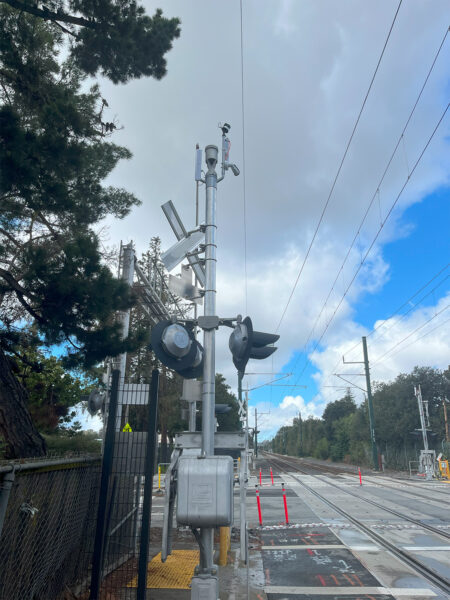
RailSentry combines advanced technology and railroad operational expertise to improve safety at high-risk grade crossings, station platforms, and bridges. Herzog Technologies, Inc. (Herzog) developed RailSentry as a safety solution that integrates LiDAR sensors, cameras, powerful computers, and AI-driven software to prevent train collisions involving vehicles, pedestrians, or objects. Before deploying RailSentry, Herzog overcame challenges involving the analysis of traffic patterns at high-risk rail crossings.
Herzog configured RailSentry to align detection zones with real-world traffic patterns, a critical step to unlocking the technology’s potential to actively detect hazards, analyze threats, and provide instant alerts to train engineers and rail operations teams. The second challenge involved software configuration and hardware processing specific to the Broadway Grade Crossing in Burlingame, Calif. Herzog needed to ensure safety-critical decisions were made in milliseconds at Broadway – the state’s most dangerous crossing with 100+ daily trains and 25,000 daily vehicles. Since 2024, RailSentry has delivered five alerts preventing potential collisions between trains and vehicles at the Broadway Crossing. Over the last 18 months, RailSentry monitored 400+ daily trains and 40,000 daily vehicles at 11 grade crossing and two bridges in California (Caltrain) and Texas (Trinity Railway Express and Dallas Area Rapid Transit).
Northwest Extension 2
Location: Phoenix, Ariz.
Contractor: Kiewit-McCarthy JV
Designer: Jacobs Engineering
Owner: Phoenix Valley Metro
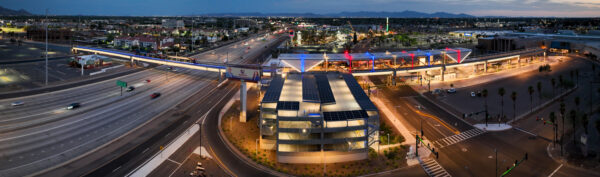
The Northwest Extension Phase II (NWEII) for the Phoenix Valley Metro LRT system includes 1.6 miles of new track, two at-grade stations, Valley Metro’s first elevated transit center, a parking garage, a new bridge over I-17, and the widening of two existing canal bridges. Jacobs was the prime consultant and provided project management and engineering for track, roadway, traffic, lighting, duct bank, the I-17 bridge structures, and the elevated station structure. Valley Metro (VM) and the City of Phoenix partnered with Jacobs Engineering Group Inc. (Jacobs) and construction manager at risk (CMAR) Kiewit-McCarthy, a Joint Venture, to deliver design and construction of NWEII.
While Jacobs and ASU spearheaded the design, KMJV played a major role in validating constructability, coordinating full-scale mockups, and executing the work safely and efficiently — reducing track construction time by nearly 30%. When Jacobs took over the project at the 30% design stage, the construction estimates pointed to a project alarmingly over budget and on the brink of financial infeasibility. To preserve the project, the CMAR team, including Valley Metro and the City of Phoenix underwent a value engineering exercise. KMJV helped drive the VE process that resulted in $60 million in savings.