
BNSF plans whopping $5 billion capital program
BNSF has planned a capital commitment plan of approximately $5 billion for 2014, approximately a $1 billion increase over its 2013 capital spend.
BNSF has planned a capital commitment plan of approximately $5 billion for 2014, approximately a $1 billion increase over its 2013 capital spend.
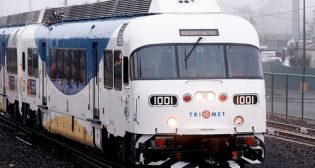
In Portland, Ore., TriMet’s WES Commuter Rail celebrated its fifth anniversary with more people climbing on board than ever before. Since the line opened on February 2, 2009, riders have taken more than 1.9 million trips on WES. Ridership has climbed each year reaching more than 476,000 in 2013.
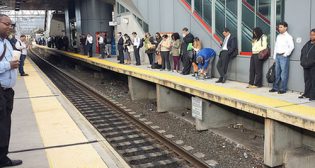
The Connecticut Department of Transportation (ConnDOT) will undertake a $10-million project to upgrade the power supply for Metro-North Railroad‘s New Haven Line beginning on February 3. The project will prevent the type of catastrophic power failure that occurred this past fall in Mount Vernon, N.Y.,
The Chicago Regional Transportation Authority (RTA) Board of Directors recently authorized issuance of up to $100 million of 30-year general obligation RTA bonds to finance multiple state of good repair projects to bolster the condition of the region’s transit infrastructure.
“State and federal dollars are not sufficient to support our capital needs, so the RTA is using its bonding authority to keep our region in a state of good repair,” said RTA Board Chairman John Gates, Jr. “Our region needs approximately $33 billion to bring the existing system to a state of good repair. The RTA is meeting a portion of the need with this bond issuance. The recent favorable reports from the three ratings services only reinforce the importance of the RTA and its ability to benefit the region in this way.”
The bonding will fund projects that benefit the region’s public transit riders through enhancements to Chicago Transportation Authority, Metra and Pace bus capital assets, specifically tied to state of good repair, in the categories of rolling Stock, track and structure, electric signal and communications and stations and passenger facilities
Qualifying projects would include projects that upon completion would have a useful life of at least 20 years; projects that will reduce the region’s state of good repair backlog and projects that replace assets, which fall into the category of “worn” or “marginal” as identified in the Capital Asset Condition Assessment.
The Federal Communications Commission (FCC) has proposed an alternative process for 565 federally recognized Native American tribes to review positive train control (PTC) antennas in a public notice posted on the FCC website Jan. 29.
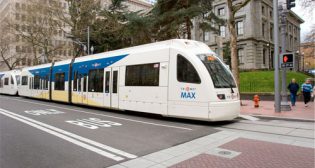
TriMet General Manager Neil McFarlane responded to the release of the Oregon secretary of state’s audit, thanking the team of auditors for their diligence during their review of the agency’s finances, transparency and operations.
Union Pacific improved its public safety incident rate in 2013, demonstrating progress in enhancing safety for employees, customers and communities. The company’s 2013 public safety incident rate was 2.22, a seven percent improvement over the 2012 rate of 2.38.
A North American railroad yard in Fort Worth, Texas, has upgraded their current Domain Operations Controller System to include RailComm’s Blue Flag Indicator (BFI) System within their facility.
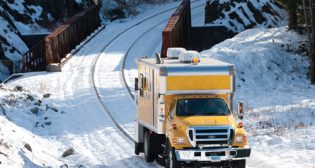
The Federal Railroad Administration (FRA) published a rule in the Jan. 24 edition of The Federal Register, amending the Federal Track Safety Standards to promote the safety of railroad operations by enhancing rail-flaw detection processes.
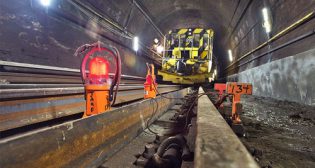
New York Metropolitan Transportation Authority (MTA) has received more than $886 million in federal aid to help cover costs associated with repairs from Superstorm Sandy, primarily in the Montague, Greenpoint and Steinway subway tunnels, and to make New York’s transportation system more resilient to any future storms.
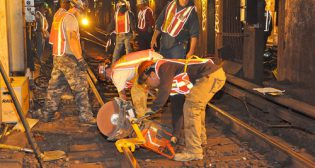
Metropolitan Transportation Authority (MTA) New York City Transit (NYCT) will begin the latest round of ongoing work to modernize, improve and fortify NYCT’s Flushing 7 Line in February.
The National Transportation Safety Board (NTSB) has closed another safety recommendation, which advised the transit agency to develop a program to periodically determine that the electronic components in Washington Metropolitan Area Transit Authority’s (WMATA) train control system are performing within design tolerances. NTSB has now closed 21 of its 29 recommendations for WMATA.
Kansas City Southern, the Anderson, Mo., Police Department and Missouri State Highway Patrol will host an Officer on a Train event January 22 to promote public safety at railroad crossings in Anderson.
The National Transportation Safety Board (NTSB) released its 2014 Most Wanted List, the top 10 advocacy and awareness priorities for the agency for 2014, which for the first time includes improving operational safety in rail mass transit.
The Federal Railroad Administration (FRA) will receive $185 million to hire an additional 45 railroad inspectors as part of the omnibus spending bill now before Congress.
The National Transportation Safety Board (NTSB) issued its preliminary report regarding the Dec. 1, 2013, derailment of a Metro-North passenger train in The Bronx, N.Y.
The Federal Transit Administration (FTA) issued a safety advisory guidance document concerning the protection of right-of-way (ROW) workers, as well as a request for information from transit agencies and State Safety Oversight (SSO) agencies that will be used to review the nation’s rail transit right-of-way worker safeguards.
The Federal Railroad Administration (FRA) published a Final Rule on Dec. 24, 2013, that increases the rail equipment accident/incident reporting threshold for 2014 from $9,900 to $10,500.
The North Carolina Railroad Company (NCRR) paid a $15.5-million dividend to the state of North Carolina on December 20, 2013 to be designated for a freight rail and safety fund to support the state’s economic development efforts.
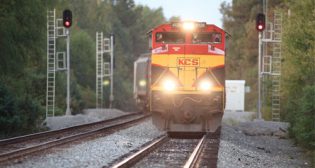
Kansas City Southern’s President and CEO David Starling issued his annual State of the Railroad letter sharing KCS’ “successes and tremendous potential.”