The Economic Development Administration (EDA) is awarding $4.3 million to upgrade critical infrastructure and fund rail projects in Arkansas, Oklahoma and Iowa. The grants are intended to support communities affected by recent natural disasters, as well as communities looking to support and attract businesses.
“The Obama Administration and the Commerce Department are committed to helping communities affected by natural disasters rebuild so they can rebound economically,” said U.S. Secretary of Commerce Penny Pritzker. “The EDA investments announced today support a diverse group of projects – from infrastructure improvements and transportation upgrades to workforce training and disaster recovery efforts – that will enable communities across Arkansas to be more economically resilient in the wake of future natural disasters and other challenges.”
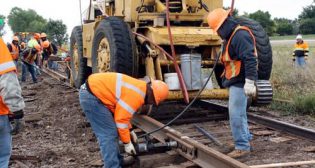
The investments include $1.2 million to the city of Pine Bluff, Ark., which will help upgrade roughly 40 miles of rail line to increase economic resiliency and diversity by providing alternate transportation in times of natural disasters to area businesses and manufacturers. Also, the proposed continued upgrading of the rail line is a vital component of broader efforts to restore and improve critical rail infrastructure that will service Southeast Arkansas and Northeast Louisiana. According to the grantee, the project will enhance the area’s ability to attract new industry and to grow existing industry by improving local logistic infrastructure and will create 24 jobs in the area.
A $1.2 million grant in Corning, Ark., will support rail improvements to an industrial site, enabling Peco Foods, Inc., to build poultry processing and hatchery facilities and associated infrastructure on a 120-acre site in Clay County. According to the grantee, the company has committed to a $165 million investment and the creation of 942 jobs. The feed mill operation will produce 15,000 tons of self-use feed per week to support the breeder and grower flocks grown for the Pocahontas plant and those ingredients will be sourced primarily from local farmers.
The Citizen Potawatomi Nation in Shawnee, Okla., received $1,232,023 in Public Works funds to fund the construction of rail infrastructure improvements at the Iron Horse Industrial Park in Pottawatomie County. This project is part of Phase II of development of the park and will provide rail service to the tenants, which include both native and non-native businesses and provide greater access to both domestic and international markets. This investment is part of a $1,232,023 project that the grantee estimates will create 15 jobs and leverage $350,000 in private investment.
The City of Sioux City, Iowa, received $631,102 in Economic Adjustment funds to fund continued implementation of infrastructure and site work necessary for construction of a new, flood-protected rail system to serve and support industries locating or relocating operations into the new Southbridge Business Park, which is located outside the city’s flood-prone area. This project supports the city’s efforts to implement flood protection and disaster resiliency measures in the region severely impacted and still recovering from the 2011 flooding of the Missouri River.