The Scale of Heavy Haul: Why America’s Railroads Need New Momentum
Written by Ana Topalovic, Tobias Gärtner, Brandon van Dyk


Vossloh
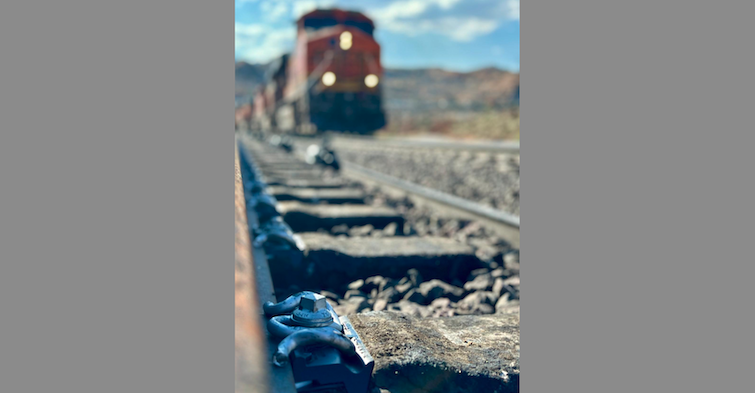
To understand the North American rail network, it is necessary to think beyond global standards. The enormous routes operated by Class I railroads form the logistical and economic backbone of the continent. Freight trains stretch for miles and carry total weights exceeding tens of thousands of tons and continuously transport raw materials, energy sources, agricultural products, and double-stack containers over thousands of miles. In this demanding market segment, extreme axle loads are the standard of daily operation.
However, this economic success generates immense mechanical counterpressure on rail infrastructure. The continuous growth of freight transport leads to a steadily increasing traffic volume and tighter headways on the tracks. At the same time, modern, automated operating models force maximum utilization of the routes, narrowing the time windows for necessary maintenance. For rail operators, this means a constant balancing act between ensuring uncompromising track availability and the highest level of operational safety, while the physical limits are continually being pushed upwards.
The overarching strategic goal of modern railroads for their infrastructure is clear: significantly extend rail life, consistently prevent rail defects, and simultaneously reduce life cycle costs. This is where wheel-rail interaction comes into focus. When these wheelsets roll over the rails at high frequency, they generate extreme dynamic forces, high-frequency oscillations, and highly destructive vibrations.
Without targeted damping and a homogenous distribution of these loads, these physical impacts inevitably lead to accelerated material wear, corrugation, and dangerous surface defects. This situation is further compounded by extreme climatic conditions. The same track needs to withstand the intense summer heat in the Southwest just as effectively as the freezing winter conditions in the North and Midwest. Rigid, conventional rail fastening systems are increasingly failing under these combined stresses. Consequently, the market urgently requires innovative, flexible system solutions developed specifically for this uncompromising market segment – solutions that translate maximum performance into concrete results.
Traditional ballasted track has been the proven standard in global railway construction for generations. The reasons for its enduring success lie in its uncomplicated handling, relatively cost-effective initial installation, and excellent drainage capacity during heavy rainfall. Furthermore, the track geometry can be corrected comparatively easily using standardized maintenance equipment. However, despite these undisputed advantages, the specific requirements of modern heavy haul traffic demand sophisticated solutions to maintain performance and optimize operating budgets.
Under the constant stress of enormous axle loads and frequent train passages, the individual ballast stones in the track bed are in constant motion. Due to the intense vibrations and the elastic deformation of the substructure, the edges of the ballast stones rub against one another incessantly. Over time, this mechanical abrasion rounds off the stones and generates a significant amount of fine ballast dust. This phenomenon weakens the interlocking mechanism of the ballast bed. The track bed loses its inherent stability, leading to uneven settlement along the line and ultimately to the formation of dangerous voids directly beneath the ties.
Once this condition is reached, the structural balance of the entire superstructure is disrupted. The acting wheel loads can no longer be distributed evenly across the ballast bed and the ties hover above the voids, lose direct contact with the supporting substructure, and strike the ballast bed like a hammer with every passing wheel. These abrupt, dynamic impact loads multiply the wear on all components involved: the tie ends wear down at high speeds, ties suffer damage, and the ballast material pulverizes itself faster and faster.
While modern concrete ties provide superior durability and vital heavy-weight track stability, these extreme dynamic impacts highlight the urgent need to protect the underlying track bed. Without optimized damping, this stress increases the risk of track distortion and even catastrophic track buckling. Recent research based on Federal Railroad Administration (FRA) accident data shows that derailments on U.S. Class I mainlines are still a relevant safety and cost factor. These data show over 80 track-buckle-caused derailments causing over $100 million of damage between 2015 and 2024; therefore the need for a high-stability infrastructure is more critical than ever.
To ensure operational safety and geometric precision, rail operators are forced to perform tamping and maintenance work at frequent intervals. This process consumes enormous financial resources, ties up valuable personnel and machinery capacity, and drastically limits network capacity through permanent speed restrictions and track closures.
This is exactly where modern, high-tech rail fastening systems come into play, forming the crucial technological link needed to keep ballasted tracks efficient, safe, and economical in the long term, even as demands continue to rise rapidly. The primary function of modern fastening systems has fundamentally changed. It is no longer just a matter of mechanically and rigidly securing the rail to the tie. Instead, the system functions as an intelligent, elastic damping element – effectively serving as an integrated shock absorber for the entire track.
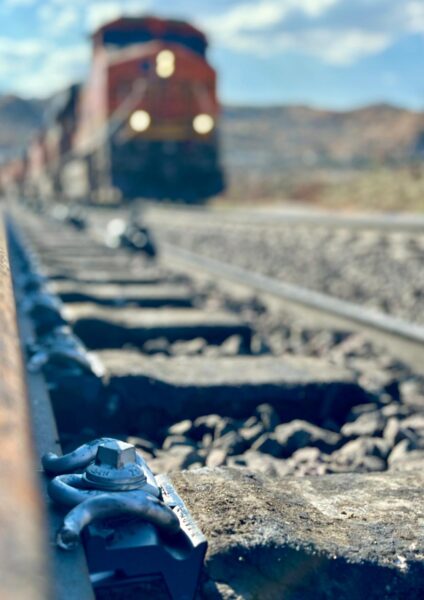
Vossloh’s M-Generation: A New Era in Fastening Technology
With the development of the innovative M-Generation, Vossloh has redefined rail fastening technology from the ground up. This forward-looking product family was developed specifically to meet the growing demands of high-frequency, heavy rail traffic. It combines advancements in materials science with an optimized design that reduces life cycle costs and sets new standards for sustainability. To ensure maximum supply reliability and proximity to the North American market, Vossloh manufactures its components locally at its state-of-the-art factory in McGregor, TX.
A central physical problem in modern heavy haul rail operations is the massive increase in high-frequency vibrations. These are caused by the constant point of contact between the wheel and the rail and are further enhanced by uneven wheels, flat spots, or irregularities on the rail surface. If the excitation frequency of the train matches the natural frequency of conventional rail fastenings, dangerous resonance occurs, causing the clamp to vibrate uncontrollably, leading to material fatigue and, consequently, frequent and unpredictable clamp failures.
The M-Generation solves this problem by significantly increasing the natural frequency of the tension clamps up to 1,500 Hz. As a result, the clamps are reliably protected against high-frequency external influences. The risk of fatigue failure caused by resonance is practically eliminated, ensuring the long-term structural stability of the entire track.
Another technical milestone of the M-Generation is the use of a new, optimized steel composition, which gives the tension clamps significantly higher fatigue strength and even greater robustness. The clamps are thus able to absorb extreme dynamic forces permanently and elastically. This increased elasticity not only protects the clamp itself from premature failure but also protects the entire superstructure by significantly reducing wear on the rails, other fastening components, and the underlying ties.
For North American rail operators, the reduction in system complexity also represents a decisive economic benefit. The components of the M-Generation are fully compatible with existing systems. This enables the rapid and cost-effective modernization of existing heavy haul lines as part of regular rail relay, without the need to modify tie designs or replace entire system structures at high cost.
Within this versatile product family, one specific system configuration stands out for the U.S. market: the MFlex 9® system. It was developed for the extreme loads of heavy haul traffic on ballasted tracks. While conventional fastening systems fail under the brutal forces of high axle loads, MFlex 9® offers the necessary robustness, reliability, and lasting elasticity thanks to the perfect alignment of its highly developed individual components.
The defining and visually striking element of the system is the newly developed M9 tension clamp. Its unique geometry features outward-bent spring arms that significantly increase torsional resistance. This design provides superior lateral stability, effectively countering massive forces to keep the rail securely in place and prevent dangerous tilting. The M9, like all other Vossloh tension clamps, features a cleverly integrated center loop that acts independently from the outer spring arms holding the rail and as a mechanical anti-tilting mechanism. As soon as the rail threatens to tilt under extreme lateral loads, the center loop builds up a high mechanical counterforce, holding the rail securely in position.
Significantly extending rail life under the extreme conditions of North American heavy haul traffic is a multifaceted challenge that demands a radical rethink. In modern networks, the rail fastening system can no longer be viewed as a static connecting element but must take on the role of an active, highly elastic control element that regulates and diffuses the immense dynamics of the track.
With the pioneering M-Generation and the MFlex 9® system based upon it, Vossloh delivers the perfect answer to the most pressing questions of railroad companies. By combining cutting-edge material science with an optimized geometry, this system successfully absorbs high-frequency vibrations, distributes tons of axle loads over a wide area, and protects the track bed from destruction. The compelling result: the cost-intensive cycle of premature wear and too-frequent tamping operations is effectively broken. Rail life is drastically extended, maintenance procedures become less frequent and more predictable, and track availability rises to a new maximum. For North American heavy haul operations, the Vossloh MFlex® system marks a decisive milestone on the path toward a safer, more durable, and highly profitable rail infrastructure – fully prepared for the challenges of tomorrow.
Media
RELATED ARTICLES