CN Commits to Port of Prince Rupert’s Future With Zanardi Rapids Bridge Project
Written by Jennifer McLawhorn, Managing Editor


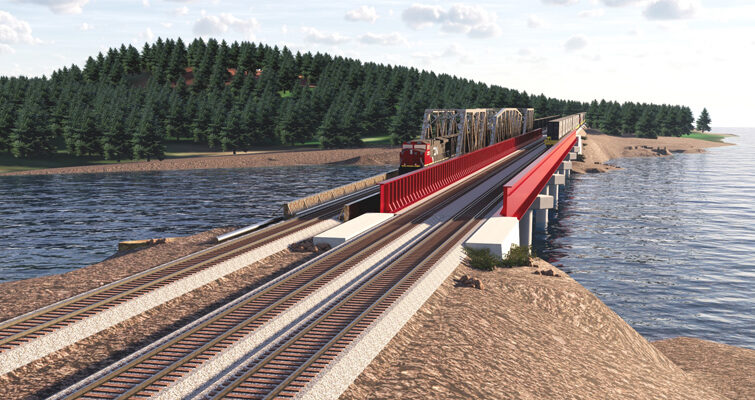
Zanardi Rapids Bridge Project at Port of Prince Rupert.
Courtesy of CN
PRINCE RUPERT, British Columbia - CN is investing in work at the Port of Prince Rupert, namely the Zanardi Rapids Bridge Project.
On July 30, the Class I detailed its commitment to the infrastructure project at the Port of Prince Rupert. The area is “one of North America’s fastest growing and most efficient gateways – offering a unique geographic advantage.” It is closer to Asia than other alternatives by 500 nautical miles and is 36 hours closer to Shanghai than Seattle. The advantages of Port of Prince Rupert lie in its deep harbour that is ice-free year round, its safe and protected approaches, and its rail reach across North America. It connects to CN’s network to ensure “seamless transportation to major North American markets.”
The Zanardi Rapids Bridge Project is an infrastructure project that CN says fits its focus on “long-term rail capacity.” The Zanardi Rapids are located at the entrance to the Port of Prince Rupert and the City of Prince Rupert, presenting a “natural bottleneck for rail capacity.” The bridge will be a 1600-foot-long waterway crossing that will expand said capacity and extend several miles of track in both directions, “connecting the new three-track bridge to meet growing demand.” As of reporting, the current bridge accommodates 24 trains daily. However, there is an expected increase over the next decade, necessitating a new structure to accommodate said growth.
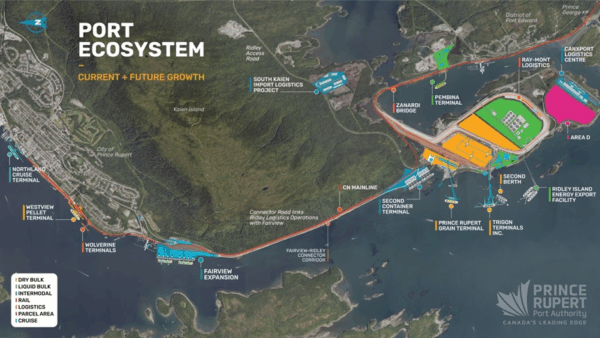
The Zanardi Rapids Bridge will enable long-term growth for CN. CN states that as it invests in infrastructure, it is also “investing in the economic future of Canada and North America. The Port of Prince Rupert represents a gateway of opportunity – and with the Zanardi Rapids Bridge Project, CN is helping build the backbone for a stronger, more connected tomorrow.”
The Zanardi Rapids Bridge project is not the only one at the Port of Prince Rupert. Other projects are underway, including “CANXPORT: a bulk trainload and breakbulk facility with an off-dock container yard; REEF (Ridley Island Energy Export Facility): a bulk liquids and LPG terminal helping position Canada as a global energy partner; Trigon Berth Expansion: increasing capacity at the existing Trigon terminal; [and] Import Container Trainload Facility: addressing surging demand for transloading services.”