Enhancing Rail Integrity: Expansion of the Rail Flaw Library at the Transportation Technology Center
Written by TTC Operated by ENSCO


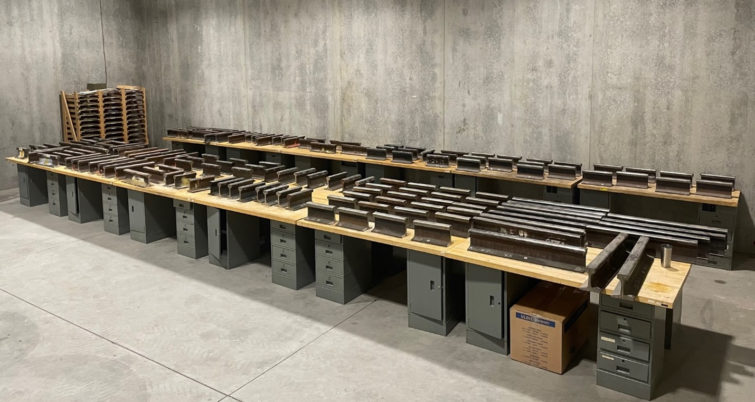
Figure 1. Overview of the Rail Flaw Library of Associated Defects (RF-LOAD) at the Transportation Technology Center (TTC).
Courtesy of TTC Operated by ENSCO
PUEBLO, Colo. - Expanding the RF-LOAD to enhance rail safety. From Alejandro Alvarez Reyes, Senior Rail Research Engineer, ENSCO, Inc., Pueblo, CO; Megan Brice, Rail Integrity Program Manager, Federal Railroad Administration; Robert Wilson, Track Research Engineer, Federal Railroad Administration.
Introduction
Enhancing rail integrity through improved rail inspection techniques continues to be an essential element of railway safety. This article explores the expansion of the Rail Flaw Library of Associated Defects (RF-LOAD) at the Transportation Technology Center (TTC) in Pueblo, Colorado, supported by the Federal Railroad Administration (FRA). The RF-LOAD aims to enable researchers and technologists to develop new rail flaw detection and characterization methods, ultimately improving rail integrity and associated railway safety and reliability.
Background
The RF-LOAD began in 2017, aiming to build a comprehensive library of rail flaw samples for the purpose of having an accessible source of defective rails and welds for academic researchers and industry technology companies. This library is essential for developing and refining non-destructive evaluation (NDE) techniques, particularly ultrasonic testing (UT) and phased array ultrasonic testing (PAUT). These methods detect internal rail defects that might not be visible on the surface but could lead to service failures or broken rail derailments if left unchecked.
Ultrasonic NDE methods are the primary techniques railroads use to monitor, detect, and characterize rail defects. These methods rely on the reflection of ultrasonic waves from flaws within the rail. However, traditional ultrasonic systems have limitations, such as fixed-angled inspection approaches and challenges with acoustic coupling, particularly with worn rail profiles or damaged rail surfaces. The RF-LOAD helps address and mitigate these limitations by providing a diverse set of rail and weld samples with machined and naturally occurring flaws for testing and improving NDE techniques.
Objectives
The primary objective of the RF-LOAD expansion is to enhance rail safety by enabling researchers and technologists to develop and deploy advanced rail NDE methods. Specific goals include improving defect detection sensitivity by enhancing the ability of NDE techniques to detect smaller and more challenging flaws. Additionally, the library aims to increase inspection reliability by standardizing inspection processes to reduce variability and improve accuracy. Another key goal is to support industry needs by providing resources for operator training, rigorous calibration, improved inspection and maintenance practices, and risk reduction through probability of detection (POD) demonstrations.
The RF-LOAD is a counterpart to the Rail Defect Test Facility (RDTF) track at the TTC. The RDTF is a specialized test track that has machined and naturally occurring rail flaw defects intentionally installed in the track. The RDTF is a great resource to evaluate automated rail flaw inspection technologies once they are at the stage for on-track evaluations. The RF-LOAD is a great resource to evaluate rail flaws in an in-depth, laboratory setting.
Methods and Tools
The RF-LOAD uses a combination of physical and NDE measurement techniques to characterize rail flaws. These methods include:
- Dimensional and MiniProf Profile Measurements: These measurements help calculate rail wear and align rails with template profiles, generating two- and three-dimensional CAD models of the defective rails.
- Ultrasonic Testing (UT) and Phased Array UT (PAUT): Hand-held ultrasonic devices detect and characterize internal flaws. PAUT is more accurate than conventional UT, especially for sizing reflectors in worn rails. The PAUT unit available onsite has Full Matrix Capture/Total Focusing Method (FMC/TFM) capabilities, known for delivering better image quality and solving engineering issues, adding economic value.
These characterized rail flaw samples and their 3D models are available to interested researchers and industry technologists. The library and the PAUT can be used in situ, or the samples can be shipped to interested parties.This collaboration supports ongoing research and optimization of rail inspection systems.
Importance of Advanced NDE Techniques
Advanced NDE techniques play a crucial role in ensuring rail safety. By providing more accurate and reliable methods for detecting and characterizing rail flaws, these techniques help prevent rail failures and improve the overall safety of rail transportation. The RF-LOAD is a key initiative in advancing these techniques and addressing the challenges faced by the rail industry. Advanced NDE techniques, such as PAUT, offer higher sensitivity and accuracy in detecting small and challenging flaws, identifying potential issues before they lead to rail failures. By characterizing flaws under different rail profiles and surface conditions, advanced NDE techniques provide a comprehensive understanding of the factors that affect flaw detection, optimizing inspection processes and improving reliability. The use of standardized rail flaw samples and rigorous calibration procedures ensures consistency and accuracy in NDE inspections, maintaining high inspection standards and reducing variability. Additionally, advanced NDE techniques and standardized samples facilitate effective operator training, enabling well-trained operators to perform more accurate inspections and identify flaws more reliably, thereby enhancing overall rail safety.
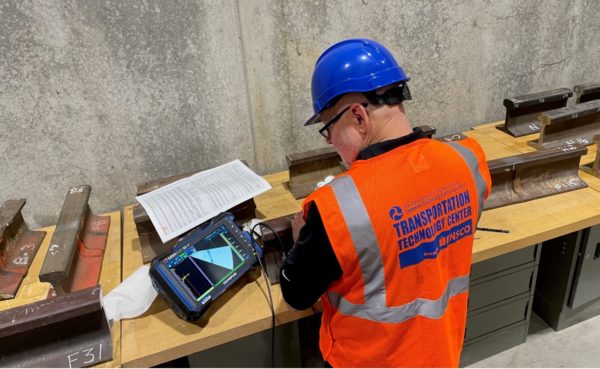
Figure 2. NDE technician performing phased array ultrasonic testing (PAUT) on one of the RF-LOAD rail samples.
Collection of Rail Samples for RF-LOAD
FRA collaborates closely with Class 1 railroads to collect rail samples that reflect current industry challenges, ensuring the library is stocked with relevant examples of rail defects. The process of detecting and characterizing rail flaws involves several steps. First, rail samples with naturally occurring flaws are collected from the field, encompassing various rail profiles with different degrees of wear and surface damage. These samples undergo physical measurements to determine their dimensional properties, with MiniProf profile measurements assessing rail wear and aligning the samples with template profiles. Hand-held UT and PAUT devices are then used to detect and characterize internal flaws within the rail samples, identifying the size, location, and orientation of these flaws. The data obtained from these physical and NDE measurements are used to create two- and three-dimensional CAD models of the defective rails, which help visualize internal flaws and calculate cross-sectional head areas for different rail profiles. Finally, the characterized rail flaw samples and their models are shared with other rail researchers and industry service providers, fostering collaboration and improvement in NDE techniques and the optimization of rail inspection systems.
Collaboration and Industry Support
The RF-LOAD emphasizes the importance of collaboration and industry support in advancing rail safety. By providing access to characterized rail flaw samples and promoting the sharing of resources and findings, the library fosters a collaborative environment where researchers and industry professionals can work together to improve NDE techniques and rail inspection systems. Companies can use the library for training purposes, allowing technicians to gain experience with actual defects pulled from tracks. Additionally, it serves as a valuable resource for developing handheld technology and equipment and as a crucial step in the development of non-contact/on-track inspection technology and equipment before they are ready for on-track testing. The characterized rail flaw samples and their models are available to other rail researchers and industry service providers, supporting ongoing research and development efforts. The library encourages collaboration among rail industry stakeholders, including researchers, service providers, and regulatory agencies, helping address common challenges and drive improvements in rail safety. Additionally, the RF-LOAD provides valuable data and resources for developing and testing emerging NDE technologies. By supporting innovation, the library helps advance the state of the art in rail inspection and flaw detection.
Impact and Future Actions
The expansion of the RF-LOAD is expected to significantly impact the rail industry by providing a robust resource for testing and improving NDE techniques. This initiative will:
- Support Research and Development: The library provides valuable data for developing new NDE technologies and improving existing ones.
- Enhance Rail Safety: Improving flaw detection and characterization methods can reduce the risk of rail failures.
- Facilitate Operator Training: Standardized samples help train operators more effectively, ensuring consistent and accurate inspections.
- Promote Industry Collaboration: Sharing resources and findings fosters collaboration across the rail industry, driving collective improvements in rail safety and reliability.
FRA and ENSCO will continue to collect and characterize a wide array of naturally occurring rail flaw samples from various sources, including the TTC and revenue service lines. This ongoing effort aims to meet future development needs by providing researchers and industry professionals with open access to different kinds of rail defects.
Conclusion
The expansion of the RF-LOAD at the TTC marks a significant advancement in rail safety. By offering valuable resources for research, development, and training, this initiative supports the industry’s ongoing efforts to enhance the integrity and reliability of rail transportation.
RF-LOAD plays a crucial role in improving rail NDE techniques, enabling better detection and characterization of rail flaws, which in turn reduces the risk of rail failures. Continued collaboration with industry stakeholders, including railroads donating service flaws, is vital for the library’s success and the advancement of NDE methods.
For more detailed information on accessing the library and borrowing samples, please visit FRA’s website at https://railroads.dot.gov/elibrary. For inquiries about the Rail Flaw Library and ongoing research, please contact Alejandro Alvarez Reyes at [email protected], and explore more about rail integrity initiatives on the TTC website at www.ttc-ensco.com.