SMART Transportation Division President Previsich joins call to Congress for passenger rail funding
United Transportation Union Sheet Metal, Air, Rail and Transportation Workers (UTU-SMART) President John Previsich testified before the U.S. Senate Committee on Commerce, Science, and Transportation’s Subcommittee on Surface Transportation and Merchant Marine Infrastructure, Safety and Security Dec. 10 at the Russell Senate Office Building.
The hearing focused on the current state of intercity passenger rail in the United States, the need to invest for future growth and implications for future legislative action. It was presided over by Sen. Richard Blumenthal (D-Conn.), chairman of the subcommittee.
Previsich called on the committee and Congress as a whole to present a long-term vision for passenger rail that includes predictable, dedicated sources of funding.
“Public investment in our nation’s passenger rail system is truly an investment in our nation’s future. Passenger rail is a critical part of our national transportation infrastructure, an important driver of our national and regional economies and is a middle-class job creator,” Previsich said.
“I can speak to this matter from personal experience. In my capacity as a union representative, I have been involved on passenger rail properties from coast to coast that have leveraged various forms of public funding to provide excellent quality service to the communities through which they operate.
“In my home state of California, I have watched Caltrain in the San Francisco Bay Area leverage a combination of local and federal funding to revitalize the service and move from a low of 5,500 boardings per day when operated by a private enterprise to the current figure of over 53,000 boardings per day.
“In my home county of Santa Cruz, Calif., a planning process is already underway to identify transit corridors that will reduce the number of daily auto trips, decrease our use of fossil fuels and promote more affordable housing. All across America, communities are relying on transit funding to invest in strategic planning that will pay back the investment many times over through job creation, community stimulus, an increased tax base and better utilization of local resources,” he continued.
He said that it is important to note that for more than 100 years prior to the creation of www.amtrak.comAmtrak, passenger rail service was provided by private railroads. For at least 40 years prior to public funding, the private rail carriers were unable to provide passenger rail service without sustaining significant financial losses. It was because private operators were unable to continue to provide that service without sustaining huge losses that Amtrak was formed.
“Amtrak was created to save rail passenger service in America, but it must be remembered that the creation of Amtrak was also intended to save our freight rail industry from economic ruin,” explained Previsch. “America’s railroads were losing $1 billion per year providing passenger service just prior to the creation of Amtrak. That is $10 billion in today’s dollars. Had Amtrak not been established, America’s rail system would have financially collapsed.”
Today, he says, Americans support and want more passenger rail.
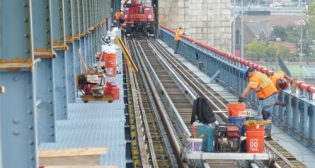
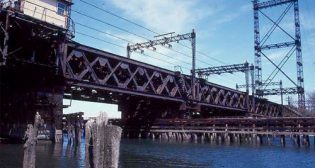
“Unfortunately, this comes at a time when inadequate federal funding has caused our nation’s passenger rail system to age and deteriorate. As Amtrak’s annual budget requests have established, its aging fleet needs replacing and the system needs significant renovations to tracks, bridges, tunnels and other infrastructure. Meanwhile, the rest of the world – most notably China – is investing heavily in modern and efficient passenger rail infrastructure, leaving American competitiveness, and American workers, further and further behind.”
Earlier this year, the House Transportation and Infrastructure Committee reported out the Passenger Rail Reform and Investment Act (PRRIA) of 2014. Unions supported this measure. The four-year bill does many important things that will help strengthen the national passenger rail network. However, Previsch says, it does not provide Amtrak with the funding levels required to meet the needs of an aging system.
“Most of all, it does not establish a predictable, dedicated funding source so Amtrak and our communities can adequately plan for future investments,” he stated.
The next passenger rail reauthorization should build on the framework established by PRIIA 2008 and should include dedicated, adequate funding to upgrade and operate the Northeast Corridor and to operate the regional and long-distance trains that make up our national system, he says.
“I want to emphasize one point. Our union is not opposed to private enterprise,” he explained. “The bulk of our membership works for privately held freight railroads and overall we have good relationships with those companies.”
Passenger rail reauthorization is an opportunity to make needed investments in a critical segment of our transportation system, Previsch noted.
“I look forward to working with the members of this committee on the timely passage of a bill that establishes dedicated long-term passenger rail funding, supports the jobs and rights of our skilled and dedicated rail employees, rejects unwanted and ill-advised privatization proposals and lays out a national rail policy that is integrated with America’s multi-modal transportation needs.”
Chairman of Amtrak’s Board of Directors Anthony Coscia provided a testimony as well, urging Congress to provide predictable and dedicated funding.
Previsch’s full testimony can be found here.