
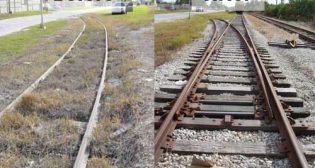
Congress approves extension of 45G tax credit for 2014
Congress approved the extension of the Section 45G shortline tax credit to cover all of the 2014 tax year.
Congress approved the extension of the Section 45G shortline tax credit to cover all of the 2014 tax year.
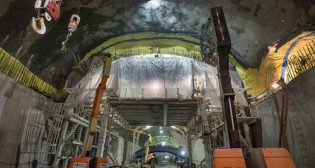
Metropolitan Transportation Authority‘s Second Avenue Subway construction has reached a milestone with the on-time completion of the 86th Street Station cavern.
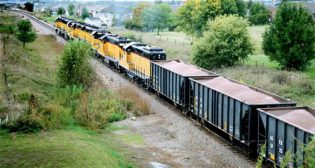
Four rail projects in South Dakota have received $56 million in public and private funds.
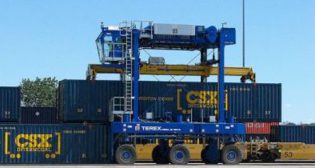
CSX opened a new intermodal terminal in Salaberry-de-Valleyfield near Montreal, QC.
Following months of work, a multitude of inspections and an additional CA$10 million (US$8.6 million) investment, Central Maine & Quebec Railway (CMQ) got the go-ahead from Transport Canada.
On December 5, CMQ received the official revocation of a series of notices and orders, confirming immediate threats no longer exist on CMQ railway. The notices and orders were transferred to CMQ following its purchase of bankrupt Montreal Maine & Atlantic.
CMQ has spent the past four months installing more than 32,000 new crossties, 110,000 linear feet of rail and 25,000 tons of ballast, upgrading bridges, culverts and crossings, completing surfacing work and removing more than 300 in-track rail defects from its main tracks and sidings. The Sherbrooke subdivision is the 125-mile backbone of CMQ’s Quebec rail line and stretches from Lac-Mégantic to Brookport just east of Farnham.
“We had to make this investment. The line was covered in snow last February and March when we were finally able to begin our diligence, but we made a commitment to Lac-Mégantic Mayor Laroche and citizens, as well as many regulators, that we would address the years of neglect,” said CMQ President and Chief Executive Officer John Giles. “It was an extremely tough undertaking. We had industry peers questioning the amount of work that we signed up for with such a short construction season. I knew we were in good hands with Ron Marshall, general manager of engineering, leading this project with his team.”
When asked about the scope of project, Marshall commented, “This is one of the most challenging construction seasons I’ve ever been involved in. But I knew from my experience working with this team at RailAmerica that I would have the support I needed. This investment demonstrates our team’s commitment to operating the railway in a safe and responsible fashion.”
CMQ considers Phase 1 of its transformation now largely completed.
“Not to say we don’t have a lot more track and infrastructure work to do next spring, but we have already started Phase II, which focuses on growth, customers and interline partners,” said Giles.
The Transportation Safety Board of Canada (TSB) released its investigation report into a May 2013 collision between two Canadian Pacific trains just east of Dunmore, AB. The TSB said this accident highlights the need for action on two of the TSB’s Watchlist issues: following railway signal indications and on-board video and voice recorders.
New Jersey Transit (NJ Transit) has completed a three-year, $2.5-million project to stabilize and restore the historic Red Bank Station.
National Railroad Construction and Maintenance Association (NRC) selected the winners of its 2014 Safety, Field Employee of the Year, Small Project of the Year and Large Project of the Year awards. The winners will be recognized at this year’s NRC Conference, January 7-10, 2015, in Hollywood, Fla.
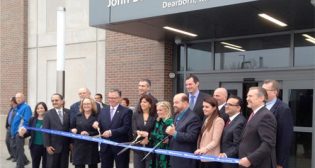
The John D. Dingell Transit Center located at 21201 W. Michigan Avenue in Dearborn, Mich., is officially open.
Amtrak‘s Vermonter service to the Knowledge Corridor will return on December 29, 2014, with stops in Greenfield and Northampton, Mass.
Metropolitan Transportation Authority (MTA) Long Island Rail Road (LIRR) appointed David Kubicek to senior vice president operations, Bruce Pohlot to senior vice president engineering and Edward Dumas vice president market development and public affairs, effective December 29.
The Metra Board of Directors highlighted the need for the $1-billion 75th Street Corridor Improvement Project (CIP), which aims to untangle a knot of railroad tracks on the South Side of Chicago, Ill., that causes significant delays for Metra, Amtrak and several freight railroads.
The Metropolitan Transportation Authority (MTA) in New York is seeking federal funding toward approximately $300 million in infrastructure improvements for the Canarsie L Line, which runs from Manhattan to the Canarsie section of Brooklyn through neighborhoods that have seen the largest increases in population in New York City.
After leading the organization for more than two years, Metrolink Chief Executive Officer Michael DePallo will step down from his post January 2 to pursue other opportunities.
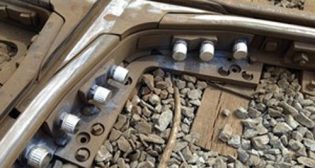
UK-based Tracksure and L.B. Foster Company have concluded an exclusive distribution agreement, which authorizes L.B. Foster to sell the Tracksure fastener range throughout North America.
The Wisconsin Department of Transportation (WisDOT) finalized its purchase of a 70-mile segment of rail line between Madison to Reedsburg and Madison to Cottage Grove.
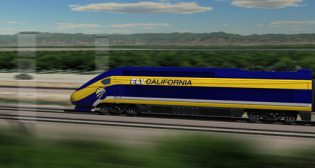
The California High-Speed Rail Authority (CHSRA) has identified Dragados/Flatiron/Shimmick as the best value team for the design-build contract for Construction Package 2-3 (CP 2-3), the next 65 mile segment from Fresno to North of Bakersfield.
The Port Authority of New York and New Jersey Board of Commissioners adopted a $2.9-billion Operating Budget and a $3.6-billion Capital Budget. Combined, together with debt service, the budget for 2015 totals $7.8 billion.
United Transportation Union Sheet Metal, Air, Rail and Transportation Workers (UTU-SMART) President John Previsich testified before the U.S. Senate Committee on Commerce, Science, and Transportation’s Subcommittee on Surface Transportation and Merchant Marine Infrastructure, Safety and Security Dec. 10 at the Russell Senate Office Building.
The hearing focused on the current state of intercity passenger rail in the United States, the need to invest for future growth and implications for future legislative action. It was presided over by Sen. Richard Blumenthal (D-Conn.), chairman of the subcommittee.
Previsich called on the committee and Congress as a whole to present a long-term vision for passenger rail that includes predictable, dedicated sources of funding.
“Public investment in our nation’s passenger rail system is truly an investment in our nation’s future. Passenger rail is a critical part of our national transportation infrastructure, an important driver of our national and regional economies and is a middle-class job creator,” Previsich said.
“I can speak to this matter from personal experience. In my capacity as a union representative, I have been involved on passenger rail properties from coast to coast that have leveraged various forms of public funding to provide excellent quality service to the communities through which they operate.
“In my home state of California, I have watched Caltrain in the San Francisco Bay Area leverage a combination of local and federal funding to revitalize the service and move from a low of 5,500 boardings per day when operated by a private enterprise to the current figure of over 53,000 boardings per day.
“In my home county of Santa Cruz, Calif., a planning process is already underway to identify transit corridors that will reduce the number of daily auto trips, decrease our use of fossil fuels and promote more affordable housing. All across America, communities are relying on transit funding to invest in strategic planning that will pay back the investment many times over through job creation, community stimulus, an increased tax base and better utilization of local resources,” he continued.
He said that it is important to note that for more than 100 years prior to the creation of www.amtrak.comAmtrak, passenger rail service was provided by private railroads. For at least 40 years prior to public funding, the private rail carriers were unable to provide passenger rail service without sustaining significant financial losses. It was because private operators were unable to continue to provide that service without sustaining huge losses that Amtrak was formed.
“Amtrak was created to save rail passenger service in America, but it must be remembered that the creation of Amtrak was also intended to save our freight rail industry from economic ruin,” explained Previsch. “America’s railroads were losing $1 billion per year providing passenger service just prior to the creation of Amtrak. That is $10 billion in today’s dollars. Had Amtrak not been established, America’s rail system would have financially collapsed.”
Today, he says, Americans support and want more passenger rail.
“Unfortunately, this comes at a time when inadequate federal funding has caused our nation’s passenger rail system to age and deteriorate. As Amtrak’s annual budget requests have established, its aging fleet needs replacing and the system needs significant renovations to tracks, bridges, tunnels and other infrastructure. Meanwhile, the rest of the world – most notably China – is investing heavily in modern and efficient passenger rail infrastructure, leaving American competitiveness, and American workers, further and further behind.”
Earlier this year, the House Transportation and Infrastructure Committee reported out the Passenger Rail Reform and Investment Act (PRRIA) of 2014. Unions supported this measure. The four-year bill does many important things that will help strengthen the national passenger rail network. However, Previsch says, it does not provide Amtrak with the funding levels required to meet the needs of an aging system.
“Most of all, it does not establish a predictable, dedicated funding source so Amtrak and our communities can adequately plan for future investments,” he stated.
The next passenger rail reauthorization should build on the framework established by PRIIA 2008 and should include dedicated, adequate funding to upgrade and operate the Northeast Corridor and to operate the regional and long-distance trains that make up our national system, he says.
“I want to emphasize one point. Our union is not opposed to private enterprise,” he explained. “The bulk of our membership works for privately held freight railroads and overall we have good relationships with those companies.”
Passenger rail reauthorization is an opportunity to make needed investments in a critical segment of our transportation system, Previsch noted.
“I look forward to working with the members of this committee on the timely passage of a bill that establishes dedicated long-term passenger rail funding, supports the jobs and rights of our skilled and dedicated rail employees, rejects unwanted and ill-advised privatization proposals and lays out a national rail policy that is integrated with America’s multi-modal transportation needs.”
Chairman of Amtrak’s Board of Directors Anthony Coscia provided a testimony as well, urging Congress to provide predictable and dedicated funding.
Previsch’s full testimony can be found here.
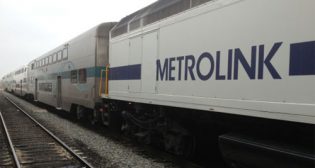
The California Transportation Commission (CTC) allocated more than $254 million for 41 transportation projects that it says will enhance the safety and mobility of Californians throughout the state. The allocation includes $102 million for rail projects.