Rail Receives ‘B-‘ in ASCE’s 2025 Report Card for America’s Infrastructure (UPDATED 3/27)
Written by Jennifer McLawhorn, Managing Editor


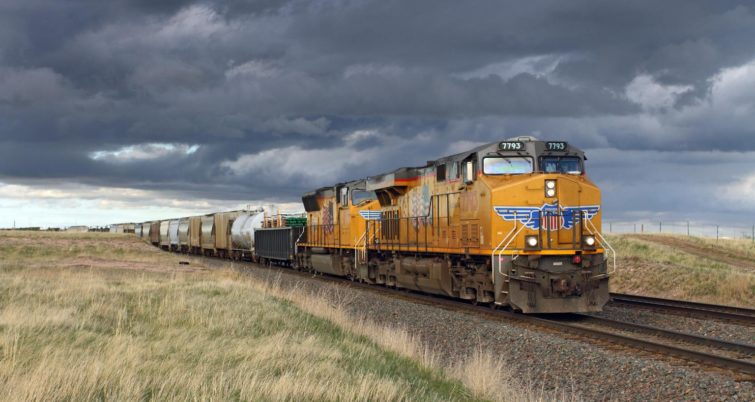
UP 7793 trails on amidst stormy skies.
Union Pacific
WASHINGTON, D.C. - The American Society of Civil Engineers (ASCE) released its 2025 Report Card for America's Infrastructure, with its highest-ever grade of 'C'.
With the highest grade given since 1998, the release states that progress was made since the 2021 Report Card, there is still more investment needed to “overcome decades of underinvestment and adapt the country’s transportation networks, water systems, electric grid and broadband services to meet current and future demands.” The 2021 Report Card showed a $2.59 trillion gap between planned investments and what needs to be done to the nation’s infrastructure. That number has grown to $3.7 trillion in 2025’s Report Card. The full report will be revealed with detailed findings at the ASCE Solutions Summit in Washington, D.C. on March 25th.
Broken down into individual categories including Ports, Stormwater, and Aviation, the categories of Rail and Transit received grades of “B” and “D,” respectively. Rail was one of the categories to improve since 2021, but Transit received a lower grade this time around. The full breakdown of categories and their grades are below:
- Ports – B
- Rail – B-
- Broadband, Solid Waste – C+
- Bridges, Hazardous Waste – C
- Inland Waterways, Drinking Water, Public Parks – C-
- Aviation, Dams, Energy, Levees, Roads, Schools, Wastewater – D+
- Stormwater, Transit – D
There are three trends that impact infrastructure that are listed in the 2025 Report Card. First, aging infrastructure is more vulnerable to extreme weather and natural disasters. During these events, there are “unexpected and often avoidable risks to public safety” and disruptions to economic activity. Second, the ASCE reports that while federal and state investments have made an impact, “sustained investments are key to providing certainty and ensuring planning goes to development.” Third, any data for key performance indicators that is unreliable or unavailable has an effect on infrastructure sectors.
Report Card Chair for the ASCE, Darren Olson said, “Every American household or business immediately feels the impacts of just one inefficiency or failure in our built environment. . . However, if we maintain investments, each American household can save $700 per year. Better infrastructure is an efficient investment of taxpayer dollars that results in a stronger economy and prioritizes American jobs, resilience and connectivity.”
The Rail Section of ASCE’s 2025 Report Card
UPDATE: APTA President and CEO Responds to ASCE’s 2025 Infrastructure Report Card
According to a release from the American Public Transportation Association, or APTA, President and CEO Paul P. Skoutelas stated, “The ASCE 2025 Infrastructure Report Card confirms both the progress we have made and the urgent need to continue investing in America’s public transportation systems. Thanks to the funding partnership among federal, state, and local governments, communities are modernizing and expanding public transit and passenger rail to meet their growing mobility demands. From resilient stations and new safety technologies to state-of-the-art vehicles and improved accessibility, federal investment is making a difference in the lives of millions of Americans.
“These investments in public transportation not only make travel more efficient and lessen congestion, they help drive our economy by creating family-wage jobs, spurring innovation, and supporting manufacturers and small businesses. The benefits are felt nationwide as 77 percent of federal transit funding flows to U.S. businesses.
“However, our work is not finished. Needed, predictable federal funding for tomorrow’s transit must continue or we risk falling backwards. ASCE estimates a $152 billion funding gap for the nation’s public transit systems.
“APTA and its more than 1,600 member organizations urge Congress to support full investment in the final year of the Infrastructure Investment and Jobs Act and to begin work on robust funding in the next Surface Transportation Authorization Act to ensure America’s economic success.”