UP’s Promises Not Worth the Paper They’re Written On –– Commentary
Written by Mike Efaw, National Legislative Director, Brotherhood of Railroad Signalmen


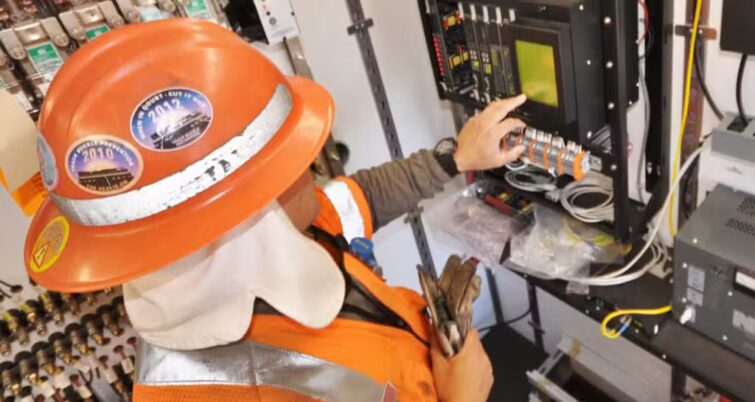
BRS Photo
WASHINGTON, D.C. –– The members of the Brotherhood of Railroad Signalmen install, inspect and maintain the signal systems that govern train movements through thousands of American communities. When a gate comes down at a grade crossing or a signal turns red ahead of a stopped train, our members go to work protecting your family.
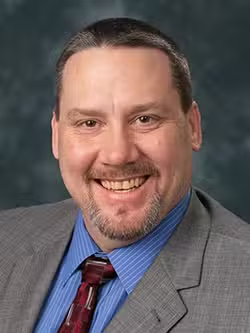
Know this: We don’t speak from corporate boardrooms. We speak from the front lines of rail safety, which is why we can confidently say that the proposed merger of Union Pacific and Norfolk Southern is a danger to workers and the public. (Left: Mike Efaw, BRS)
Union Pacific has answered every concern about this merger the same way: with empty promises about jobs, better service and a stronger network. Here is the problem: Union Pacific’s own record proves that its promises ring hollow, and the Surface Transportation Board should not accept a single commitment from this company at face value.
Start with safety, where the stakes are highest. In 2024, the Federal Railroad Administration (FRA) began a safety culture assessment of Union Pacific, part of a review of every major railroad after the East Palestine disaster. Two weeks in, the FRA shut the assessment down.
The FRA found that Union Pacific employees across 23 states, in every craft, had been coached to give scripted answers to federal safety inspectors and ordered to report any contact with the FRA to their supervisors. When the government came to ask railroaders honest questions about safety, Union Pacific’s response was to script the answers. It’s no surprise why: This is a company whose derailment rate was the highest of any Class I railroad, roughly 30% higher than the next closest carrier.
The pattern of broken commitments is just as clear. In 1996, Union Pacific promised regulators that its merger with Southern Pacific would preserve competition and improve service. Instead, the network melted down for two years, shippers and communities paid the price, and competitors are still asking regulators to enforce commitments that were ignored decades ago.
I have seen this pattern up close before. I worked as a Signal Foreman at CSX during the 1999 breakup of Conrail between CSX and Norfolk Southern, a transaction that disrupted freight operations throughout the East. CSX had begun a major capacity improvement program back in 1997 to prepare for that transaction. Despite years of planning, the split still triggered operational and service meltdowns that paralyzed freight traffic. Our craft experienced furloughs in the aftermath. Large-scale rail mergers have a history of producing exactly this outcome. Months or years of promises are followed by gridlock and a failure to follow through on the ground.
The recent record is no better. In 2022, Union Pacific stood alone among the major railroads in receiving two federal emergency service orders, the first the STB had issued in more than a decade. The railroad that issued 27 traffic embargoes in 2017 issued more than 1,000 in 2022, telling its own customers it could not carry their freight.
Hauled before the Board, Union Pacific’s chief executive pledged in writing to pause those embargoes. The pledge lasted less than two weeks. When regulators pressed the railroads to rebuild their workforces, Union Pacific promised to hire, then turned around and furloughed workers, drawing public rebukes from the heads of both the STB and the FRA.
This is the same company now asking the Board, workers and the public to trust it with control of nearly half the nation’s rail traffic. The signal systems our members maintain do not run on promises. They run on redundancy, verification and proof. The STB should demand nothing less. Paper commitments from Union Pacific are not protections. They are press releases with expiration dates, and the expiration date always arrives once the deal is closed and the oversight ends.
The rail industry has been down this road before. The results were disruptive, dangerous and costly. This merger is about expanding corporate power while shifting the risk onto workers, communities, and the public. We are asking the STB to judge Union Pacific by its record, not its promises, because the record tells us everything we need to know.