Groundwork to Growth: Construction Perspectives
Written by Jennifer McLawhorn, Managing Editor


Shutterstock
ATLANTA - Managing Editor Jennifer McLawhorn spoke to and compiled the perspectives of construction company executives. These perspectives encompass safety culture, collaborative partnerships, and how innovative delivery methods pave a path forward.
Earlier this spring, RT&S spoke to and compiled the perspectives of engineering firm leaders. It was only right to turn our attention to the construction side of the business and ask these executives their outlooks. As you read these profiles, you’ll note a focus on operational efficiency, safety, and sustainability. However, a common thread emerged in their responses: an emphasis placed on the importance of people. After all, it’s people who make up the business, who generate ideas to spur technological innovation, and who actively work on the railroad.
Ames Construction: A Legacy of Safety, Innovation, and Solutions Without Surprises
By Curtis Bilow, Executive Vice President, Ames Construction
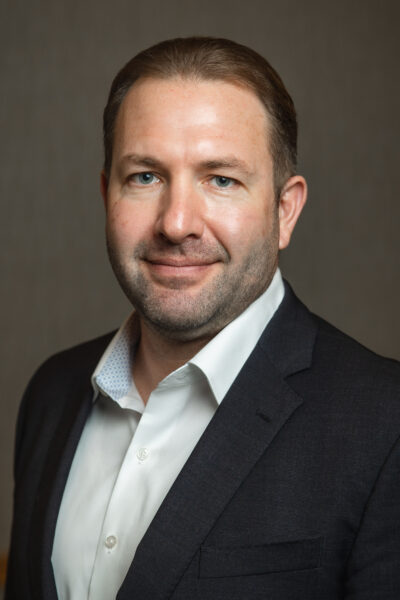
For over 30 years, Ames has delivered construction services and solutions to the railroad industry. Our founders had a deep passion for the railroads, and their commitment continues to drive our company, from leadership to team members in the field. While much has changed, Ames remains dedicated to safety, innovation, and partnership.
In this rapidly evolving landscape, where capital investments are growing and project schedules are accelerating, safety is the foundation of every successful job. At Ames, we understand that tighter work windows, increased regulatory scrutiny, and heightened public awareness mean we must plan better, communicate clearer, and execute smarter. One often-overlooked factor in construction safety is mental health. Rail projects often involve remote travel, extended time away from home, and high-pressure environments. The toll on workers and their families can be significant. Construction has one of the highest suicide rates among all industries in the U.S., and the rail industry is not immune. That’s why Ames is investing in mental health support, providing resources, and encouraging open conversations across our workforce. Safety is more than hard hats and vests. It’s about protecting people in every sense of the word.
Across the railroad industry, there’s a growing shift toward alternative project delivery models, and for good reason. With billions in rail infrastructure investment anticipated over the next decade, owners are seeking faster, more collaborative ways to deliver projects. Ames is at the forefront of this shift, delivering intermodal facility expansions, rail bridges, and other critical facilities. Alternative delivery methods allow us to engage early, partner with owners and designers to identify efficiencies, mitigate risks, and keep costs under control before construction even begins.
Our philosophy, “Solutions Without Surprises,” is more than a slogan. It’s a way of working that anticipates challenges, fosters trust, and puts the clients first. Ames innovates where it counts: in planning, scheduling, budgeting, and safety integration, before boots hit the ground. As freight railroads seek ways to maintain fluidity amid record demand, and passenger agencies plan ambitious expansions, the ability to deliver complex work with minimal disruption is more valuable than ever.
There’s no question the rail industry is in a period of transformation. Whether it’s the shift toward decarbonization, growing intermodal volumes, or increasing network fluidity, change is happening. The industry needs contractors that can adapt quickly and think ahead. Ames believes the future is one of true partnership with railroads, engineers, subcontractors, and suppliers. We must focus on operational efficiency and cost reduction as intently as our railroad clients, and we must continually improve how we collaborate across the supply chain.
This mindset has guided us through decades of successful railroad work, and it will continue to do so. On December 31, 2024, after 63 years of private ownership, Ames transitioned to an Employee Stock Ownership Plan (ESOP). This historic moment was about culture and sustainability as much as it was about succession. The ESOP ensures that the core values that built Ames—safety, innovation, teamwork, and accountability—will carry forward with even greater meaning.
Road & Rail Services Brings Operator Insight to Rail Facility Design and Construction
By Kevin Brandon, CEO, Road & Rail Services
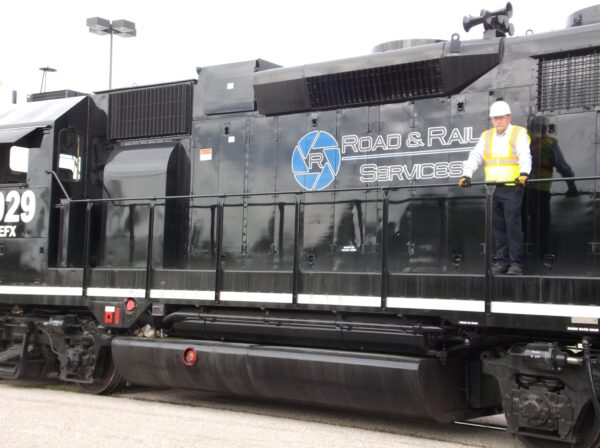
As the rail industry evolves, so do the demands on infrastructure—especially in high-volume, complex logistics environments. Road & Rail Services, with decades of experience operating facilities across the country, is leveraging its deep operational knowledge to provide a more strategic, integrated approach to track construction and facility design. “We’ve always asked, ‘How can we create more value for our customers?’” says CEO Kevin Brandon. “We started our track construction division with that in mind. Today, we’re not just proficient — we’re strategic partners in designing facilities that operate efficiently on day one and scale with future growth.”
What sets Road & Rail Services apart is its dual expertise in track construction and rail operations. Road & Rail understands how poor design choices can lead to costly operational inefficiencies over time. “As an operator, we’ve seen the consequences of underinvestment in track infrastructure. That gives us a unique perspective on why thoughtful design from the start is critical.” This hands-on operational insight allows the company to anticipate needs others might overlook—from switch placement to demurrage mitigation—ensuring designs align with real-world performance. By integrating engineering, construction, and operations, the company delivers smarter, more cost-effective solutions that flex as customers’ needs evolve. The company is also expanding its capabilities by partnering with engineering firms to offer full-service design-build-operate packages. These include potential financing and even warranty-backed service plans, a rarity in the industry. In some circumstances, financing might be accomplished via a purchase improvement lease (PIL), which can be advantageous to all parties and allow Road & Rail to continue to add value for the customer.
“Whether it’s a greenfield facility or an upgrade to an aging one, our approach considers long-term costs, service velocity, and scalability,” Brandon explains. “Our experience with OEMs shows that designing with growth in mind pays off.” For shippers and developers alike, Road & Rail Services represents a powerful partner—one that combines precision with the pragmatic foresight of a seasoned operator. “When a facility hits 80% productivity, it’s at its best. At 100%, it’s overwhelmed,” Brandon says. “We build for that sweet spot.”
How R. J. Corman Embeds Safety Culture into Project Planning
By Mark Boyle, Vice President of Engineering, R. J. Corman Railroad Services, LLC
At R. J. Corman Railroad Services, we pride ourselves on our unwavering commitment to safety, making it an integral part of our engineering and operational ethos. It can’t be overstated how essential it is to incorporate safety into every phase of our projects, particularly in the wake of natural disasters. Take, for instance, our recent efforts on two major track reconstruction projects in North Carolina and Tennessee following the devastation wrought by Hurricane Helene. The damage was extensive, posing numerous engineering and operational challenges. However, before tackling these obstacles, we first had to address significant safety concerns.
The safety challenges we faced were multifaceted. The hurricane destroyed communication equipment, leaving us with no reliable cell phone signals in the affected areas. The steep terrain added another layer of difficulty, making access and maneuverability limited and precarious. Displaced wildlife, unstable soil due to erosion, and the presence of floodwaters in nearby rivers and creeks created further hazards. Understanding and planning for these safety challenges was paramount. We began by establishing robust communication protocols to ensure that our teams could stay in contact despite the signal issues. Our operations team evaluated the steep terrain and designed access routes that minimized risk. Some of the haul roads for material had to be heavily staffed with escorts, flaggers, and spotters to ensure safe ingress and egress. We coordinated with engineers to assess the soil’s integrity and take appropriate steps to ensure its stability. Our teams were equipped with personal protective equipment suited to the conditions, and we continuously monitored weather forecasts to adjust our plans accordingly.
With a solid safety and operational plan in place, we also had to be mindful of the devastating impact this storm had on the residents of these communities. We remained sensitive to the needs of families who were trying to recover and rebuild and were cognizant of their priorities. Mitigating public impacts on an already stressful and difficult situation was a daily expectation for our crews. These efforts exemplify our safety-first culture. By anticipating and being proactive with safety challenges, we ensure that our engineering and operational plans reflect our commitment to the well-being of our workers and the communities we serve. For R. J. Corman, safety isn’t just a priority – it’s the foundation upon which we build our future.
Delta Railroad Services: A Deeper Commitment
By Linda Laurello, CEO, Delta Railroad Services

In a world that demands personalization, the railroad industry is no exception. Our customers — from railroad construction to maintenance, manufacturing, and remanufacturing — require solutions tailored to their specific challenges, and the traditional promise of “on time and under budget” is simply the price of entry. What sets a true partner apart? It’s a commitment that goes deeper. It’s building a motivated workforce, guided by exceptional leadership. It’s channeling significant investment into the innovative technologies that drive real-world results. And it’s an obsession with precision across the entire customer journey—from critical Maintenance of Way (MoW) maintenance to the end-user who depends on us for a reliable commute and a steadfast supply chain.
This year, Delta Railroad Services made it our mission to do even better. We launched our new Rail Grinding division to proactively address a core industry need. This service significantly extends track lifespan. For the public, the benefits are just as tangible: a reduction in noise and vibration, and a smoother, more comfortable passenger experience. We also innovated from the ground up, introducing a first-of-its-kind, custom-built Rail Unloader. We engineered this solution to protect field teams by reducing physical strain and driving greater efficiency in the unloading process. For our clients, this means safer, faster project execution. Finally, we’ve put a spotlight on our most valuable asset: our people. By sharing a behind-the-scenes look at our team — through channels like our #TeamDelta story on social media — we’re showcasing the deep expertise and dedication that fuel every project we undertake. At Delta, we believe our people are our ultimate competitive advantage.
*Editor’s Note: RT&S would like to apologize for the print issue misstating Linda Laurello’s name.
Looking Ahead at Herzog
By Deron Haptonstall, VP of Major Infrastructure, Herzog Contracting Corp.
When asked where Herzog is headed, we’re continuing to pursue the work that’s on the horizon. A lot has to do with work on the Northeast Corridor, so we continue to pursue that work and any project from local and transit agencies. It’s global. There’s a lot going on right now. Our outlook is to look at what’s happening in the industry and at the funding that agencies want to put out. We look at ones that fit best into our business model, and we focus on what’s in the continental U.S.
As for exactly why track construction should be invested in, it’s something I have pondered a lot over the course of my career. In this country, traffic is always a growing issue in our major cities. These cities are growing. Transit by rail is a viable alternative. It’s a great alternative for a lot of reasons. It’s economical for the common person to get to school, work, or travel, especially over driving or flying. It’s good from an overarching standpoint. It alleviates pressure and congestion on other means of transportation. You don’t get on a flight anymore that isn’t completely full. It’s taken years for us to get to this mindset of public transit and the euro model of travel by train. The Northeast Corridor and Brightline have opened people’s minds. Americans want an alternative. There are more opportunities for public transit now than before. With more transit systems in place, they realize it’s a good alternative and to have another option.
Personally, my own perspective is nothing lasts forever. Rail systems have a service life. But, with the latest technology in track construction, it allows for a longer service life. With the right means and methods in products and technology, these systems are a much lower maintenance cost than before. What helps is as we evolve to a dedicated corridor that isn’t shared with freight, those systems can then have a longer service life. Heavier tonnage equates more maintenance costs. As we look at jobs and build interstate railroads and high-speed rail, there should be dedicated corridors. It’s a commonsense approach. Shared track equals more maintenance of way efforts and costs. No heavy freight on dedicated transit systems allows for more sustainability on those systems.
One thing we want people to know about us is that we live by our core beliefs: Safety Without Compromise, Power of the Team, Passion for the Customer and Pursuit of Excellence. Our values lie in doing the right thing all the time, whether or not someone is looking. Our founder, Bill Herzog, was a people person. He focused on people and the relationships. I want people to know Herzog is a company of strong values that are centered around helping people. Bill always wanted to help people in life; it’s one of the reasons he started the company. We’re committed to improving the way of life for Americans. It’s high-level, but that’s what I would want people to know about us. There’s a lot from a technological standpoint that I want people to know about, but the culture of the company and how we treat each other – our partners and community – is foundational and the core of who we are.
RailPros: Partnerships Hold Key to Sustained Growth
By Jason Murray, Vice President Right of Way Services, RailPros
Track and infrastructure development continue to evolve and are key to continued growth for the industry. Not only do railroads continue to invest in infrastructure, but third-party infrastructure projects, such as public projects and utility installations that interact with railroad infrastructure, continue to increase each year. It is imperative that third-party projects are managed to ensure there is no interference with railroad operations and that future railroad development, such as track construction, is not impeded. RailPros currently manages third party Pipe and Wire Permitting for a Class 1 railroad. We proactively review and work directly with the third party to ensure all projects meet or exceed our clients’ standards during design.
At RailPros, we know proactive communication and education of third-party applicants greatly reduces risks to railroad operations. In doing so, the project owner and contractor better understand all requirements and the potential impact their project may have on railroad operations, leading to a better overall project design. Once a third-party project is approved, it is important the project’s construction does not impact railroad operations or infrastructure. Through our total right of way management approach, RailPros can provide both a roadway worker in charge to ensure the safety of crews and equipment working near the track and a construction monitor, who serves as the railroads’ engineering representative during construction. This allows all field design changes and issues to be escalated for review, while keeping the third-party project moving forward, thus reducing duration and risk of the project impacting the railroads’ right of way and infrastructure.
Lastly, as railroads invest in infrastructure, friction with existing third-party infrastructure is expected. It is important that conflicts are actively managed as early in the design process as possible, to provide notice to the impacted party and minimize delay to the railroad’s critical project. RailPros has found that our unique partnerships on both the railroad and third-party sides enable us to provide a holistic look at infrastructure projects and the possible solutions. Strong relationships and partnership with third-party infrastructure owners is key to delivering railroad infrastructure projects on time and within budget.
Railroad Construction Company: A Co-worker Owned Company
By Joe Daloisio, Track Division Manager, Railroad Construction Company, Inc. and current NRC Chairman
At Railroad Construction Company, we see the future of track construction centered around modernization, innovation and resilience. That’s why we’re focused on projects that improve infrastructure longevity and leverage new technologies. Whether it’s supporting expansion or maintaining a state of good repair, we believe investment in rail will remain essential to building a more connected future. Sustainability is no longer optional, it is integrated into our planning, execution and equipment. We invest in modern, low-emission equipment, adopt construction practices that reduce waste and energy usage, and work with clients to build infrastructure that’s built to last. Sustainable track construction not only preserves resources but helps our communities thrive for generations to come.
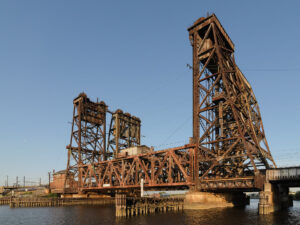
As for what we are currently working on, RCC is proud to be part of several transformative projects across the Northeast and Mid-Atlantic. We’re actively working on constructing 16.1 miles of track for the Purple Line Light Rail P3 Project, in Maryland with Joint Venture Partner, Delta Railroad Services; as a subcontractor to Skanska Traylor PNB JV, RCC is furnishing and installing 17,100 LF of new 136 RE CWR for the Portal North Bridge Project in Kearny, N.J.; in Queens, N.Y., the Skanska Railroad Joint Venture is improving the NYCT Flushing Line, a design-build project for MTA; and multiple infrastructure initiatives in Boston with joint venture partner, SPS New England, including construction of the 60,000 sq. ft. Southampton Street Yard Trainset Facility for Amtrak. We support local transit agencies with ongoing maintenance and rehabilitation efforts, helping to keep systems running safely and efficiently. Our teams serve short-line railroads and industrial clients across N.Y., N.J., Pa., Conn., Del., and Mass., providing everything from inspections and emergency response to full-scale, design-build projects.
RCC isn’t just a company, we are a family of co-workers. Since our founding nearly 100 years ago, we’ve remained true to our values of safety, quality, productivity and having fun. Every co-worker is treated with respect, because we believe we succeed together, as one team. We emphasize ongoing training, professional development and investment in modern tools and equipment to set our teams up for success. Our culture extends across our regional offices in N.J., N.Y., Pa., Md., and Mass. No matter where we work, we bring the same commitment: to deliver quality construction and engineering services safely, with professionalism and integrity. As a co-worker owned company, we build our future.
Hanson: Innovating Rail Infrastructure for Railroads and Communities
By Mat Fletcher, Railway Market Principal, Senior Vice President, Hanson
Hanson continues to lead innovative engineering initiatives that contribute significantly to a safer, sustainable and resilient future for railroads and the communities where they operate. This robust approach to infrastructure advancements is evident in various ongoing projects, with a similar perspective even while working for different owners. Hanson is completing the Springfield Rail Improvements Project in Springfield, IL on behalf of the city, while the Chicago Region Environmental and Transportation Efficiency (CREATE) EW2 Project on Chicago’s South Side is for Norfolk Southern.
This dedication to enhancing railroads and communities helps bolster supply chains. The Springfield Rail Improvements Project is an excellent example of this effort, aiming to streamline the critical freight and Amtrak rail link between St. Louis and Chicago. This project involves realigning Union Pacific and Norfolk Southern tracks into a combined corridor, reducing 68 at-grade crossings to 32 and greatly improving multimodal connectivity through the city to resolve logistical bottlenecks and accommodate growth. This project also will develop a “quiet zone” to further enhance the living environment. The partnership demonstrated by both railroads during this multiyear project has further proved their willingness to serve as good neighbors to the community. Additionally, the railroads will realize a long-term operations and maintenance benefit through safety enhancements, new track and new signals for greater long-term resiliency and expanded right of way for maintenance access.
Similarly, the CREATE EW2 project demonstrates a focus to deliver complex solutions that improve rail operations while fostering community engagement. This project is being executed collaboratively with meticulous planning and coordination, resulting in significant operational upgrades for Norfolk Southern and enhancing mobility in the community. The goal is to enhance mobility for freight, passengers and roadway users by reducing rail-rail conflicts and improving the local roadway network. The rehabilitation of 11 viaducts constructed in the 1900s involves the design and construction of new bridges, retaining walls and noise walls. The renovations will include roadway resurfacing and reconstruction with drainage, sidewalk and lighting upgrades.
Central to Hanson’s strategy is cultivating strong relationships with railroad companies to focus on aligning the engineering advancements with community needs. In both projects, Hanson’s knowledge and skills are evident in navigating the complex landscape of stakeholder coordination, seamlessly delivering improvements that meet operational, environmental and community objectives. By integrating technical innovation and community-focused strategies, ongoing efforts in projects like these highlight a future in which economic growth and community well-being are intricately linked. This coordinated approach enhances safety and efficiency, delivering broad benefits to multiple stakeholders, including railroads, government entities and communities.
Media
RELATED ARTICLES