NRC Chairman’s Column: We’re Not Throwing Away Our Shot to Impact Rail Legislation and Programs
Written by Joe Daloisio, Chairman, National Railroad Construction and Maintenance Association (NRC)


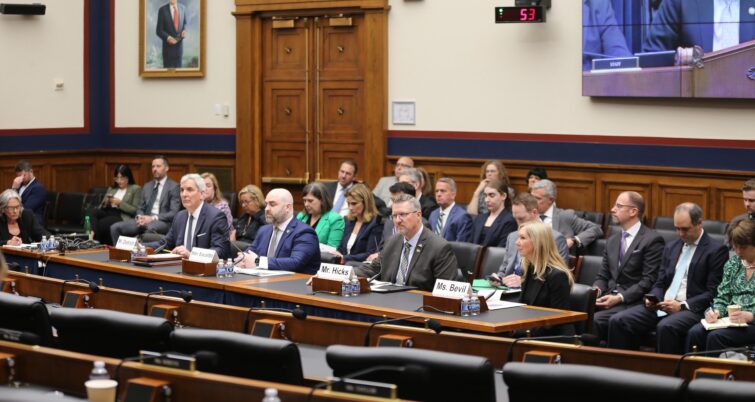
NRC July 2025 Panel
Courtesy of NRC
ATLANTA - Railway Track and Structures July 2025 issue features the NRC Chairman's Column from Joe Daloisio.
The invitation to testify on Capitol Hill on behalf of railway contractors and suppliers is an honor and an enormous opportunity. The NRC capitalized on two invitations in 2025, first in late January, when I testified about potential surface transportation legislative proposals in a hearing before the House Transportation & Infrastructure Committee’s Subcommittee on Railroads, Pipelines, and Hazardous Materials. Testimony before that same Subcommittee followed in May by NRC Board Member Kevin Hicks, senior vice president of rail and freight-market sector leader at GFT, about experiences and recommendations on rail discretionary grant programs.
Being invited to the room where it happens – or at least to where what happens is considered – is a big responsibility, so we made sure we didn’t throw away our shot. We were grateful to go on the record with these concerns by our members about the grants process.
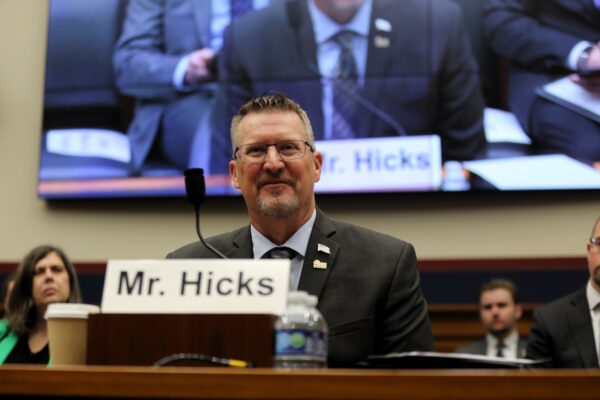
Kevin’s testimony highlighted several key concerns and offered suggestions to help address them. His full testimony is linked here, A few highlights follow:
The grant awards selection process is slow. After the application is submitted, grant award selection takes about six months. Because all the federal rail grant programs are vastly oversubscribed, FRA then takes a long time to evaluate the large number of applications. This is a vicious spiral that forces FRA staff to be in a constant cycle of publishing a Notice of Funding Opportunity (NOFO), awarding grants, and then immediately drafting the next NOFO. These delays result in changing budgets that jeopardize the projects and place additional risks onto contractors, who are usually engaged at the end of this process.
We recommend that Congress consider directing the FRA to identify a “pre-approved” or a prior-vetted pipeline of projects. FRA should consider further standardizing grant applications – such as with a more defined template – that could reduce the effort required to both prepare and review applications.
Grants take too long to obligate. It takes an additional six to 18 months to obligate a grant after selection. The waste due to delays – in the form of administrative and planning costs, inflation, and lost opportunities for alternative use of the capital – hinder us from achieving our capacity expansion goals. Expediting transportation projects can be accomplished while retaining all current environmental safeguards.
Implementation issues delay projects. Numerous factors impact project readiness, including railroad coordination and approvals, utility coordination and relocations, right of way acquisition, permitting and additional funding. While most of these factors are outside of the FRA’s control, the FRA could do more to avoid future delays by having project sponsors better define the status of these factors in advance of obligation. The FRA could also conduct risk reviews later in the grant process based on project scope, readiness, and budget.
Consider other reforms to the grants process. We recommend Congress direct the FRA to speed up and streamline the discretionary grant process to reduce waste, cost overruns, and unnecessary project delays. Our recommendations include standardizing the environmental approval process, providing pre-award spending authority for advance construction and pre-construction activities, providing successful grantees with a target date for a completed grant agreement, sharing responsibility by the USDOT and the grantee for meeting a target date, model grant management system after the FTA’s Transit Award Management System (TrAMS), exempt the national rail network from Section 106 just like the national highway system, streamline the length and complexity of applications to make it easier for smaller entities, and codify authority for flexing and transferring funds between USDOT modal agencies when appropriate.
We don’t take our participation in congressional hearings lightly. We know our invitations are the result of years of relationship-building with Members of Congress and their staff through ongoing outreach and NRC fly-ins, Railroad Day on the Hill, and grassroots events at our members’ facilities and jobsites.
Our opinion matters, and this is no time to take our foot off the gas. We are committed to outreach – with further dialogue between Member of Congress, with FRA Administrator nominee David Fink, FRA Acting Administrator Drew Feeley and other FRA officials , and our member contractors and suppliers – to reform rail funding programs and to ensure continued funding for rail, including preserving the Consolidated Rail Infrastructure and Safety Improvements (CRISI) Program, in the upcoming transportation appropriations bill and the next surface transportation reauthorization bill.
“We aren’t just in this industry. We are this industry!”
Media
RELATED ARTICLES