Rail Passenger Service Profitability – Fantasy Land?
Written by David C. Lester, Editor-in-Chief


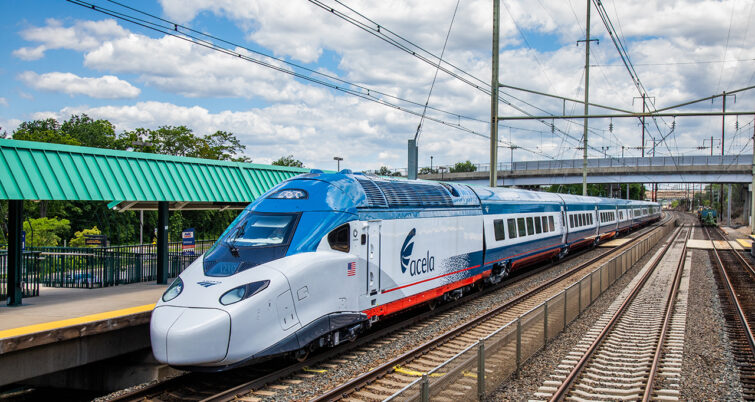
Amtrak Photo
ATLANTA –– From the March 2026 issue of Railway Track and Structures.
The debate around whether common carrier rail passenger service can be profitable is as old as dirt. Privately-owned and publicly-funded railroads have struggled with this for decades. It’s expensive to run passenger trains, and they can be challenging to operate when competing for track time with freight trains. Passengers would not be able to afford ticket prices that covered all costs and left some profit.
It’s generally agreed that passenger operations do not make a profit. Consider that most urban transit and commuter systems have been sitting on a fiscal cliff for the past few years, as federal infrastructure funding runs out, and most systems are scrambling to state and local governments to keep running. Even though ridership is improving, farebox collection represents a relatively low portion of revenue for most systems. Amtrak does not make a profit, and the legislative mandate expecting it to make a profit was reversed seven years after the agency’s inception. And Brightline lost a half-billion dollars in 2024 as ridership and revenue increased significantly. To be fair, though, check out this quote from the Palm Beach Post, quoted by my colleague David Peter Alan, a passenger expert and contributing editor to Railway Age. The quote appeared in David’s RA web story on Brightline finances on September 30, 2025: “According to the privately run passenger train company, Brightline lost about $549 million in 2024, even though its revenue more than doubled compared to 2023.” They also reported: “A big chunk of that, more than $214 million, happened in May 2024 when Brightline refinanced its debt of about $4.6 billion. The Miami-based company also paid $178 million in interest on its debt, it said in its financial statement for 2024. But even without counting debt-related payments, the South Florida-Orlando train still spent more money than it made last year.” For more analysis of Brightline Florida, please see David Peter Alan’s excellent report at this link: https://www.railwayage.com/passenger/intercity/brightline-loses-nearly-550mm-in-2024-but-keeps-on-going/.
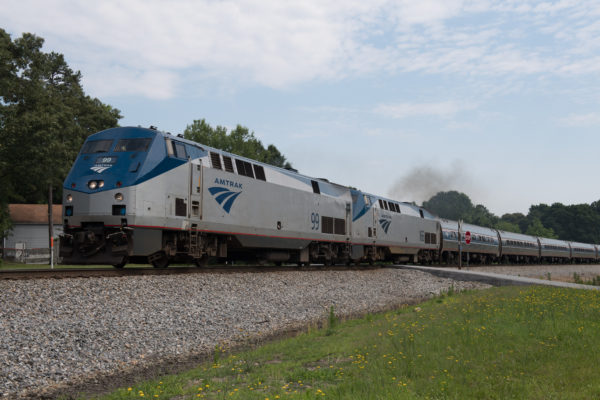
THE DEBATE AROUND WHETHER COMMON CARRIER RAIL PASSENGER SERVICE IS PROFITABLE IS AS OLD AS DIRT. IT IS GENERALLY AGREED THAT PASSENGER OPERATIONS DO NOT MAKE A PROFIT.
I don’t want to use this space to dwell on statistics. For our discussion, we know that common carrier passenger trains are big money losers. I’m sorry to bring up the facts you’ve heard and read a million times, but they’re part of the story. Back in the “heyday” of passenger rail, private railroads made very little, if any, money on passenger train operation. I’ve read that when private railroads improved their accounting methods and segmented revenues and costs associated with freight and passenger service, executives were surprised at the size of the financial gulf between the two. Then, as we all know, the private automobile and the commercial passenger airplane arrived on the scene with strong, continuing infrastructure support (i.e., roads and airports). Once passenger trains lost their mail contracts, it was straight downhill from there.
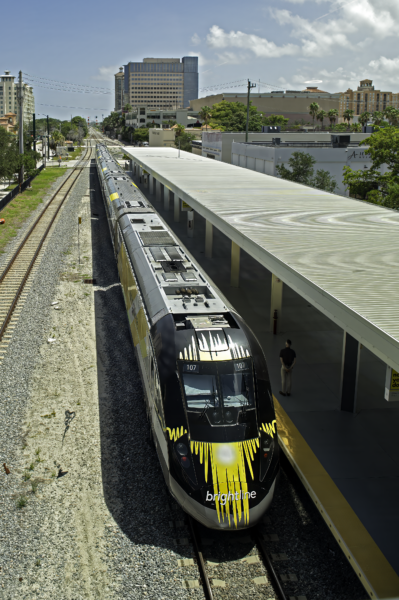
Brightline Train Headed South From West Palm Beach Station. David C. Lester photo.
I strongly believe that rail passenger operations should be run like businesses. Attention to cost control and disciplined, professional operation must be the norm, even though they rely on government investment. However, I think it’s folly to talk about running passenger trains for a self-sustaining profit. Investment in passenger rail is just as valuable to the U.S. economy and society as are roads and airports, which federal and state governments provide. Public money should be invested in our current infrastructure so operations like Amtrak’s California trains, the Northeast Corridor (NEC), and long-distance trains can be successful, along with commuter and transit rail.
At the risk of being accused of heresy, I wonder we if need to spend scarce dollars on truly high-speed rail. I’m not talking about Brightline-type service between West Palm Beach and Orlando, which is considered higher-speed, as is the NEC. I think it would be best to spend on traditional (80-90 m.p.h.) speed and higher-speed (125-150 m.p.h) than truly high-speed (200+ m.p.h.). I wonder what the real demand is for high-speed rail between Los Angeles and San Francisco. It requires about one hour and twenty minutes to fly from LAX to SFO, with around 55 minutes in the air. A high-speed train is projected to complete the journey in just under three hours. I wonder how many business travelers would prefer the train.
I’m not sure that the old adage about trains placing you downtown rather than a suburban airport, except maybe, in the NEC, is nearly as important as it used to be because of burgeoning employment and economic activities in the hinterlands of city areas.
Completing the California line is going to cost a lot more than it already has, and maintenance costs will be high. Moreover, are there going to be multiple departures in both directions per day, with each train packed with travelers? I’m not saying that we will never need high-speed rail in the United States, but I just don’t think it’s necessary at this time, considering the long-term, sustaining improvements conventional passenger rail needs now.
I’ve ridden the Shinkansen high-speed rail in Japan, and it’s wonderful. It would be great to have it in the U.S. As I’ve written before, however, I don’t think we’ll see high-speed rail in this country before 100 years have passed, because I don’t believe the political will exists to fund it to completion. With apologies to Charles Barkley’s book of the same title – I may be wrong , but I doubt it.
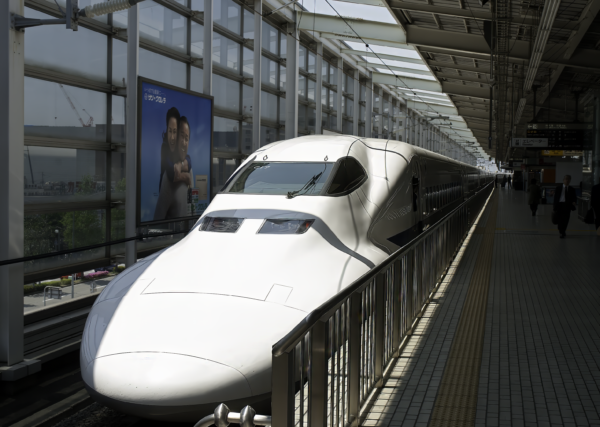
Shinkansen Passenger Train in Japan. David C. Lester photo.