White House Targets Amtrak Spending in New Budget
Written by David C. Lester, Editor-in-Chief


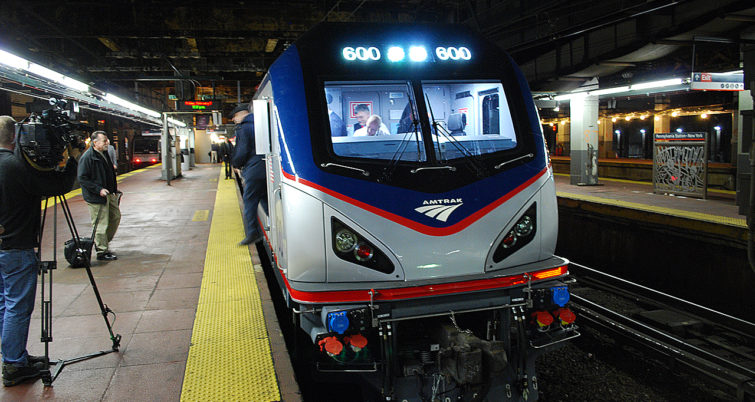
Photo courtesy of William C. Vantuono
WASHINGTON, D.C. –– The White House budget proposal for Fiscal 2027 calls for a decrease in Amtrak spending.
The White House budget proposal for Fiscal Year 2027 has called for cuts in domestic spending to support a significant increase in defense spending. The new budget calls for defense spending of $1.5 trillion, with $73 billion of cuts in other parts of the budget. The increase in defense spending is 42% above the amount for defense in the Fiscal 2026 budget and the cuts represent about 10% of the budget.
The proposed Amtrak budget cut, by itself, represents a 13.5% decrease from 2026 to 2027. In terms of dollars, the 2026 to 2027 changes are $1.57 billion > $1.44 billion for the national network and $841 million > $641 million for the Northeast Corridor (NEC).
Jim Mathews, President and CEO of the Rail Passengers Association, said “At a time of record highs for gas prices and airfare, the Trump administration is proposing cuts to the intercity rail and transit programs that have been helping Americans stay connected to work, school, and to family. This budget moves the nation in the wrong direction for affordability, mobility, and safety.”
The Rail Passengers Association added that “The proposed cuts become even more severe when factoring in the expiration of Advance Appropriations under the Infrastructure Investment and Jobs Act (IIJA) at the end of FY2026.” The addition of this funding expiration, combined with proposed cuts in the FY2027 budgets, the net Amtrak budget impact on FY2027 vs. FY2026 would be:
- “Amtrak National Network: $4.8 billion → $1.45 billion
- Amtrak NEC: $2.0 billion → $600 million
- High-Speed Rail Grants: $900 million → $0
- Federal-State Partnership (total): $3.8 billion → $1.4 billion”
Mathews pointed out that “These reductions represent a dramatic step backward just as states and regions are delivering new service, modernizing aging infrastructure, and responding to unprecedented demand for rail. Slashing funding to proven grant programs pulls the rug out from projects already underway.”
Media
RELATED ARTICLES