Breaking News

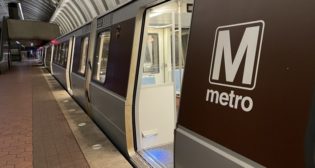
Service on WMATA’s Orange Line Returns to Normal

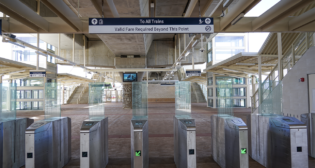
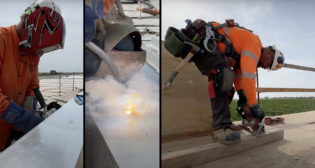
Service on Washington Metropolitan Area Transit Authority’s (WMATA) Orange Line returned to normal on May 22 following a 10-day construction project during which crews worked around the clock at the Minnesota Ave. and Deanwood stations to make roofing repairs.
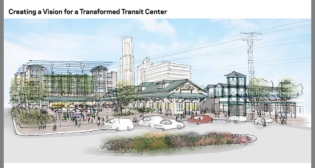
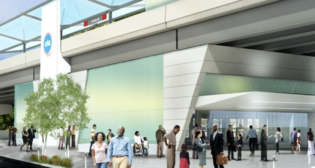
New Rochelle Station Primed for Redesign

The historic Metro-North/Amtrak station located on the Northeast Corridor in downtown New Rochelle, N.Y., is about to undergo a transformation, along with the surrounding area. Originally built in 1887, the station was

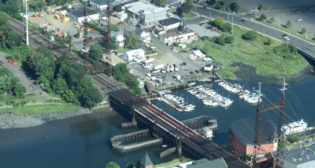
Walk Bridge Off to a Running Start

The Connecticut Department of Transportation (CTDOT) is starting construction on the Norwalk River Railroad (Walk) Bridge Replacement Project in Norwalk. Originally built in 1896, the Walk Bridge is a four-track swing span

NCDOT Awards $2.1MM in FRRCSI Grants

The North Carolina Department of Transportation has awarded five Class II railroads in the state $2.1 million in matching grant funds through the Freight Rail & Rail Crossing Safety Improvement (FRRCSI) Program

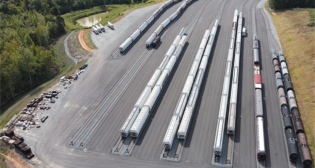
Ohio Rail Commission: $750,000 for CUOH

The Ohio Rail Development Commission (Rail Commission) on May 11 approved a grant of up to $750,000 to Columbus & Ohio River Rail Road (CUOH), a Genesee & Wyoming, Inc. Company, to improve capacity at the Class II’s Newark Yard and mitigate the possibility of blocked railroad crossings in Zanesville, Ohio.

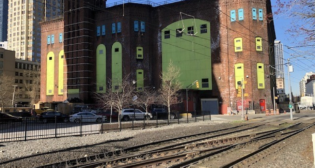
The current PATH powerhouse in Jersey City, built in 1908. (Photograph and Caption Courtesy of Port Authority of New York and New Jersey)

PATH Powers a Resilient Future

The empty triangular lot tucked into a busy section of downtown Jersey City is undergoing the first stages of redevelopment. At the moment, it isn’t much to look at. But for PATH, it’s a powerhouse of a project.

NYMTA Transit Tech Lab Releases Results of Operational Efficiency, Human Capital Utilization Challenges

The New York Metropolitan Transportation Authority/Partnership for NYC Transit Tech Lab on May 9 reported the results of its Operational Efficiency and Human Capital Utilization challenges, in which 15 companies have been selected to collaborate with regional transit agencies and test technologies, such as AI (artificial intelligence), LiDAR and edge computing, to “mitigate service disruptions, automate operations and combat workforce shortages.”