CSX Asks To Use Trip Optimizer Feature To Stop And Start A Train; Union Objects
Written by David C. Lester, Editor-in-Chief


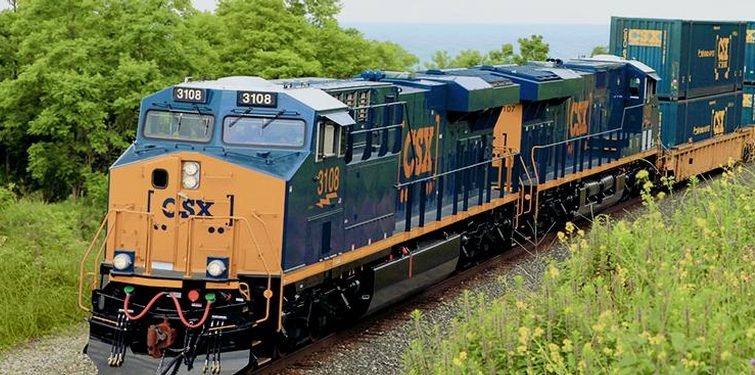
Image courtesy of CSX
JACKSONVILLE –– While locomotive and train operation matters are not within the usual purview of RT&S coverage, this story is the latest example of management and labor disagreement when it comes to the implementation of technology, which is an issue most railroaders must address at some point.
What CSX Wants
Late in 2024, CSX submitted a petition for Federal Railroad Administration (FRA) approval of a “Product Safety Plan” (PSP) for the Trip Optimizer Air Brake Control Product (also referred to as “TO Air Brake Control” or “Air Brake Control.”)
For those who may not be familiar with Trip Optimizer, it is a Wabtec product that the company describes as “A smart cruise-control system for trains that takes into account terrain, train make-up, speed restrictions and operating conditions to calculate an optimum speed profile. It then automatically controls locomotive throttle and dynamic brakes to reduce fuel burn and provide efficient train handling.” This system has been in use for two decades and has been used to monitor these variables and make recommendations to locomotive engineers on needed brake and throttle actions.
Wabtec says that a new feature of Trip Optimizer is “Zero-To-Zero Operation,” which means the system can automatically start the train at 0 mph and stop the train at 0 mph using train air brake control. CSX has been testing this feature for several years and petitioned the FRA to use it beginning in 2022, but no decision has been made.
This dilemma is one of the many examples in the history of industry, particularly the railroad industry, where advances in technology have impacted or could impact the number of employees needed to do a particular job. In this case, labor unions believe implementation of this functionality would bring us closer to automated train operation, which could result in one-person crews or, further down the road, no crews at all. A similar situation exists around the use of Automated Track Inspection Programs (ATIP) as a supplement, or as some fear, a replacement for the need for visual track inspection. While the FRA has issued some waivers for testing ATIP, the railroads would like additional waivers that cover a larger amount of territory.
Why SMART-TD Objects
SMART-TD, the union which, among other crafts, represents conductors when there is a difference in opinion between management and labor, has said that CSX’s claims around fuel consumption and emissions are “little more than a smokescreen for CSX’s true intentions: cutting costs at the expense of safety.”
The union adds “Railroads, along with the Association of American Railroads (AAR), have long used environmental claims to disguise their primary motive of reducing both their fuel and labor costs.” The union goes on to say “The Trip Optimizer system may automate key operations, including control of air brakes. But here’s the reality: this technology is not ready for prime time. Trip Optimizer has been in use for nearly 20 years, and it has consistently failed to perform basic train operations effectively. The system often struggles with throttle control, making erratic adjustments that violate CSX’s own operating rules. Even so, CSX wants to trust this technology with the most crucial safety function on the train, our air brakes.”
“Wabetc, the company behind the system, understands that Trip Optimizer relies on Positive Train Control (PTC), yet PTC is based on the train lineup, not signal speed. This means that a train could blow through a crossover at 45 mph, even if a signal indicates a 30-mph speed limit. We all know CSX and the other carriers would consider this a small flaw in the program, but if the crew doesn’t catch the mistake and fix it, the small flaw becomes a de-certifiable 15 mph overspeed event.”
Finally, SMART-TD says “This proposal is wreckless, and we will fight it every step of the way.”
Media
RELATED ARTICLES