Assessment of Fine Migration in Shoulder Cleaned Ballast
Written by MxV Rail, Corporate Communications


MxV Rail
PUEBLO, Colo. –– (FROM THE AUGUST 2024 ISSUE OF RT&S) MxV Rail partnered with the University of South Carolina (UofSC) to investigate fine migration in shoulder ballast cleaned (SBC) track. In 2021 and 2022, UofSC conducted laboratory “flume tests” that allowed UofSC to quantify fine migration in a variety of maintenance and fine-filled ballast conditions.
Research Article by Stephen Wilk, Principal Investigator I MxV Rail, Pueblo, Colo. & Yu Qian, Professor of Civil Engineering University of South Carolina, Columbia, SC
Laboratory test results were compared with the results from an actual test track “Rainy Section” at the Facility for Accelerated Service Testing (FAST) in Pueblo, CO, along with revenue service testing in the central United States.
In addition to improved drainage,1 a second possible benefit of SBC is fine migration or the “cleaning out” of fines from the center of the track. With this cleaning mechanism, SBC can extend the ballast life by reducing the fines in the center track and increasing the amount of time before undercutting or track renewal is required. In the long term, SBC may also reduce track geometry degradation. Historically, there has been some debate about this “cleaning” process, so it is possible that it happens in certain situations and not others.
This publication documents evidence of outward fine migration in SBC track under a variety of testing conditions. In addition, it explores how different ballast conditions can affect this fine migration. This work will help in developing ballast degradation models and, eventually, aid in SBC maintenance planning. This article presents a summary of Technology Digest TD22-018,2 and more test details can be found there.
Fine Migration
Fine migration can occur through multiple processes. In one process, the downward “shaking” or vibration that happens during train operations moves fines in the upper ballast to the lower ballast and creates a gradient of fines. Another process involves the upward migration of fines toward the surface. In certain cases, this can be a result of surface mud pumping that may occur when a section floods or has a ballast pocket with a water table.
A third process, and the one relevant to this work, involves the fine migration from the center of the track outward to the shoulders that typically occurs after SBC. This migration can either happen internally through voids in the ballast or as a result of surface runoff. Figure 1 illustrates various proposed fine migration processes. However, few studies have quantified fine migration or investigated the parameters that may affect the fine migration processes.
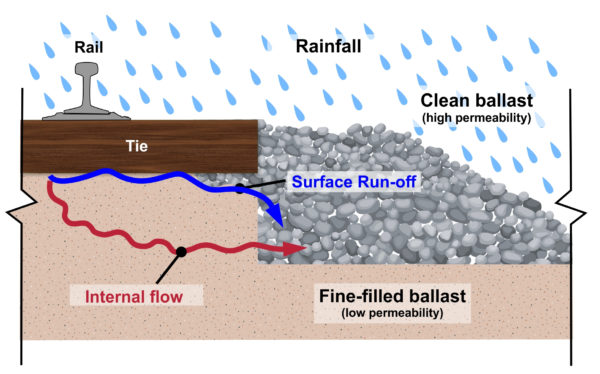
Figure 1. Diagram of fine migration with shoulder cleaned ballast
Hardly any historical testing has focused on the mechanism of outward fine migration. Previous studies using ground penetrating radar (GPR) did show a reduction in center fine degradation in locations where SBC occurred, as compared to non-SBC track.3 However, the exact reason for this reduction could not be deduced from the particular dataset.
Laboratory Flume Testing
In an effort to directly test the outward fine mechanism, UofSC in 2020 developed the laboratory “flume” tests. Since then, UofSC has completed multiple testing iterations that investigated different fine levels, fine types, and ballast maintenance methods (SBC or none).4 The setup includes a full track cross-section and has a symmetric separation in the middle so two different conditions can be compared simultaneously. A sprinkler system replicates rainfall; however, thus far the test setup can only replicate the “cleaning” mechanism and not ballast degradation from loading.
Four tests were conducted for this study, and two types of fines were tested: granular fines and cohesive fines. The granular fines consisted of sand that was donated by a supplier. The cohesive fines were provided by MxV Rail from the Rainy Section at FAST. Using both types of fines, UofSC developed two different Fouling Index (FI) levels to simulate “moderately fouled” and “fouled” situations. The results for all tests were monitored after 6 and 30 hours of continual wetting. The wetting intensity was 4 inches per hour, corresponding to 24 and 120 inches of cumulative rainfall.
TEST RESULTS
Fine Migration
Figure 2 summarizes the change in center FI (fine migration) due to wetting as a function of initial FI. The downward y-axis shows a reduction in center fines after wetting, and the two lines represent the two different fine types. The results show a significant difference between the two fine types. The granular material shows greater outward fine migration (up to a reduction of a third of fines). This migration is likely due to granular sand particles having the capability of being washed internally through the ballast voids. In addition, the amount of fine reduction increases with increasing FI. There was also fine reduction for the cohesive fines; however, the amount of reduction was almost six times less than for the granular fines due to the inability of water to move internally through the ballast. Most of the fine migration occurred through surface runoff and the erosion of the side walls. These results strongly indicate that, while fine migration occurs for both fine types, the fine type and gradation can have a significant impact on both the amount and location of “cleaning” that occurs.
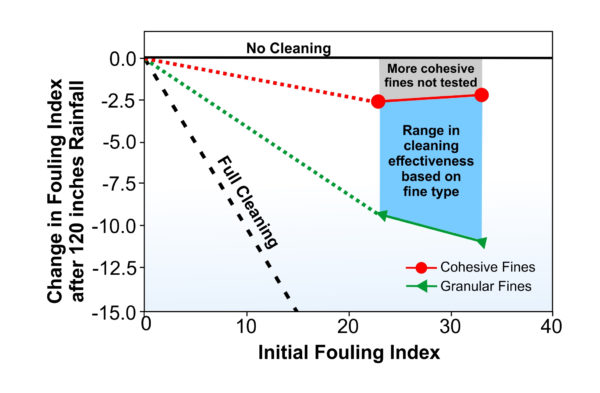
Figure. 2 Comparison of change in center Fouling Index from wetting based on fine type
A second assessment of the change in center FI was made by plotting the fine reduction with cumulative rainfall, as shown in Figure 3. The results show a non-linear trend where there is a sudden migration (a reduction in FI) followed by a reduction in the migration rate. This non-linear trend indicates that initial wetting “washes away” most of the loose fines, leaving only the fines that are more difficult to wash away. The remaining fines are likely near the bottom and center of the ballast section or are trapped by ballast grains and/or fines.
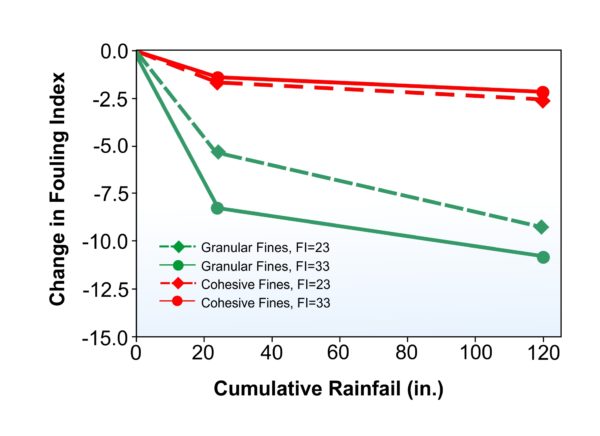
Figure 3. Change in center Fouling Index with cumulative rainfall
Rainy Section Comparison
The laboratory test results were compared with the field Rainy Section test results. Despite the fact that the Rainy Section inherently experiences both tonnage and rainfall, the results and observations made during wetting tests largely agreed with the UofSC laboratory results. Visual observations determined that the moisture did not penetrate deeply into the section, but mostly ran off the surface. The photograph in Figure 4 depicts the excavated shoulder after 61 MGT. The photograph shows the “scarifier” region being filled with fines and the sidewall angle expanding, suggesting a gradual fine buildup over time.
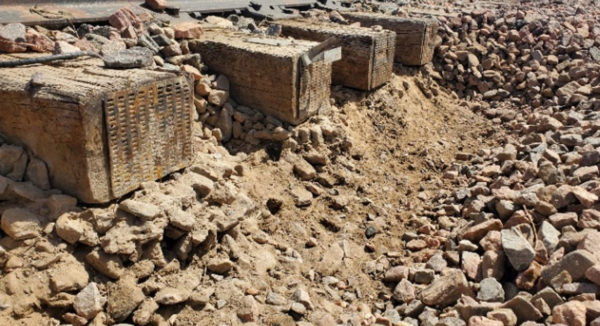
Figure 4. Photograph of shoulder after 61 MGT (19.7 inches of rainfall)
INTERPRETATION AND APPLICATION
The change of center fines in SBC track will be dictated either by the competing mechanisms of increasing fines from ballast degradation due to tonnage3 or by external sources versus reducing fines due to cleaning (either internally or through surface runoff). Both the laboratory and Rainy Section test results indicate that fine migration occurs, which has multiple implications for SBC maintenance.
First, it appears that SBC “cleans” the track center by washing away loose fines, and periodic cleaning should extend useable ballast life. SBC will likely be most effective at “moderately fouled” levels (FI from 15 to 30). And while SBC can have drainage benefits for “highly fouled” sections (FI > 30), it will probably not wash away any fines except those from surface runoff, unless the fines are purely sand.
Second, increasing fine levels most likely occur in tracks that are located in wet climates, or in tracks with high tonnage/axle loads, more rapidly degradable ballast (e.g., limestone), or windblown sand. These tracks would be better suited for regular SBC as it can continually wash away recently introduced loose fines. At this time, it is unclear if “regular” means using SBC every year, every two years, or every five years, because other factors such as tonnage, ballast degradation, rainfall, type of fine material, and introduction rate of external fines must also be considered. Unless the area experiences extensive windblown sand, using SBC on low tonnage/axle load lines will likely not be as effective after the first cleaning due to the lack of new fines from ballast degradation.
REFERENCES
- Wilk, S., R. Chaparro, D. Li, and D. DeVencenty. (2022). “Shoulder Ballast Cleaning in Mud Spot Location.” Technology Digest TD22-017. Association of American Railroads (AAR)/MxV Rail, Pueblo, CO.
- Qian, Y. and S. Wilk. (2022). “Laboratory Assessment of Fine Migration in Shoulder Cleaned Track.” Technology Digest TD22-018. AAR/MxV Rail, Pueblo, CO.
- Wilk, S., S. Galvan-Nunez, and D. Li. (2021). “Benefits of Ballast Shoulder Cleaning.” Technology Digest TD21-016. AAR/Transportation Technology Center, Inc., Pueblo, CO.
- Qian, Y., Y. Wang, H. Kashani, and F. Fanucci. (2021). “Effect of Ballast Shoulder Cleaning on Fouling Particles Migration within Ballast Matrix.” Proceedings of the 2021 American Railway Engineering and Maintenance-of-Way Association Annual Conference, September 2021.